AI & ML
A Lightweight Method for Validating Simulated LiDAR Configurations Based on Point Density over Distance
arXiv cs.RO0 views
arXiv:2611.27379v1 Announce Type: new Abstract: Simulated LiDAR sensors play a crucial role in validating autonomous systems, yet achieving signal-level realism remains challenging due to simplified sensor models and limited configurability in common simulation environments. This paper presents a lightweight, platform-agnostic method to assess one observable aspect of LiDAR simulation fidelity: the range-dependent point density on annotated objects. The method uses only 3D bounding boxes and point clouds and does not require semantic labels, detailed maps, simulator internals, or perception models. To quantify agreement between real and simulated range-dependent point distributions, we formulate the Density Similarity Score (DSS), a bounded similarity representation derived from the Mean Absolute Percentage Error (MAPE) over discretized distance bins. The method is evaluated against a real-world LiDAR using three CARLA configurations of varying complexity. Results show that naive parameter matching based on sensor datasheets leads to systematic point-density deviations, particularly in the near field, while a custom configuration using the sensor's non-uniform vertical beam angles achieves the highest similarity in the evaluated scenario (DSS: 0.559--0.709). The proposed approach is intended as an early-stage, signal-level consistency check for identifying gross mismatches in simulated LiDAR configurations. It should be interpreted as a complementary validation step rather than a complete measure of simulation quality or downstream perception performance.
Source:https://arxiv.org/abs/2611.27379PreviousGeoSDF-Diff: Geometry-Aware Diffusion Planning for Collision-Free TrajectoriesNextAnyBodyCodec: A Shared Native Interface for Body-Model Conversion, Extension, and Humanoid Control
Related posts

Jensen Huang scheduled to testify next week in Senate following reinstatement as Nvidia CEO
0TechCrunch

Google Search’s AI Mode can now tap into Drive and Wallet for more personalized responses
0TechCrunch

AI Network Firewalls for Enterprise Security Architecture
0freeCodeCamp
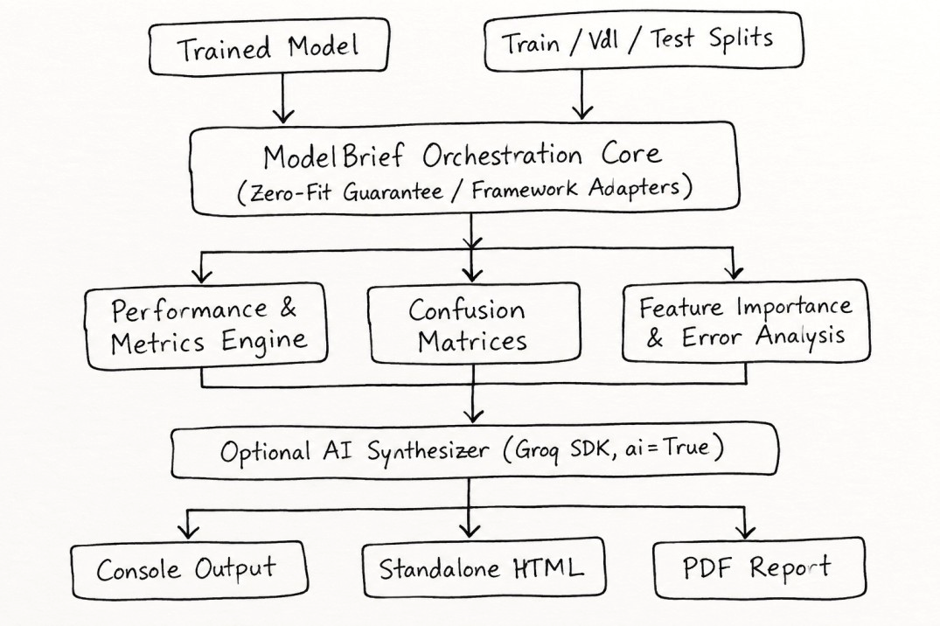
How to Standardize MLOps Reporting and Evaluation using an Open Source Python Package
0freeCodeCamp

FFGO: tiled first frames unlock Wan 2.2 multi-image consistency
0dev.to

HunyuanVideo 1.5: text and image to video, 1080p upscaling, and where it ignores you
0dev.to