- GPT-6.2 Astra quickly identified a historical sketchbook artist
- The work was prompted by an expert history professor
- An identification was made after just 22 minutes of looking
It's not easy keeping pace with all of the discoveries AI models are making now, and the latest example of AI's ability to pattern-match and dig through masses of data comes from history professor Mark Humphries at Wilfrid Laurier University in Canada.
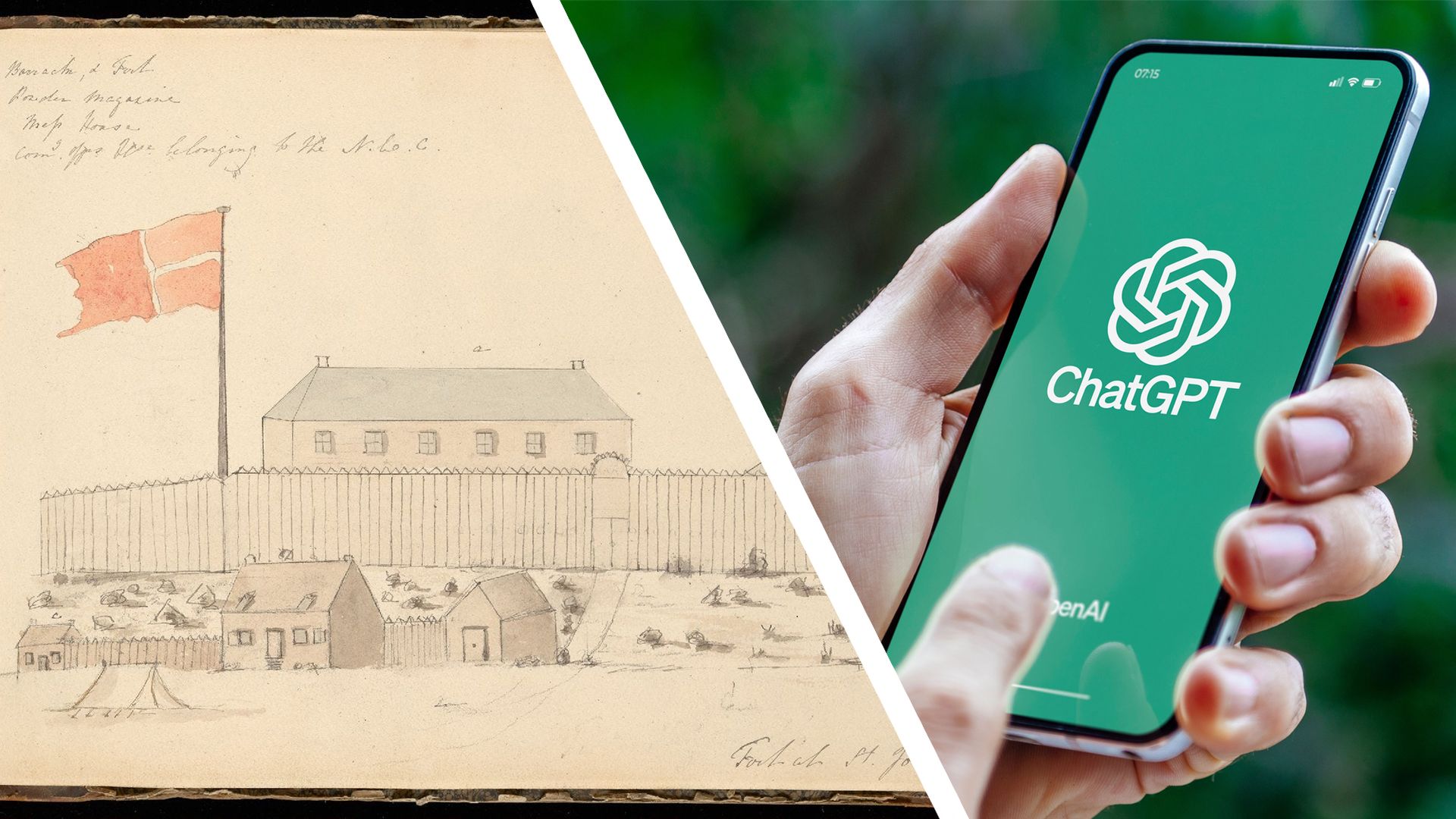
Posting on X, Humphries has announced that the GPT-6.2 Astra model in ChatGPT was able to identify the artist behind a previously anonymous 1808 sketchbook held at the Beinecke Library at Yale University. What's more, it did so in just 22 minutes, using primary and secondary sources publicly available on the web.
The sketchbook depicts a journey from Montreal to Fort William and back, and features several locations that have since been destroyed. According to GPT-6.2, it's the work of French aristocrat Louis-Guy-Charles-Guillaume de Rohan-Chabot (1780–1875), who spent most of 1808 in Canada as a British Army officer.
Humphries describes it as "a significant historical discovery" that required the AI to read through sources, develop a hypothesis from limited evidence, and argue a case. "It would be unlikely that a human could replicate what it did," says the historian.
Joining the dots
In testing GPT-6.2, I used it to make a significant historical discovery which I detail in the post below. This suggests that the process of research and discovery we’re already seeing in verifiable domains like math is starting to generalize to non-deterministic fields like history.You can read the full post here:https://t.co/Vm7MA2R3aQIn a nutshell, Yale’s Beinecke Library holds an anonymous sketchbook of an 1808 journey from Montreal to Lake Superior and back. I’ve spent many hours over the years trying to figure out who made the sketches with no luck. The artist could literally be any one of several thousand people. There are few clues: only four dated and labelled images.With minimal prompting, in just 22 minutes, Astra used publicly available sources to identify a minor French aristocrat, the vicomte de Chabot, as the artist and suggested that we test the hypothesis by ordering copies of a little known microfilmed diary of Chabot’s trip it also found.I was truly stunned. I’d never heard of Chabot or this diary! New document finds are also exceedingly rare in a well worn field like fur trade history.I ordered scans of the journal from microfilm and when they arrived the handwriting matched the captions in the sketchbook. The itinerary also aligned perfectly with the few dated drawings in the book. But there was actually the type of conclusive evidence we rarely get as historians: on 18 June 1808, after Chabot’s canoe reached Fort St. Joseph, he wrote “I took a sketch” before describing the exact view of the fort depicted in a matching drawing.The journal itself is also a major find. It had been mentioned once in a dissertation footnote, but in a completely different area of history and is unknown to fur trade or Canadian historians. It’s long and detailed, covering some 162 notebook pages which makes this a significant new document to my field. Attached to the journal was another trove of documents too: excerpts from long-destroyed North West Company papers, journals, and letters. Again, this almost never happens. Both finds equally surprised the other leading experts I consulted.Although we can construct a coherent narrative in hindsight, I cannot emphasize enough how exceedingly difficult this sort of thinking and recall is for humans. Unlike a human, Astra was able to tackle the problem from both ends at once: working forward from the scant facts of the 1808 journey pictured in the sketchbook and backwards from the immense number of surviving facts about 1808 British North America in general.While we can technically explain Astra’s path to this find as a product of enhanced search capabilities, it conducted the investigation from end to end. I basically acted as the research assistant, restricting copies of the paper documents it needed.To my mind, this puts historians in a similar position as the mathematicians found themselves about eleven months ago, when LLMs started to solve the first Erdős problems. Over the past year, we’ve watched these same models go from learning to read handwriting, to beginning to think historically, to mastering the undergraduate essay, and finally to making small but real contributions to human knowledge more or less autonomously.The trajectory seems clear.November 24, 2026
Humphries included a couple of suggestions in his ChatGPT prompt (which turned out to be false leads), but the AI did almost all of the work on its own — although the historian admits the ChatGPT "black box" means its workings aren't entirely clear.
"While the book is unique, the route of travel it records was common," explains Humphries. "Without knowing the person’s name in advance, it is almost impossible to know where to start looking, which is why the document has remained anonymous for more than 200 years."
For evidence, ChatGPT suggested that the microfilmed diary of Chabot's trip, held in the Special Collections of Cleveland State University, would help settle the matter. That revealed handwriting matching the sketches, as well as notes from Chabot that he took the relevant trip and made sketches along the way.
Humphries attributes AI's "remarkable" next-level ability to join up dots across large, disparate collections of data to the discovery, and there are likely many more to come — as long as the evidence is out there and available, these AI agents are capable of finding it.