AI & ML
DC-Link Voltage Regulation in a Single-Isolation-Stage Multioutput Solid-State Transformer for Wide-Range DC Outputs
arXiv cs.SY0 views
arXiv:2611.09276v1 Announce Type: new Abstract: Single-isolation-stage solid-state transformers with balancing circuits eliminate an additional downstream dc--dc conversion stage. However, the remaining isolated converters must directly accommodate a wide output-voltage range. This paper investigates variable dc-link voltage operation of a single-isolation-stage multioutput SST to ease this requirement. Coordinated cascaded H-bridge modulation and embedded four-switch balancing circuits support intentionally unequal submodule dc-link voltages, allowing the isolated-converter input voltages to be adjusted according to the output requirements. The achievable voltage range is determined by relating the required balancing power to the BC transfer capability within the available CHB switching windows, subject to modulation and peak and rms current limits. The analysis quantifies the range extension provided by BC operation beyond modulation alone. For a single-phase-shift dual-active-bridge converter, input-voltage following within this range reduces the calculated peak current and extends the ideal zero-voltage-switching region compared with fixed input. Experiments on a six-submodule SST prototype demonstrate unequal dc-link voltage operation and inter-submodule power exchange. Experiments result on DAB demonstrate reduced current stress and improved efficiency with voltage following.
Source:https://arxiv.org/abs/2611.09276PreviousReconciling European Electricity Data with Diffusion Priors Learned from Observations AloneNextAn Optimal Power-Flow Grouping Topology for Single-Isolation-Stage Multi-Output Solid-State Transformers
Related posts
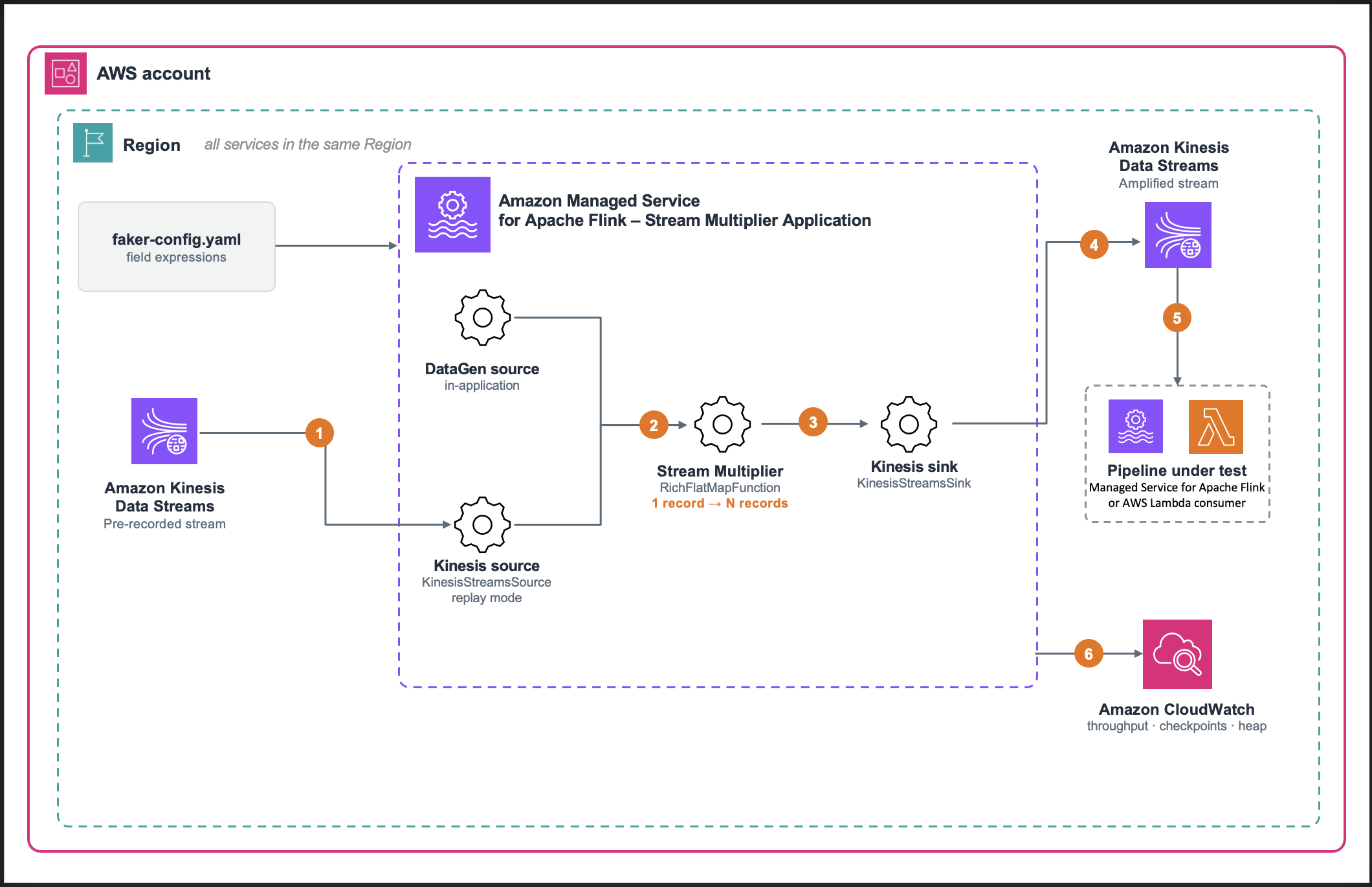
Multiply pre-recorded streams with Amazon Managed Service for Apache Flink
0AWS Big Data Blog

Start and Restore GPU Workloads in Seconds with NVIDIA Snapshot
0NVIDIA Developer Blog

Running AV Reasoning Models Within Onboard Compute and Latency Limits
0NVIDIA Developer Blog

IoT-Enabled Clinical Decision Support: Continuous Monitoring Versus Episodic Care
0dev.to AI

IoT-fähiges klinisches Entscheidungsunterstützungssystem: Kontinuierliches Monitoring versus episodische Versorgung
0dev.to AI

Hedra Launched Model Factory: A Self-Improving Pipeline for Real-World AI
0dev.to AI