AI & ML
Fast Inference-Time Policy Refinement via Action-Affine World Models
arXiv cs.RO0 views
arXiv:2611.15011v3 Announce Type: replace Abstract: Imitation policies can fail through compounding errors, while existing refinement methods often require additional on-policy learning or expensive online planning. Our key insight is to model the response to small corrections around a policy proposal in an affine form that enables fast optimization. We refine a frozen imitation policy using an \textit{action-affine world model} (A\textsuperscript{2}WM), trained offline from perturbed policy rollouts. Conditioned on history and the proposal, the model directly predicts a nominal trajectory and a linear action response over the full horizon. With quadratic costs and linear constraints, refinement becomes a cheap quadratic program (QP), requiring only one model evaluation and one QP solve per control step. To the best of our knowledge, we are the first to combine an action-affine world model with QP-based inference-time refinement of frozen imitation policies. Across four manipulation tasks, our framework achieves the highest success rate among evaluated baselines, adding only 4.2 ms of mean refinement latency per control step, excluding base-policy sampling.
Source:https://arxiv.org/abs/2611.15011PreviousMOSU2: Long-range Navigation System with Multi-modal Scene UnderstandingNextWhat Can a VLA Learn from the Agent That Calls It? Task-Level Experience Distillation for Embodied Navigation
Related posts
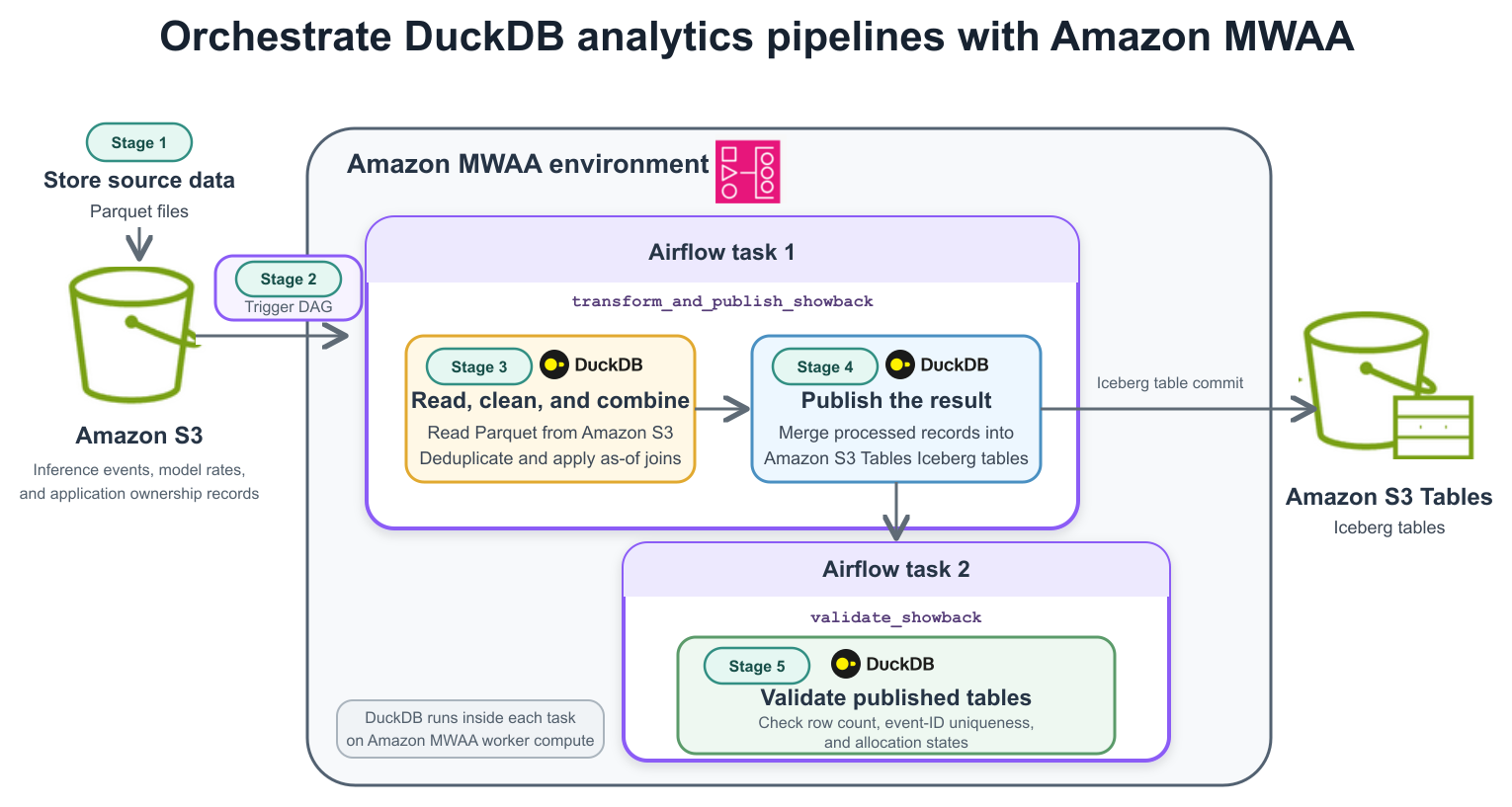
Orchestrate DuckDB analytics pipelines with Amazon MWAA
0AWS Big Data Blog
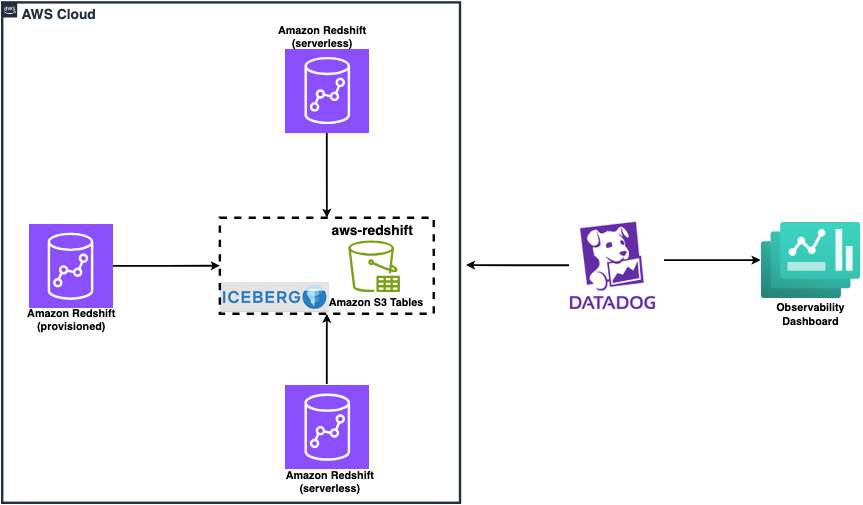
Long-term Amazon Redshift observability with Datadog and Amazon S3 Tables
0AWS Big Data Blog
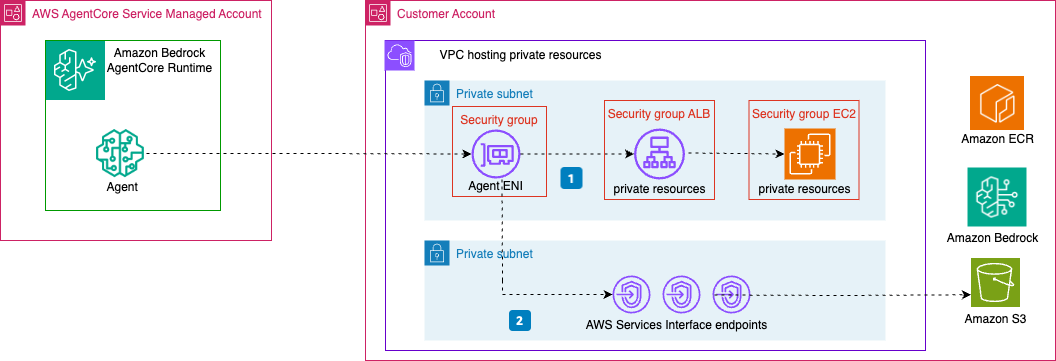
Choosing the right network architecture for Amazon Bedrock AgentCore
0AWS Networking Blog

New Site-to-Site VPN connections will default to recommended cryptography
0AWS Networking Blog
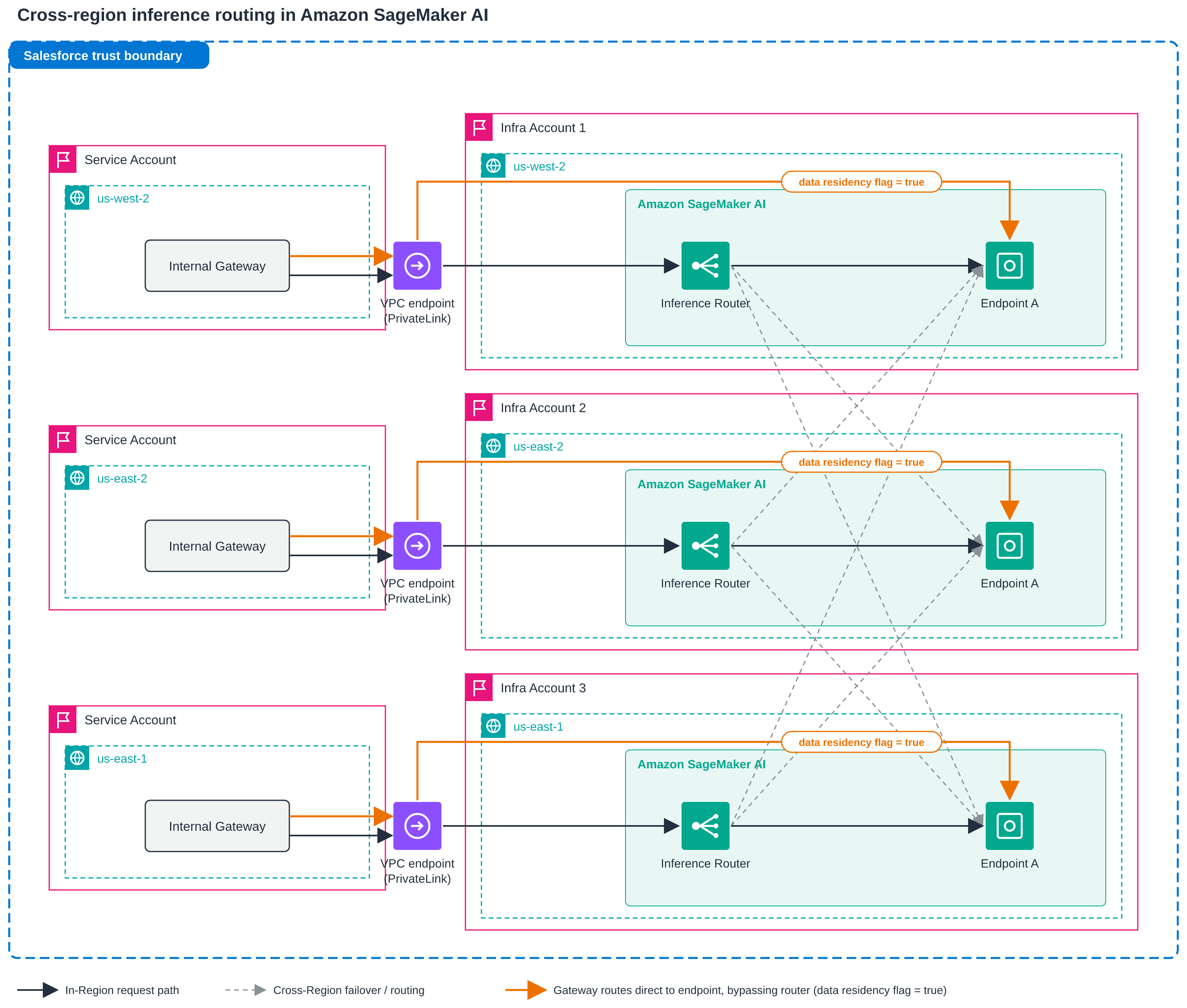
How Salesforce is advancing global-scale model serving with cross-Region inference routing in Amazon SageMaker AI
0AWS Machine Learning Blog
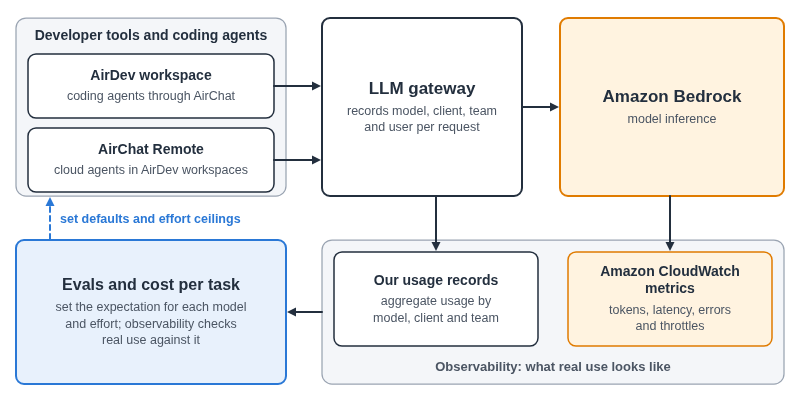
How Airbnb uses cost per task to operate coding agents on Amazon Bedrock
0AWS Machine Learning Blog