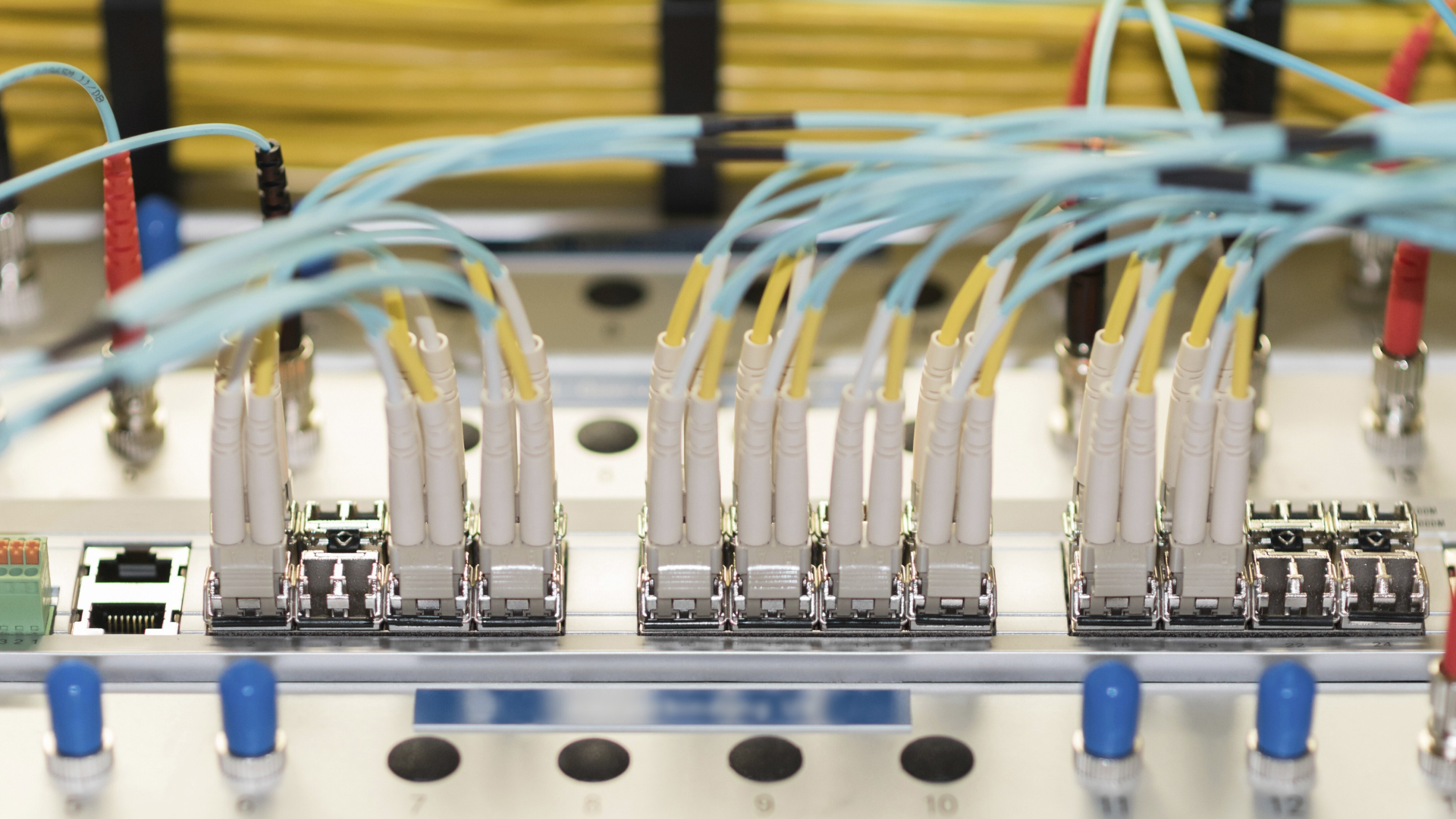
Microsoft, the tech giant that is building 35 data centers around the U.S. and has plans for 134 more, has reportedly met with the White House Office of Science and Technology Policy and the National Security Council as the FCC is considering an import ban on Chinese optical transceivers. According to Reuters, the company, alongside the Information Technology Industry Council (ITI), is lobbying against the move.
- The data center cooling state of play
- The custom AI ASIC state of play
- America’s AI chip rules keep changing — and the rest of the world is paying the price
- GTC 2026: Ian Buck press Q&A transcript — VP of Hyperscale and HPC speaks out on shelving CPX and shipping LPU decode this year
- Demand for data center CPUs has surged, and AI agents are responsible
“It really threatens to arguably grind (the data center rollout) to a halt,” ITI Executive Vice President of Policy and General Counsel John Miller said. He also added, “Those chips, without optical transceivers, literally could just sit there waiting around unutilized until you actually have the transceivers to essentially connect them together,” referring to the AI chips that data centers use.
Optical transceivers are tiny modules plugged into hardware that convert their electrical signals into light signals, allowing data to be transmitted as light pulses across fiber optics. Data centers increasingly use optical transceivers and fiber optics to transmit data between AI GPUs and server racks, as they’re faster, offer lower latency, require less power, and generate less heat compared to traditional copper connections. However, Chinese companies currently supply 66% of the global market, meaning banning them from supplying data centers in the U.S. would more than halve the available supply, thereby exacerbating the various shortages that have been pummeling the industry.
However, there are concerns that some of these transceivers could be compromised by Beijing and be used to steal data, install malware, or remotely disrupt American data centers, which is why the FCC is considering the restriction, just like how it banned Huawei from the U.S. telecommunications network. But unlike Huawei, which had many established competitors in the telecommunications hardware industry, only two U.S.-based companies produce optical transceivers that data centers need — Coherent and Lumentum. While these firms could produce optical transceivers to compete with Chinese offerings, they simply do not have the scale to make up for the shortfall if the FCC bans Chinese imports today.
One compromise floated by the Trump administration is that it would only ban Chinese optical transceivers capable of hitting 3.2 terabits per second. While this technology already exists, its production isn’t expected to expand until 2028, with installation not beginning until 2029. This should give American producers time to ramp up their own output, although the suggestion is still under consideration.