A scant two weeks ago, Elon Musk made yet another bold claim: he was "highly confident" that SpaceX could build 10 GW of data center capacity in 2027 alone. The grandiose statement raised a few eyebrows, but in a detailed write-up, the analysts at Semiaccurate explain how that's actually doable... if the stars align. That +10 GW figure over the existing 3 GW would mean the company had built in as much data center capacity in 1.5 years as Google did in its entire existence, according to the post. The site notes that should this forecast ring true, that would make SpaceX the fastest-building hyperscaler on the planet, far outpacing every other player.
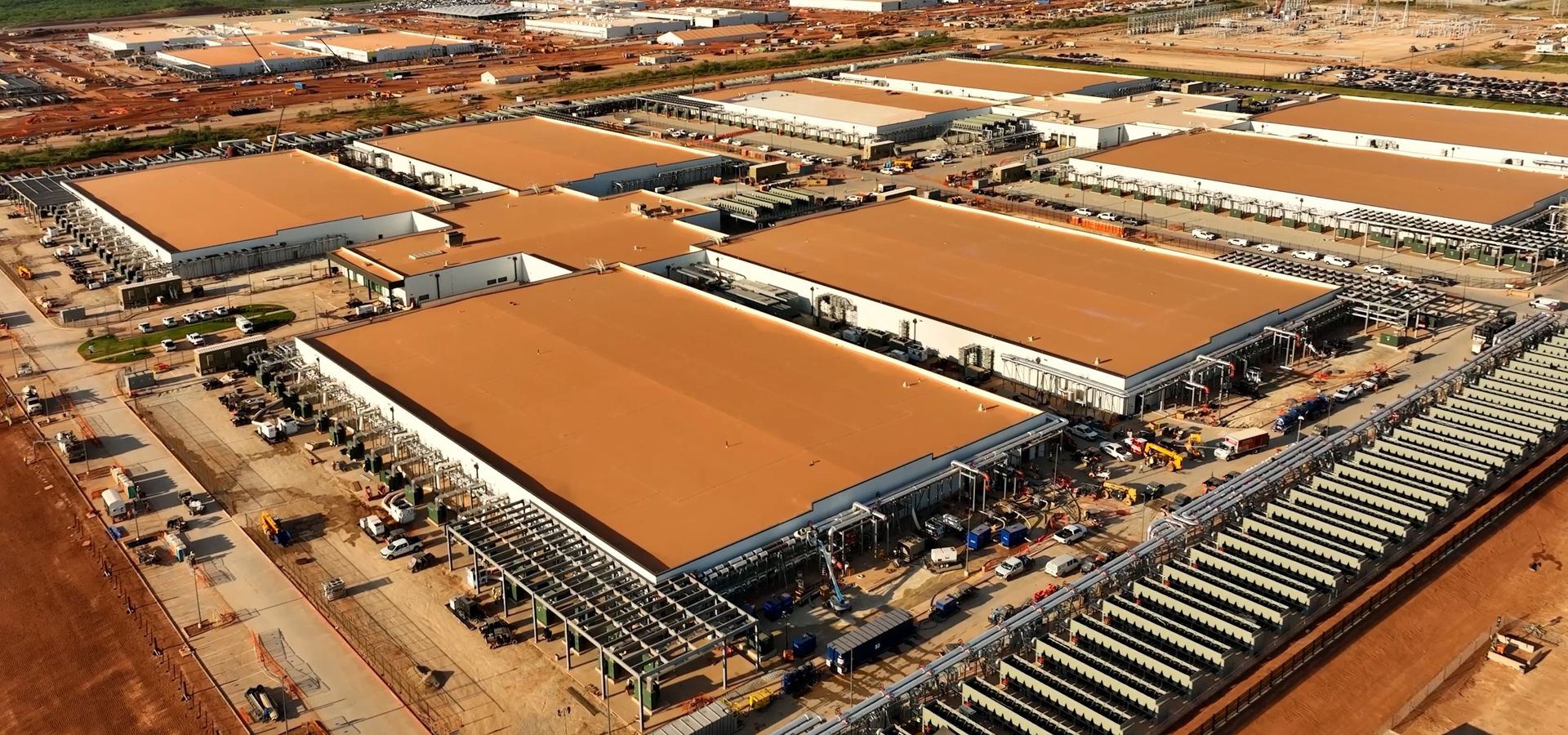
As proof of progress, the analysts point to how quickly the Colossus 1 and Colossus 2 buildouts are progressing, estimated from aerial shots and available information. They note that Colossus 2's power generation capacity went from only 0.4 GW in January to a projected 2.4 GW by the time the year is out, at the rate that the relevant hardware is popping up. The site tallies up 9 GW of potential data center capacity across the sites it's tracking, including Colossus and Starbase facilities.
Notably, the facility includes 89 turbines capable of delivering approximately 2.5 GW, helped along by a total of 1377 Tesla battery Megapacks, all already on the campus. Due to emissions regulations, the facility will only eventually be allowed to operate roughly 1.24 GW of its own turbines.
Even with the 1.2 GW eventually coming in from the grid, there's a 300 MW shortfall to be filled by the batteries, which Semianalysis expects will top up with compute load variation and possibly external power. SpaceX has an agreement with the state of Mississippi that lets it temporarily operate the extra turbines, with a promised phase-out by July 2027.
As of September 25, Elon Musk had stated that Colossus 2 already had 550,000 GPUs working, presumably in the extant Macrohard and Macroharder facility. At the time, SpaceX was reportedly gunning to have its Gun Range and Project SPAM centers ready in short order. Judging by the photos, they appear to be progressing at a rapid pace, as there are visible facilities where there was nothing but loose dirt a few months ago — though nothing says the racks of GPUs are in there yet.
Semianalysis' team remarks that SpaceX's builds have become so fast that they kick off well before it decides how the facility will be powered, and the respective power supplies come in. We've all seen the news about the scarcity of GPUs and RAM, but for a data center, just having enough power is problem enough.
If SpaceX can keep its stream of gas turbines coming along, that's quite the achievement by itself. The analysts think that Tesla may be manufacturing mechanical and electrical equipment in modules, presumably ready to install directly from the factory, or even trucks. Heck, the aforementioned temporary turbines are mounted on truck flatbeds as "mobile" power generation, seemingly in a bid to skirt regulations.
In the hyperscaler world, speed is the name of the game, particularly in these trying times when there are mounting suspicions that not all players will even make it to the finish line. Compute capacity being built and eventually becoming available is enticing for AI players, yes, but they're willing to pay through the nose for anything they can get their hands on right now, as current demand far outstrips supply.
Having facilities built doesn't mean that they're actually working, however, or that they're functioning at their expected rate. Zoning, permits, grid connections, power generation constraints, water supply, and public opposition are some of the few problems that have plagued builds most everywhere, none of which relate to the existence and installation of computing hardware.
Microsoft's Satya Nadella put it clearly: "You may actually have a bunch of chips sitting in inventory that I can’t plug in. In fact, that is my problem today." That's far from the only report that a significant percentage of AI accelerators are still stuck in warehouses, on hold until they can go fulfill their duties in a server rack somewhere.
Since building a datacenter involves many moving parts, even assuming that Colossus 2 wraps up as quickly as it appears to be, that doesn't necessarily mean that SpaceX will be able to replicate its success across its other sites. There is no luck involved in engineering, yes, but some factors like availability of hardware and materials, changes in legal winds, and public opposition are hard to predict, even for someone with resources as extensive as Elon Musk.
And yet, the folks at Semianalysis note that two data centers at Starbase are undergoing rapid construction, suggesting that SpaceX can indeed replicate Colossus' success. They attribute the speed to SpaceX having most of the infrastructure and power generation hardware effectively in-house, via Tesla's manufacturing ability. If that assessment holds, the firm could be bypassing supplier lead times that other hyperscalers have to contend with.
Even if SpaceX doesn't reach its "10 GW in a year" target, if the Colossus buildouts are anything to go by, the company may well be moving faster than anyone else in this space. Metrics aside, in the AI gold rush, coming first is all that's needed to win.