AI & ML
Sub-Synchronous Control Interaction Risk of Large Data Center Loads: A Frequency-Scan Assessment with Cross-Model Validation
arXiv cs.SY0 views
arXiv:2611.17550v1 Announce Type: new Abstract: Data centers are now one of the fastest-growing loads on the bulk power system, and most of their demand reaches the grid through power converters inside uninterruptible power supplies (UPS). Whether these loads can take part in sub-synchronous control interaction (SSCI), as wind and HVDC converters do, has not been studied extensively. We examine this question with impedance-based frequency scans at the point of common coupling (PCC). Using a detailed proprietary model (INS-ISU), we scan the motor, variable-frequency-drive (VFD), lighting, and UPS-fed information-technology (IT) branches of a representative facility separately. Only the UPS in double-conversion mode shows negative resistance; it covers the whole sub-synchronous band and continues up to about 170 Hz. The other branches, and the UPS in bypass mode, stay passive. We then repeat the scans on three public models from PNNL, TAMU, and NLR. None of them shows negative resistance in bypass mode, while three of the four models do in double-conversion mode. Lowering the load from rated to light load makes the negative resistance deeper, as expected for a constant-power load, so a lightly loaded facility in double-conversion mode is the worst case. Raising the UPS DC-link capacitance pushes the negative resistance into a narrow band around the fundamental. These findings give a basis for screening data centers for SSCI during interconnection studies.
Source:https://arxiv.org/abs/2611.17550PreviousLearning monotone game-theoretic linear MPCNextBattery Energy Storage Sizing in PV Ramp-Rate Smoothing using Constraint-Aware Reinforcement Learning-Based Controller
Related posts

An LLM confidence score isn’t correctness: the certainty trap
0dev.to

What a host-side layer for LLM agents is, in plain words (and what it is not)
0dev.to

OpenAI's Agents API Lets Any App Rent Codex, Here's How It Works
0dev.to
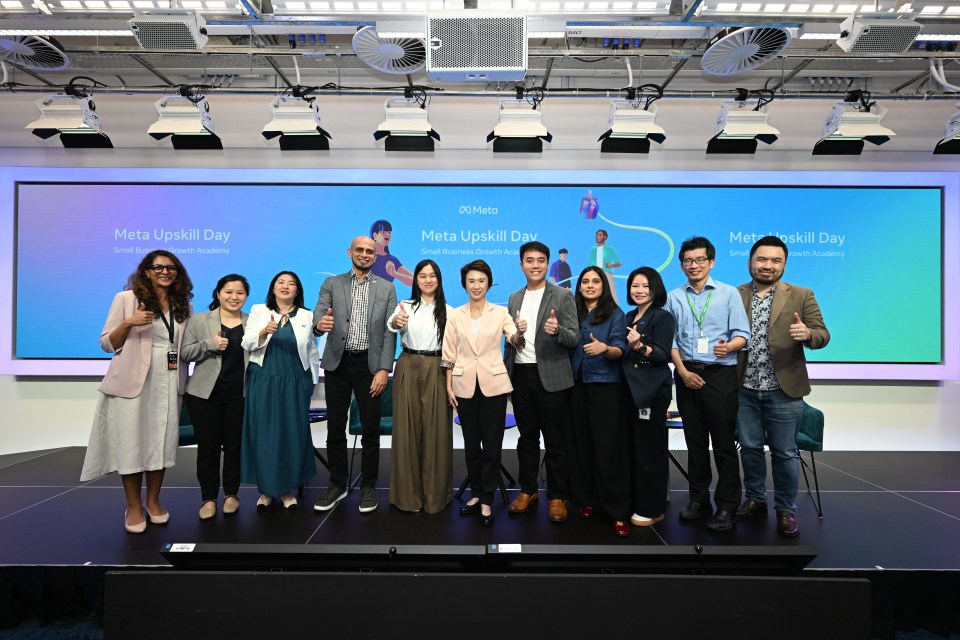
94% of Singapore Small Business Owners Surveyed Say More AI Guidance Is Needed
0Meta Newsroom

Nashville, Tennessee Real Estate Dataset: 7,436 Listings, Excel File (Nov 10, 2026)
0dev.to Data

A Hundred and Eighty Six Thousand Pounds of Stock Had Left One Branch and Never Arrived at Another
0dev.to Data