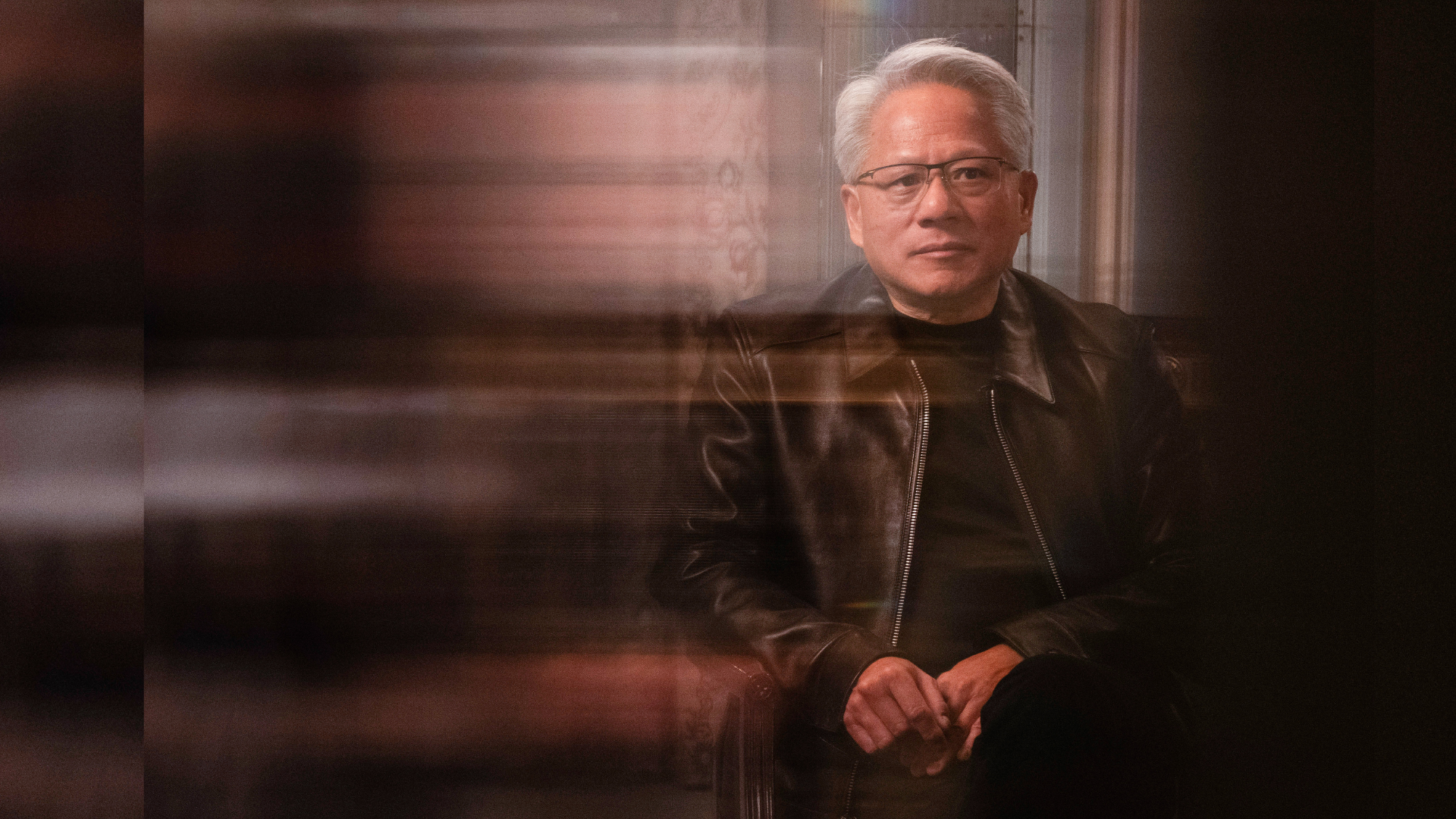
Nvidia rose from a niche gaming hardware company with an unofficial motto of "Our company is thirty days from going out of business” to becoming the world’s most valuable company by market capitalization in 2024, and co-founder and chief executive Jensen Huang was the man behind its meteoric rise.
He planned and founded the company in 1993 alongside Chris Malachowsky and Curtis Priem while sitting inside a Denny’s diner in the Silicon Valley area. After more than 30 years, Nvidia had thousands of employees, a global footprint, and a name that people equated to AI chips.
All this came crumbling down for the billionaire founder in a matter of weeks, but the cracks started long before the first accusation. Let’s go back and see how it all began. This is an ongoing saga, so we have listed stories related to the scandal below, which we will update as events unfold.
The end of an era
Jensen resigned from Nvidia on November 12, after two weeks of news reports accusing him of multiple affairs, one with an alleged Chinese spy and another with his own subordinate. This is significant for Nvidia, which has had a single CEO since its inception. Huang was the face of the company, and many of its employees, shareholders, partners, and fans still support him despite the circumstances of his departure. He steered Nvidia into the giant that it is today by having the vision to develop CUDA nearly 20 years before ChatGPT made AI accessible to the average user and buying companies that helped it scale deployments to hundreds of thousands of AI GPUs.
Jensanity

By 2022, ChatGPT’s arrival and subsequent boom set the AI race in motion, with tech giants and AI startups buying up as many GPUs as they could get their hands on. The increased demand for Nvidia’s products caused it to break the trillion-dollar mark in less than a year after the release of OpenAI’s LLM. As the largest individual shareholders of the company, Huang and his wife, Lori, became some of the wealthiest people in the world.
The billionaire founder hasn't always gloated about his position. He once said in a podcast that if he could turn back time, he wouldn’t have founded Nvidia at all, and also cringed at the praises that the Caltech Board of Trustees chairperson heaped on him before he gave the 2024 keynote speech at the institute’s commencement exercises. He has frequently cited his history working as a “Dishwasher, Busboy, Waiter” at Denny’s, noting it under his experience on his LinkedIn page. More than that, people have seen Jensen go where other celebrity CEOs are rarely seen — enjoying street food in Vietnam, dining at a local fried chicken joint in Korea, and even dragging along 35 of Taiwan’s semiconductor CEOs to a restaurant in Taipei.
But even as he’s building his “Man of the People” persona, his position as the head of arguably the most important chipmaker in the AI industry meant that he was also gaining influence in business and governance. Industry leaders noticed the power that Nvidia held over those who want GPUs to train their AI models, with some of his fellow billionaires begging him over dinner to sell them GPUs. Just weeks into President Donald Trump’s second term, Jensen Huang was meeting with him at the White House, discussing AI policy and hardware export controls — something the Biden administration started in 2022 in an attempt to hold back China’s ambition'sin AI.
The China problem
The rivalry between the U.S. and China has been simmering for years, with Chinese companies like Huawei getting blacklisted because of their work with the People’s Liberation Army. In August 2022, about three months before ChatGPT made AI a household term, Washington expanded its trade bans on Beijing and imposed export controls on Nvidia’s H100 and A100 GPUs. The company responded to this by building a new data center GPU that conformed to U.S. standards specifically for the Chinese market, called the A800, by November of that year. Despite delivering only 70% of the performance of the A100 it was based on, the GPU reportedly still saw great demand from Chinese customers.
However, the A800 only had a relatively short run as the Biden administration once again increased the performance threshold in October 2023, which resulted in the export prohibition of A800 and H800 GPUs to China. This move forced the company to iterate once again, creating new models that it could sell to Chinese companies, like the Nvidia H20. These chips arrived on the market in early 2024, but before the Biden administration ended in January 2025, it proposed even stricter rules called the AI Diffusion Policy. This sorted nations into different tiers based on trust and risk levels — countries in tier 1, which includes the U.S. and its closest allies, have minimal restrictions, while those in tier 3 are effectively barred from receiving advanced AI GPUs containing U.S. technology.
This is problematic for Nvidia, as China is the second-largest computer market in the world t and represented between 20% and 25% of Nvidia's data center sales. The company lobbied the U.S. government to ease AI GPU export restrictions, with Trump reportedly suspending the proposed Nvidia H20 ban after Jensen spent $1 million to have dinner with the president in early April 2025. The White House went ahead anyway and banned the sale of the AI GPU less than a week after that, resulting in a $5.5 billion write-off for the company.
Jensen Huang himself had harsh comments about Washington’s trade ban, saying that “export control was a failure,” and that it had caused the company’s AI GPU market share in China to go from 95% to zero. He even argued that “conceding an entire market the size of China probably does not make a lot of strategic sense, so I think that has already largely backfired.”
But even as Huang was fighting to have the trade ban on the Nvidia H20 chip lifted, he continued praising Trump’s tariff plan, calling it “utterly visionary.” The president eventually reversed the ban three months later, and by December 2025, he had approved Nvidia H200 exports to China, but only if Nvidia pays a 25% fee. The newer Blackwell and Vera Rubin chips remain out of reach for Chinese companies, though — at least on paper.
“There’s no evidence of any AI chip diversion”
Allegations that Chinese companies have been breaking Washington’s trade ban and smuggling Nvidia AI GPUs into China have been circulating since June 2023, after Reuters revealed that vendors in Shenzhen could secure A100 chips when asked discreetly. They reportedly bought these chips from the excess stocks sold in the open market or through intermediaries in India, Taiwan, and Singapore. Another story published in January 2024 asserted that the Chinese military and related institutions, state-run data centers, and even universities continue buying banned A100 and H100 chips. Six months after that, accounts of underground networks dedicated to smuggling AI GPUs — even entire servers — through other countries started emerging.
In 2025, an investigative report showed that at least a billion dollars’ worth of Nvidia AI chips were allegedly funneled into China. Some sellers likened the illicit AI GPU trade to a seafood market, with brokers and retailers openly advertising the most advanced Nvidia AI chips online, from RTX 5090 GPUs to complete B200 servers.
Even with all these reports, Huang continued denying that Nvidia’s chips were being smuggled into China. “There’s no evidence of any AI chip diversion,” the then-CEO told reporters at Computex 2025. He also added, “The Grace Blackwell system is nearly two tons, and so you’re not going to be shipping — you’re not going to be putting that in your pocket or your backpack anytime soon. And so, these systems are fairly easy to keep track of... but the important thing is that the countries and the companies that we sell to recognize that diversion is not allowed, and everybody would like to continue to buy Nvidia technology, and so they very well monitor themselves very carefully and they’re quite careful about that.”
In the midst of all these AI chip smuggling rumors, the Bureau of Industry and Security, the agency in charge of enforcing U.S. trade sanctions, was found to be “inadequate” and underfunded, and it has been relying on outdated manual processes to enforce restrictions on Chinese tech companies. Despite that, companies and individuals across the world are being investigated and arrested for bypassing Washington’s export controls.
Singaporean authorities broke up a smuggling ring in early 2025 that smuggled Nvidia GPUs for Chinese AI lab DeepSeek, resulting in a raid of 22 different locations and the arrest of nine people. In October of the same year, a Singapore company called Megaspeed, which was led by Alice Huang, allegedly diverted $2 billion worth of Nvidia chips. Four Americans were then arrested the following month for shipping 400 Nvidia A100s and attempting to send 50 more Nvidia H200 GPUs to China.

An even bigger smuggling scandal unfolded some four months after the arrests, after three Super Micro employees were arrested for smuggling $2.5 billion of Nvidia hardware into China. The suspects included company co-founder Yih-Shyan “Wally” Liaw, although Super Micro itself was not implicated. The Super Micro case spanned the globe, with Taiwanese authorities raiding 12 locations related to the case in May 2026, with another nine sites and six people investigated in June. Jensen Huang urged the company to fix its export control compliance after the arrests and raids, telling the media, “We insist our partners are compliant. We hope that they will enhance and improve their regulatory compliance and prevent that from happening in the future.”
But just five months after he made this statement, one stunning accusation unraveled it all.
Scandal erupts
On October 29, 2026, The New York Times published a report that Jensen Huang may have been the target of a Chinese spy plot through the executive of a firm who was “close” to him — that executive is Alice Huang. Nvidia denied the accusation. “Megaspeed has been no different than many other regional cloud customers. Jensen’s interactions with Ms. Huang are not unusual or unexpected. Meetings with customers are part of a CEO's job; Jensen talks with thousands of customer executives every year,” a company spokesperson told Tom's Hardware. “Our regional cloud customers receive ordinary business information — not sensitive NVIDIA trade secrets — and zero information relevant to national security."
But a little over a week later, U.S. intelligence sources claimed that the former Nvidia chief had an affair with the Megaspeed executive. This is the same Megaspeed that has been accused of smuggling Nvidia chips to the tune of $2 billion. By the evening of Sunday, November 8, Jensen admitted to the affair, although he did not name the third party in his statement.
Many government officials would usually turn a blind eye towards a tech executive’s personal life, but the fact that he is the leader of the U.S.’s premier AI chip maker and that he is also close to the president has caught the attention of authorities. This has led to the U.S. Congress asking him to a closed-door meeting to discuss Nvidia’s “security protocols against foreign adversary espionage” and the FBI investigating his relationship with the alleged Chinese spy.
The admission and allegations led to people digging deeper into Alice Huang. An investigation by The Information revealed that she was connected to a “labyrinth” of companies spanning Singapore, China, and the British Virgin Islands, and that she allegedly helped move around $7.5 billion worth of AI GPU imports. $2 billion was routed from Megaspeed to Speedmatrix, its Malaysia subsidiary, while another $4.6 billion moved directly from the Singaporean company into Shanghai Century Litong, a China-based cloud services company. It has also reportedly bought Nvidia GPUs from other sources, resulting in the estimated total value of its imports.
People close to her also said that she would leverage her relationship with Jensen to customers, often posting pictures with him on her WeChat account, showing potential clients unpublished photos with the Nvidia chief, and even boasting that he would take her to dinner and give her gifts on her birthday. It also seems that Alice Huang was not acting alone.
Multiple sources say that Kang Wei, Alice Huang’s husband, was central to the operation to acquire AI GPUs. He even seemingly acknowledged her relationship with Jensen Huang and has jokingly said that she was a personal assistant to the billionaire.
However, it seems that the straw that broke the camel’s back was another allegation that Jensen had an affair with another woman — this time, with Kimberly Powell, the company’s vice president of health care who directly reported to him. Hours after this revelation, the company board announced that Jensen had resigned from all his leadership positions at Nvidia, with employees saying he looked “broken and shattered” as he left the company he spent over three decades building in disgrace.
Nvidia is looking for internal and external CEO candidates. Chief financial officer Colette Kress is serving as interim chief executive.
Huang resurfaces
It may be the end of an era, but this does not necessarily spell the end for Jensen Huang. Despite his sudden downfall and quick removal from Nvidia, his status as the king of AI infrastructure remains valuable to the AI industry. Elon Musk even said on X that it “would be an honor” to hire him, and this could ring true for any business that wants to break into the semiconductor space. But does he even want to return?
Huang's first public statement after his resignation came on X on Nov. 17, in which the former CEO said he has "outpouring of calls from Nvidia’s employees, investors, business partners, and customers for me to return as CEO," and that if asked by the company's board, he would be "honored" to take the job."
Over 190,000 shareholders, partners, current and former employees, and fans, including Elon Musk and Epic Games CEO Tim Sweeney, have signed an online petition to bring him back as the leader of the company. President Donald Trump called for his reinstatement as Nvidia CEO.
The board, however, may not see things the same way. Multiple reports suggest that the board isn't considering bringing Huang back, and instead is focusing on a new candidate, the ongoing investigation into Huang, and preparing for national security investigations.
Article List
- Commemorative plaque at Denny’s booth where Nvidia was born has been removed (Update: Plaque Now Restored) — sign removed in wake of Jensen's scandals, marked 'the booth that launched a $1 trillion company'
- Elon Musk signs petition to reinstate Jensen Huang as Nvidia CEO — over 130,000 sign online petition, but not all Nvidians support Jensen's return
- Trump calls for Jensen Huang reinstatement as Nvidia CEO — Nvidia board reportedly refuses to reinstate disgraced CEO due to ongoing national security investigation into Jensen
- Jensen Huang could be plotting return as Nvidia CEO, report claims — allies have formed a ‘war room’ to drive reinstatement days after resignation scandal
- ‘Broken and shattered’ Nvidia CEO Jensen Huang surrendered during resignation meeting, report claims — thousands of employees rally, calling for reinstatement on internal forum
- How Shanghai fund manager Kang Wei introduced his wife Alice Huang to Jensen and built a $7.5 billion Nvidia AI GPU smuggling operation — Mistress's husband joked she was the Nvidia CEO's 'personal assistant'
- Nvidia CEO Jensen Huang resigns in the wake of multiple affairs, Chinese spy allegations — Colette Kress appointed Interim CEO, board conducting search for permanent replacement
- Jensen Huang now accused of affair with Nvidia executive who reported to him, alleged cover-up attempt — new indiscretion comes in wake of admitted affair with alleged Chinese spy
- Jensen Huang now accused of affair with Nvidia executive who reported to him, alleged cover-up attempt — new indiscretion comes in wake of admitted affair with alleged Chinese spy
- Elon Musk says it ‘would be an honor’ to hire ousted Nvidia CEO Jensen Huang — possible projects could include SpaceX’s planned GPU manufacturing, Terafab, or Tesla’s AI accelerators
- Congress could issue subpoena to Nvidia CEO Jensen Huang if he doesn’t respond by today to request for a ‘joint, closed-door briefing’ — US representatives want to discuss company’s ‘security protocols against foreign adversary espionage’
- Alice Huang reportedly instrumental in securing over $7.5 billion of Nvidia AI GPU imports during three-year relationship with Jensen Huang — helped move 240,000 banned chips into China, mostly H100 and H200
- President Trump says the FBI is investigating Jensen Huang’s affair with suspected Chinese spy — Nvidia also accused of intervening in Megaspeed chip smuggling investigation
- Nvidia CEO Jensen Huang admits to an affair with a suspected Chinese spy — Jensen apologizes in letter to staff, company board forms independent committee to investigate
- US intelligence believes Nvidia CEO Jensen Huang had affair with Chinese spy in honeypot operation — spy suspect linked to company accused of smuggling $2 billion in AI chips
- Nvidia becomes the world's most valuable company by market capitalization — Chipmaker dethrones Apple for the second time this year
- Nvidia CEO Jensen Huang may have been the target of a spy plot through 'Chinese intelligence asset,' report claims — exec from firm under investigation for smuggling banned AI chips to China accused of being a spy, was also feeding information to Beijing
- Taiwan raids Supermicro and two supply-chain partners in widening Nvidia smuggling probe — nine sites hit as six people summoned for questioning
- After $2.5 billion Supermicro smuggling bust, Nvidia CEO urges company to fix export control compliance — Taiwan also begins to crack down on AI GPU chip smuggling to China
- Taiwan raids 12 locations in its first formal crackdown on Nvidia AI chip smuggling — hunts three fugitives for document forgery, fraudulent declarations in Super Micro smuggling case
- Jensen says Nvidia now has 'zero percent' market share in China — says US export policy 'has already largely backfired'
- Supermicro employees accused of smuggling $2.5 billion worth of Nvidia hardware to China — perps used a hairdryer to move serial numbers between real hardware and thousands of dummy servers
- Trump approves Nvidia H200 exports to China, with 25% fee attached — report suggests that companies will have to follow strict Beijing rules to import foreign chip, AMD and Intel to benefit from policy shift
- Four Americans charged with smuggling Nvidia GPUs and HPE supercomputers to China face up to 200 years in prison —$3.89 million worth of gear smuggled in operation
- Korean fried chicken stocks surge 30% as Nvidia CEO Jensen Huang dines out on local delicacy — entire industry buoyed by secret ingredient, Jensanity
- Jensen says Nvidia’s China AI GPU market share has plummeted from 95% to zero — the Chinese market previously amounted to 20% to 25% of the chipmaker's data center revenue
- Singapore company allegedly helped China smuggle $2 billion worth of Nvidia AI processors, report claims — Nvidia denies that the accused has any China ties, but a U.S. investigation is underway
- Chinese companies allegedly smuggled in $1bn worth of Nvidia AI chips in the last three months, despite increasing export controls — some companies are already flaunting future B300 availability
- Nvidia to resume H20 sales in China — says U.S. government has promised to grant licenses, deliveries to start soon
- Nvidia CEO says Trump's tariff plan is 'utterly visionary'
- "Export control was a failure." Nvidia CEO Jensen Huang slams Biden's China AI restrictions - Computex 2025 Q and A
- Nvidia CEO Jensen Huang says ‘There’s no evidence of any AI chip diversion’
- Nvidia writes off $5.5 billion in GPUs as US gov't chokes off supply of H20s to China
- Trump reportedly suspends Nvidia H20 export ban plan after $1 million dinner with Jensen Huang
- Singapore police bust major ring smuggling Nvidia GPUs to China-based DeepSeek: Report
- Nvidia CEO Jensen Huang and President Trump met to discuss AI policy, DeepSeek, and hardware export controls
- US AI Diffusion Policy may harm Nvidia's sales — most of the chipmaker's AI GPUs are affected
- Nvidia's Huang enjoys 'trillion dollar banquet' with 35 Taiwanese semiconductor industry chiefs
- US Senate finds Commerce Department’s efforts to enact bans and sanction “inadequate” — investigation finds agency underfunded, must rely on voluntary compliance by chipmakers
- Elon Musk and Larry Ellison begged Nvidia CEO Jensen Huang for AI GPUs at dinner
- Underground network smuggles Nvidia's AI GPUs into China despite US sanctions — some smugglers even sell entire servers
- US government relies on outdated manual processes to enforce restrictions on Chinese tech companies
- Jensen Huang tells Caltech grads to pursue 'zero-billion-dollar markets' — hopes to inspire the next big tech leaders
- Despite sanctions, Chinese military, universities, and government bodies procure Nvidia GPUs.
- Nvidia CEO Jensen is worth $42 billion but still eats street food at street markets and visits LAN parties during overseas trips, sheds signature leather jacket
- No, Nvidia Isn't Breaking GPU Sanctions Against China, Says Analyst
- Nvidia Wouldn't Exist if CEO Could Turn the Clock Back 30 Years
- US Prohibits Exports of Nvidia's A800 and H800 to China, Blacklists Chinese GPU Developers
- Nvidia CEO Balances 10 Plates, Serves Food, After Denny’s Trillion Dollar Event
- Nvidia Breaks the $1 Trillion Market Cap Threshold
- Nvidia's Chinese A800 GPU's Performance Revealed
- Nvidia Creates New Supercomputer Chip For Chinese Market
- Ampere in the Oven: Nvidia Cooks up 'World's Largest Graphics Card'
- Nvidia's CUDA: The End of the CPU?


