This week on Tom's Hardware Premium, we've published in-depth interviews, roadmaps, and features that you won't want to miss. To read any of the articles we feature in this weekly roundup, you'll need to first arm yourself with a subscription.
Headlining our coverage this week is our story from Laptop expert Andrew Freedman, in his exploration of how and why Apple has chosen 2026 as the time to release an OLED — excuse me — PROLED display, with touch. After all, touch is a feature that Windows laptops have sported for well over a decade, along with OLED displays, offering unparalleled contrast ratios when compared to any other panel technology. In this feature, he explores the justifications and the likelihood of Apple slowly trickling the "brand-new" functionality to its suite of devices.
Last month, Micron revealed its brand-new product roadmap, featuring new DRAM devices, 3D NAND, the use of high-NA EUV lithography tools, and much more. NAND and DRAM are both incredibly hot topics, due to the ongoing rush to build faster, more capable AI accelerators, with Micron as one of the companies benefiting from the rush in demand. We go into detail about its 1δ DRAM, which is set to be manufactured on American shores. Beyond that, the company has also demonstrated its 11th-Gen NAND, which sports over 400 layers. With the next few years of its technologies explored in unrelenting technical detail, this roadmap details exactly where Micron's upcoming projects are, and where it's going next.
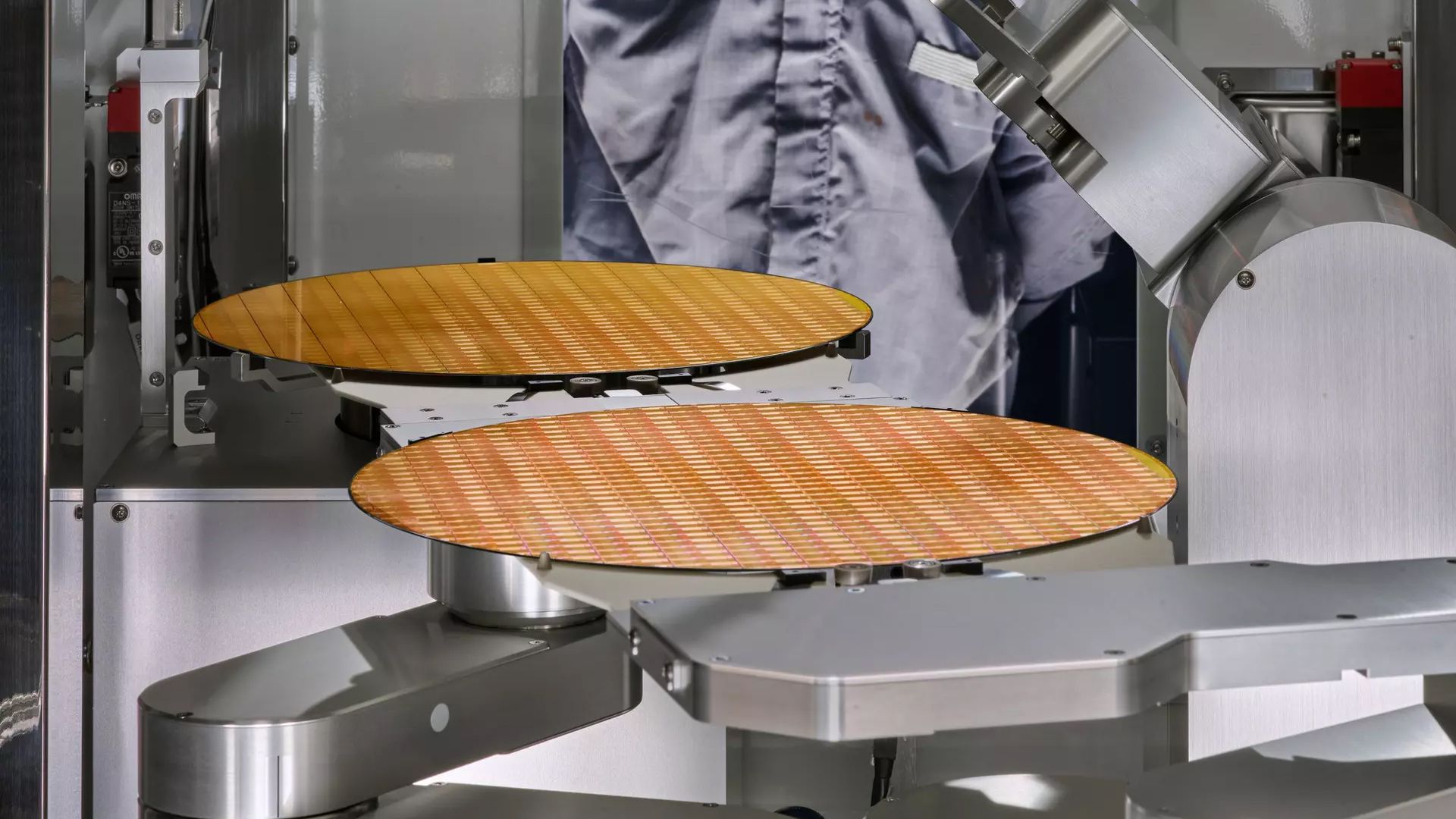
While ASML's EUV lithography machines remain in high demand, the company's latest technology, FDX Fusion, instead relies on tried-and-true DUV. Semiconductor expert Anton Shilov sits down with GlobalFoundries VP Sudipto Bose to detail the new tech, which boasts 7nm-class performance using advanced planar transistors, with broad applications across a range of devices, including within the data center. This unredacted interview transcript explores the hows and whys behind GlobalFoundries' decision to advance its FDX Fusion technologies without going down the EUV route, as many companies are currently doing, and offers an insider look at what the company might be planning in the future.
Luckily, it's not all about data centers and the technologies therein, as there are actual, new consumer PC parts that we're expecting to hit the market sometime in 2027. Of course, Intel's Nova Lake platform is abuzz with rumors over its boost clocks and big last-level cache (bLLC), which is touted as the company's answer to AMD's hugely popular X3D chips.
But a new platform means new motherboards and new chipsets to get your head around. For those brave enough to be considering a new PC upgrade in this economy, we explore everything that we currently know about Nova Lake's associated motherboards, which come alongside a brand-new socket and a suite of features up and down all budget ranges.
Marvell has signed an agreement to acquire optics company Lumentum, at a value of $115 billion. The move would combine two of the biggest players in the optical market into a single company. However, the deal would significantly impact Marvell's overall optical infrastructure portfolio, especially in the realm of in-house laser manufacturing. As companies rush to build both scale-up and scale-out domains, optics remains a huge part of the AI connectivity puzzle, as copper hits its natural limits. We explore all aspects of the proposed merger in our detailed analysis.
We've previously covered how much AI is disrupting cybersecurity, and the recent PHP vulnerability is merely the latest in a string of critical issues found in commonplace pieces of software, much of which forms the foundation of the modern internet. We tear apart and examine The PHP Foundation's post-mortem of the issue, their response, and more.
Google's Gemini 4 Carbon AI model recently topped charts as being one of the most capable frontier AI models out there. Google has historically been a laggardly competitor in the overall AI frontier race, with much more irregular releases than the likes of Anthropic or OpenAI. We explore how Gemini 4 Carbon fares in the grand AI thunderdome, and where it might have some advantages, such as being the model least likely to hallucinate.
A Pat Gelsinger-backed company, Nagare Labs, has recently showcased a new type of memory named Z2RAM. It can achieve rapid, SRAM-like speeds, with the same density benefits as DRAM. The product is still in early testing, with the latest published figures and roadmap pointing toward the device potentially becoming an alternative to High Bandwidth Flash (HBF). We explore all elements of the published design documents in our technical analysis.

Premium Subcription: $29
Don’t miss out on this Tom’s Hardware Premium. Get a full year of access for just $29, or from $7 per-month. Get daily news analysis, deep dives into specialist topics in the semiconductor industry, as well as access to Bench, the largest benchmarking database around.View Deal
To read any of the articles we mention above, as well as unlock Bench, you'll need to purchase a Tom's Hardware Premium subscription. Your support goes a long way in helping us to publish deeper, more insightful articles that might not otherwise be covered.


