Industry
VG-GP: Uncertainty-Gated Visuo-Geometric Memory for Negative-Transfer-Resistant Grasp Adaptation
arXiv cs.RO0 views
arXiv:2611.31826v1 Announce Type: new Abstract: Pretrained antipodal grasping networks generalize well to canonical shapes but frequently fail zero-shot on novel objects with irregular mass distributions, thin rims, or unfamiliar handles. While episodic experience memory adapts a frozen base policy without retraining, naive retrieval suffers from visual appearance bias, negative transfer from overriding working base grasps, and degenerate closed-loop acquisition. We present VG-GP, a plug-and-play Visuo-Geometric Gaussian Process memory framework for closed-loop $SE(2)$ residual grasp transfer. First, we fuse color-invariant surface-normal DINOv2 features, canonical $SE(2)$ gripper-aligned 3D local heightmaps, and contact-geometry descriptors under a product kernel with Automatic Relevance Determination (ARD) lengthscales learned strictly on source objects. Second, we model the joint posterior over the base grasp and candidate $SE(2)$ alternatives, overriding the base policy only when the joint-covariance Lower Confidence Bound (LCB) clears a risk-sensitive threshold. Third, an online counterfactual curation gate using single-record necessity and sufficiency interventions quarantines source experiences causing negative transfer. Fourth, we close the acquisition loop via Bayesian Expected Improvement (EI) over equal-budget $SE(2)$ probes. Across 42 disjoint YCB objects in ManiSkill3 (20 source, 12 development, 10 held-out test), VG-GP wraps a pretrained GR-ConvNet base policy and raises physical lift rate across all 22 unseen objects from 38.6% (34/88) to 53.4% (47/88) with zero regressions (+13 rescues, 0 losses; object-clustered 95% CI [+6.8%, +22.7%], exact McNemar $p = 0.00024$). On the 10 held-out objects, EI active acquisition reaches 45.0% (18/40 vs. 32.5% base, 5/7 of oracle headroom), achieves 55.0% probe divergence over passive fallback, and monotonically reduces epistemic uncertainty.
Source:https://arxiv.org/abs/2611.31826PreviousBeyond the Benchmark: Localizing Released Autonomous Driving Models to Real VehiclesNextPOISE: Curvature-Aware Critic Regularization for Smooth Actor-Critic Control
Related posts

Three Clouds Converge on Managed Private Interconnect, With Different GA Regions
0dev.to AWS

Buy Old Gmail Accounts - Use for any Google service
0dev.to Linux

How to build a production-ready booking app in Next.js
0dev.to React

Amazon Sweetens Black Friday Deals on PROLED MacBook Pro
0MacRumors
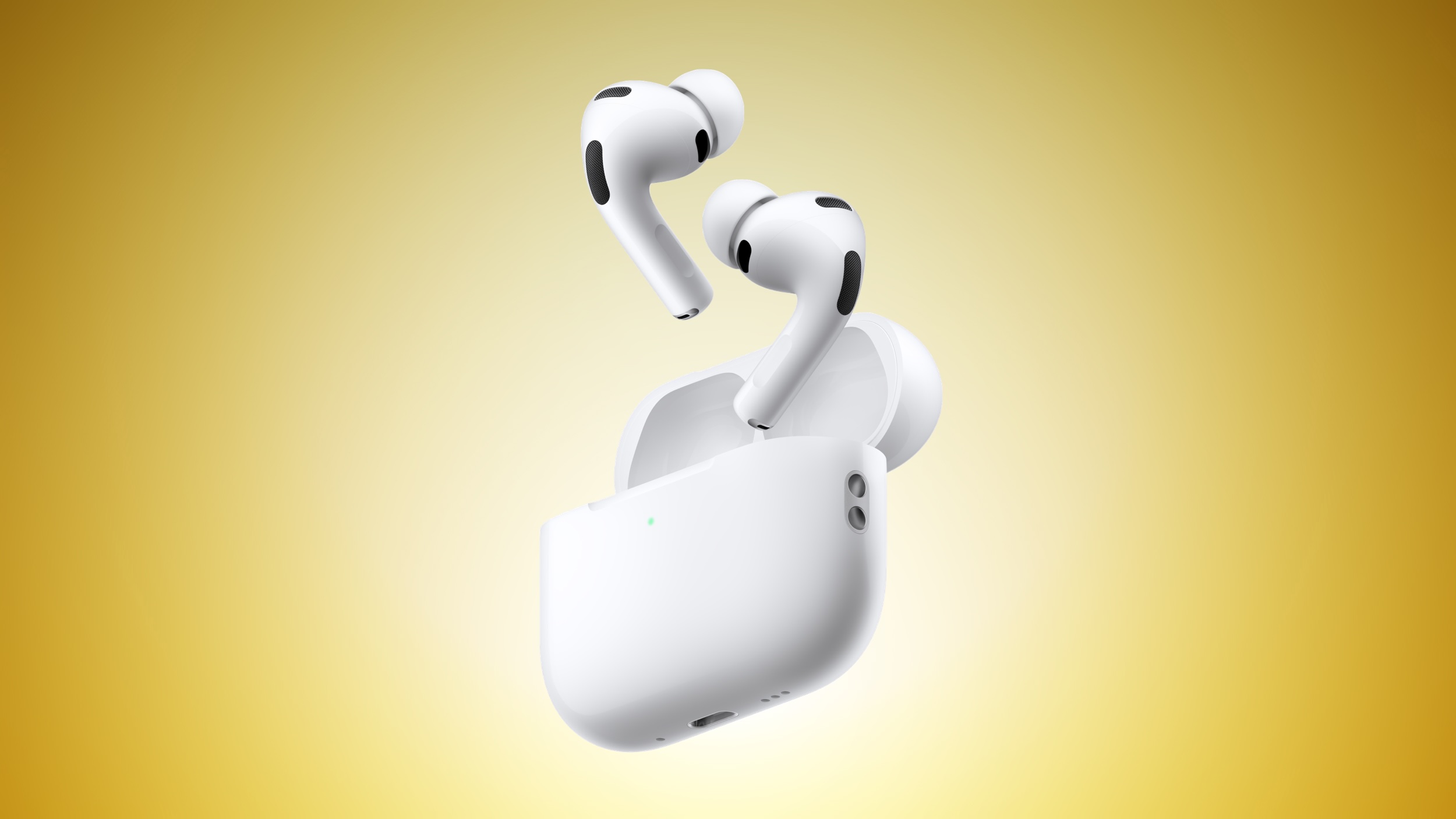
AirPods Pro 3 for $149 is One of The Best Black Friday Deals This Year
0MacRumors

Why Are Metal Logos So Hard to Read? The People Who Drew Them Disagree
0Hacker News New