Database
WiFi-based Global Localization in Large-Scale Environments Leveraging Structural Priors from osmAG
arXiv cs.RO0 views
arXiv:2508.10144v2 Announce Type: replace Abstract: WiFi localization offers a lightweight global prior for robots in GPS-denied environments, but fingerprinting requires dense surveys and generalizes poorly beyond surveyed areas. We model received signal strength indicator (RSSI) measurements using OpenStreetMap Area Graph (osmAG) structural priors. Offline, known anchor access points (APs) support sequential calibration of line-of-sight (LOS) propagation and wall attenuation; unknown AP locations are then estimated by alternating ray-wall intersection checks, signal compensation, and least-squares fitting. The resulting AP map supports online robot position estimation using the same structure-aware model. In experiments in an 11,025~m$^2$ multi-floor environment, our method reduces the mean AP localization error from 5.86~m to 3.79~m. Mean robot localization errors are 3.12~m in fingerprinted areas and 3.83~m in unfingerprinted areas, where four baselines yield 11.00--20.21~m. The WiFi-related map representation achieves approximately 251:1 compression relative to the raw fingerprint database. These results support structural modeling for compact global localization beyond surveyed regions. Code and data: https://github.com/XuMa369/osmag-wifi-localization
Source:https://arxiv.org/abs/2508.10144PreviousLearned Controllers for Agile Quadrotors in Pursuit-Evasion GamesNextAgriChrono: A Longitudinal Dataset and Benchmark for Novel-View Synthesis of Field-Grown Crops
Related posts

Day 26: Numeric Semantics, Multiple Currencies and Units of Measure
0dev.to

GBase Database: Why BLOB and CLOB Must Be Stored in an sbspace
0dev.to

Stop bending your app to fit your CRM
0dev.to
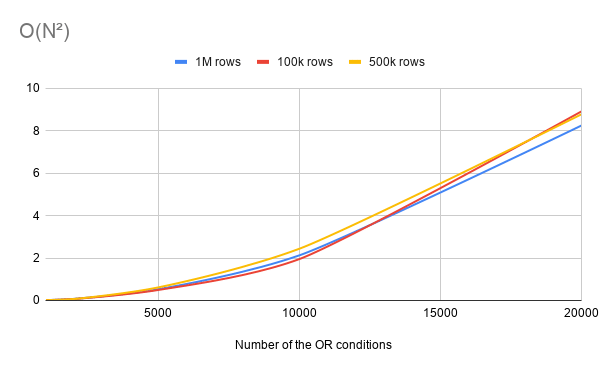
Why MySQL OR is slower than IN
0Percona Blog

What I learned from indexing roughly 500 agent skills
0dev.to Productivity

AI Execution Governance, Part 13: The Key Protects the Call, Not the Money
0dev.to Security