AI & ML
Adversary Brains: Hypothesis-Based Logical Signatures for Threat Actor Detection with LLMs
arXiv cs.CR0 views
arXiv:2610.35624v1 Announce Type: new Abstract: An adversary brain is an LLM-based model of a threat actor's behavior, held as an evolving logical signature: a hypothesis with enough structure that data can test it continuously, without a person re-interpreting it each time. Rather than any single observation, such as an IoC (Indicator of Compromise), it is the arrangement that becomes a detection, or intelligence, mechanism. Where YARA matches a file and Sigma matches a log line, an adversary brain matches the activity pattern of a campaign or threat actor. This is based on an intelligence analysis technique called Analysis of Competing Hypotheses (ACH), which the design lifts from the limitation of a few hypotheses at a time, to thousands, and then also operationalizes it for continuous detection purposes. Language models make the concept, and scale, practical: they turn prose reports into brains, judge matches, and drive the loop that keeps brains current. A partial pattern in a brain can also match a new value, such as a fresh C2 (command and control) domain name, assisting with the discovery of new indicators, and turning unknown unknowns into known unknowns, and potentially into knowns. The author would like to thank Ryan Moon for the collaboration, and Sounil Yu, Chris Inglis, Thomas Roccia, Marius Benthin, Israel Grimberg, Michal Kamensky, Justin Borland, Brandon Levene, John Hultquist, and John Bambenek for their feedback and assistance.
Source:https://arxiv.org/abs/2610.35624PreviousThe Agent in the Middle: How AI-Mediated Access Reshapes Web Vulnerability ExploitationNextA Category-Selective Encryption Framework for Privacy Protection of UAV Images
Related posts

Filings: Oracle is selling $10B in common stock and $10B in bonds, as it rushes to get financing for its data center buildout and chip purchases; ORCL falls 5%+ (Kelly Cloonan/Wall Street Journal)
0Techmeme

Sources detail Anthropic's compute deal spree: 3.5GW+ of expected capacity in 2026, diversifying beyond Nvidia's AI chips to Amazon, Google, and AMD, and more (New York Times)
0Techmeme

A profile of OpenAI VP Charles Porch, an ex-Instagram executive who is rehabilitating AI's image across Hollywood and the media, including via celebrity dinners (Charlotte Klein/New York Magazine)
0Techmeme

Putin orders owners of non-state data centers to reserve 10% of capacity for Russia's IT infrastructure after Ukrainian drone attacks on Russian facilities (Reuters)
0Techmeme

Supermarket Freezers Across Europe Hit By Second Suspected Cyberattack
0Slashdot
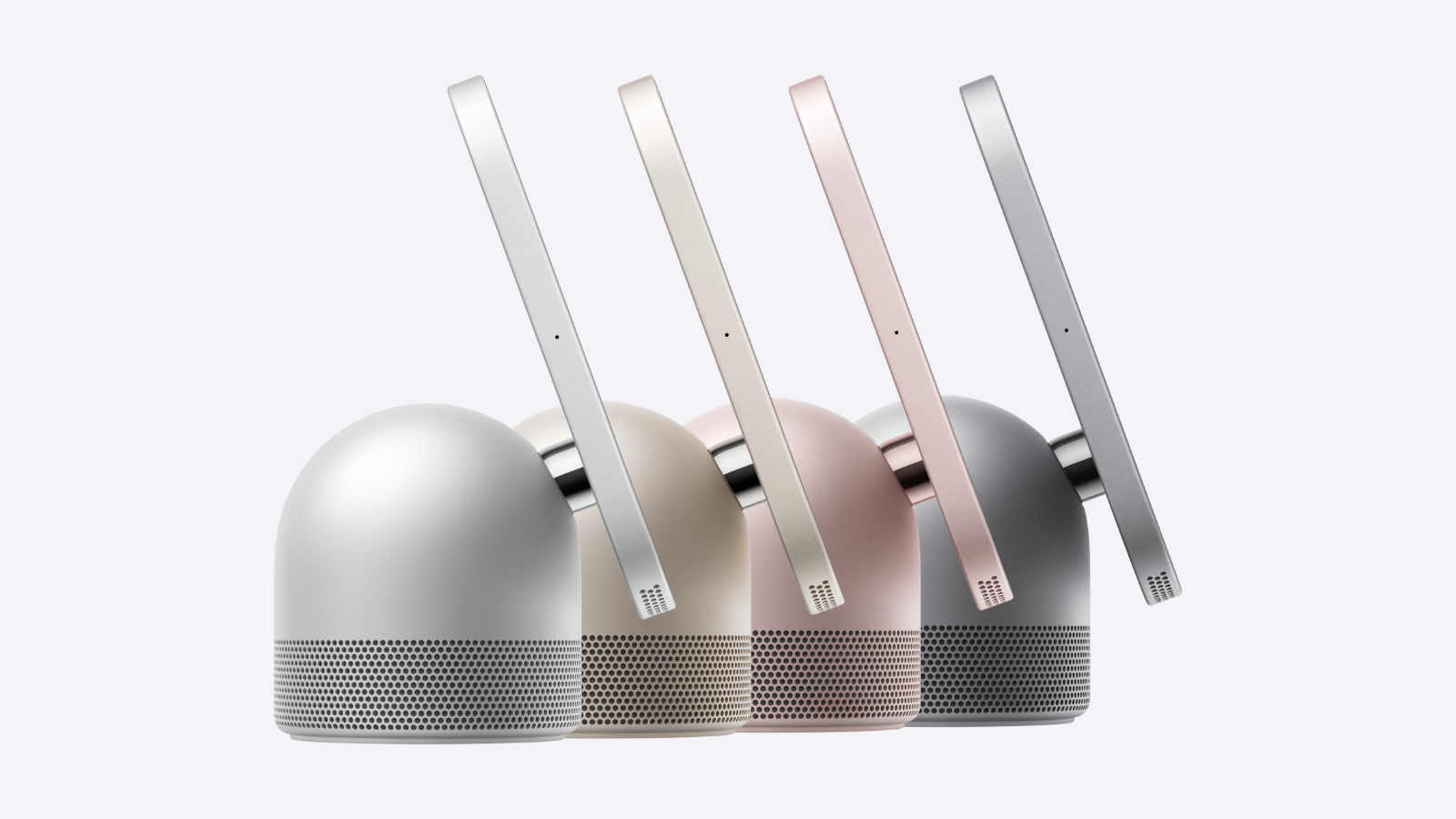
Apple 'HomeView Ultra' With 9-Inch 360º Screen Detailed in New Report
0MacRumors