Last week, Apple finally brought two new display technologies to the MacBook Pro: OLED and touch. For the former, it was just a matter of time; Apple has been using OLED in the iPhone and Apple Watch for years, and also just brought it to the iPad Mini. But touch has never felt like a sure thing. While many of Apple's most successful products have relied on touch: the iPhone, the iPad, the Apple Watch, and some late-stage iPods all featured touchscreens. But until now, it never made its way to Apple's laptops.
Former Apple CEO Steve Jobs' words are infamous: "It's ergonomically terrible," he said of touchscreen laptops in 2010, describing how "your arm wants to fall off" due to fatigue. "Touch surfaces want to be horizontal," he added.
Since then, touchscreens have become ubiquitous on Windows PCs and Chromebooks. Outside of the Touch Bar, which was ultimately reversed because Mac users were not fans, Apple hasn't had a real touchscreen on the Mac.
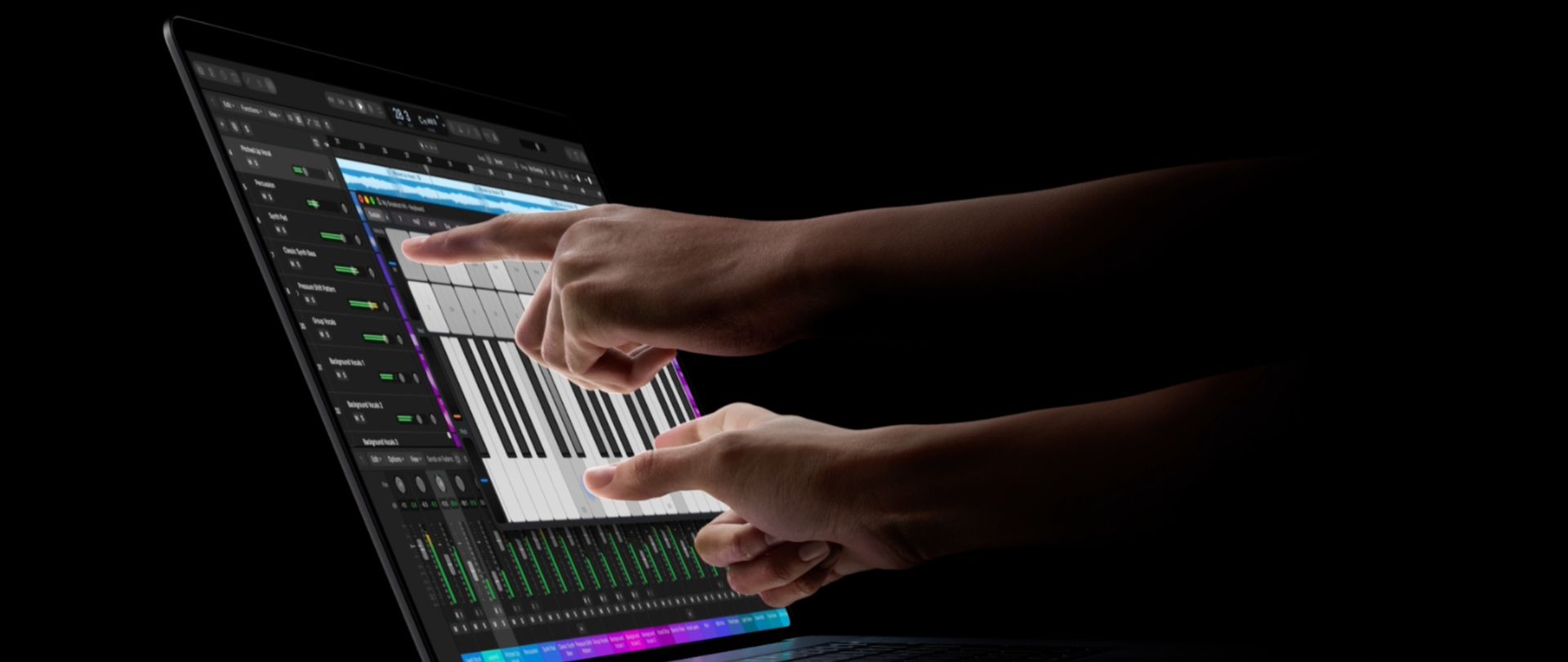
That changed, as the company announced 14-inch and 16-inch MacBook Pros with "PROLED XDR" displays with, yes, touch support. The devices are also lighter than existing MacBook Pros, have updated speaker systems, and, yes, are more expensive.
Apple eschewed touch on its laptops for years. But it seems, however, that at least some Mac owners disagreed.
"Apple tends not to move to a new technology until it can bring to market a differentiated product," Tom Mainelli, group vice president of device and consumer research at IDC, told Tom's Hardware. "Based on all the demos they are showing here in LA, the drive for 'why now' is because they see a desire for touch from creators who use the Mac."
He added: "The more business-focused answer is the company is creating further segmentation in a mature market, offering a new, more premium tier to its pro lineup."
Years and years of touch
There's one last uphill climb that the touchscreen on the new MacBook Pro faces: the price. After all, the touchscreen is debuting on just the new, redesigned 14- and 16-inch models.
In time, touch will likely fall down the stack, to the cheaper MacBook Pro models, the MacBook Air, and possibly even the Neo. You may see a touch iMac at some point. That will take time. After all, the Mac is just getting OLED, too. That means it's unlikely we'll see mass adoption of touch on the Mac anytime soon. It still has to reach the most popular devices, and even then, it has to coexist with the old standbys, keyboard and mouse.
You could trace the touchscreen laptop back to 2008's HP TouchSmart tx2, which had a swiveling screen. The real touch revolution started around two other releases: The Microsoft Surface Laptop RT and the release of Windows 8 in 2012, which had a touch-forward interface and led to a flood of touch laptops.
Windows 10 came and went with more touchscreens, and by the time of Windows 11's release in 2021, touchscreens largely became the default for Windows laptops. On all but the cheapest devices, I tend to assume a Windows notebook has a touchscreen.
On Chromebooks, the 2013 Chromebook Pixel was considered premium because of its touchscreen. In 2019, I reviewed the Samsung Chromebook Pro and Plus, as Google first experimented with Android apps in Chrome. I remember sitting there poking and prodding the device, thinking that "if Android apps are going to be on Chromebooks, every single one needs a touchscreen." I was seven years too early.
When Apple introduced the MacBook Neo earlier this year, it shocked the industry on price and performance. But it did cut some features, like a backlit keyboard. But some companies that made competitors, such as Dell with its XPS 13, made a point to add that not only did it have a backlit keyboard — it had a touchscreen. (HP also kept the touchscreen with its OmniBook 5. Acer did away with it on the Swift Air 14).
In an interview with Steven Levy at Wired, Apple's chief hardware officer Johny Srouji said that "Ten years is a very very long time," and said that a lot has changed, from display technology to custom silicon to software architecture, which now "met our bar." In the same interview, Apple's senior vice president of worldwide marketing, Greg Joswiak, explained that most creatives have an iPhone or iPad and find it natural: "There’s a generation of young creators and young people using our MacBook Pros that expect to touch."
Touch still has yet to prove itself
This might betray my age, but in general, outside of tablets and 2-in-1 laptops, I don't make a ton of use of touchscreens on computers. It hasn't bothered me once in the past five years that my personal MacBook Pro doesn't have a touchscreen. In general, I agree with Jobs; The ergonomics aren't great.
There are other reasons you might skip a touchscreen. For a long time, they were thought of as battery hogs. The digitizer can add extra weight or cost. And operating systems haven't been designed with touch in mind.
Windows 11 was supposed to be more designed for touchscreens, having taken cues from the unreleased Windows 10X, designed for touchscreens and foldables. But Windows is Windows, and the underlying OS still feels best with a keyboard and mouse.
One of the best operating systems I've seen for touch is Googlebook OS, if only because it's so based on Android 17 that some parts make more sense with a finger than a keyboard and mouse.
For macOS 27 Golden Gate, Apple has added system gesture APIs to make apps more likely to support touch. Apple says its own apps are ready, and in its press release, listed a number of other apps like the Microsoft Office suite, Zoom, Notion, Da Vinci Resolve, Adobe Lightroom, Blender, and Algoriddim DJay Paro.
But it also didn't remove the keyboard and touchpad. It's a Mac with a touchscreen, but not touch-first.
For creative professionals who need true accuracy, specialty tablets that work as peripherals will still be king.
When the price is right
There's one last uphill climb that the touchscreen on the new MacBook Pro faces: the price. After all, the touchscreen is debuting on just the new, redesigned 14- and 16-inch models, starting at $2,899 for the 14-incher and $3,399 for the 16-inch models, respectively.
In time, touch will likely fall down the stack to the cheaper Pros, the MacBook Air, and possibly even the Neo. You may see a touch iMac at some point. That will take time. After all, the Mac is just getting OLED, too.
That means it's unlikely we'll see mass adoption of touch on the Mac anytime soon. It still has to reach the most popular devices, and even then, it has to coexist with the old standbys, keyboard and mouse.