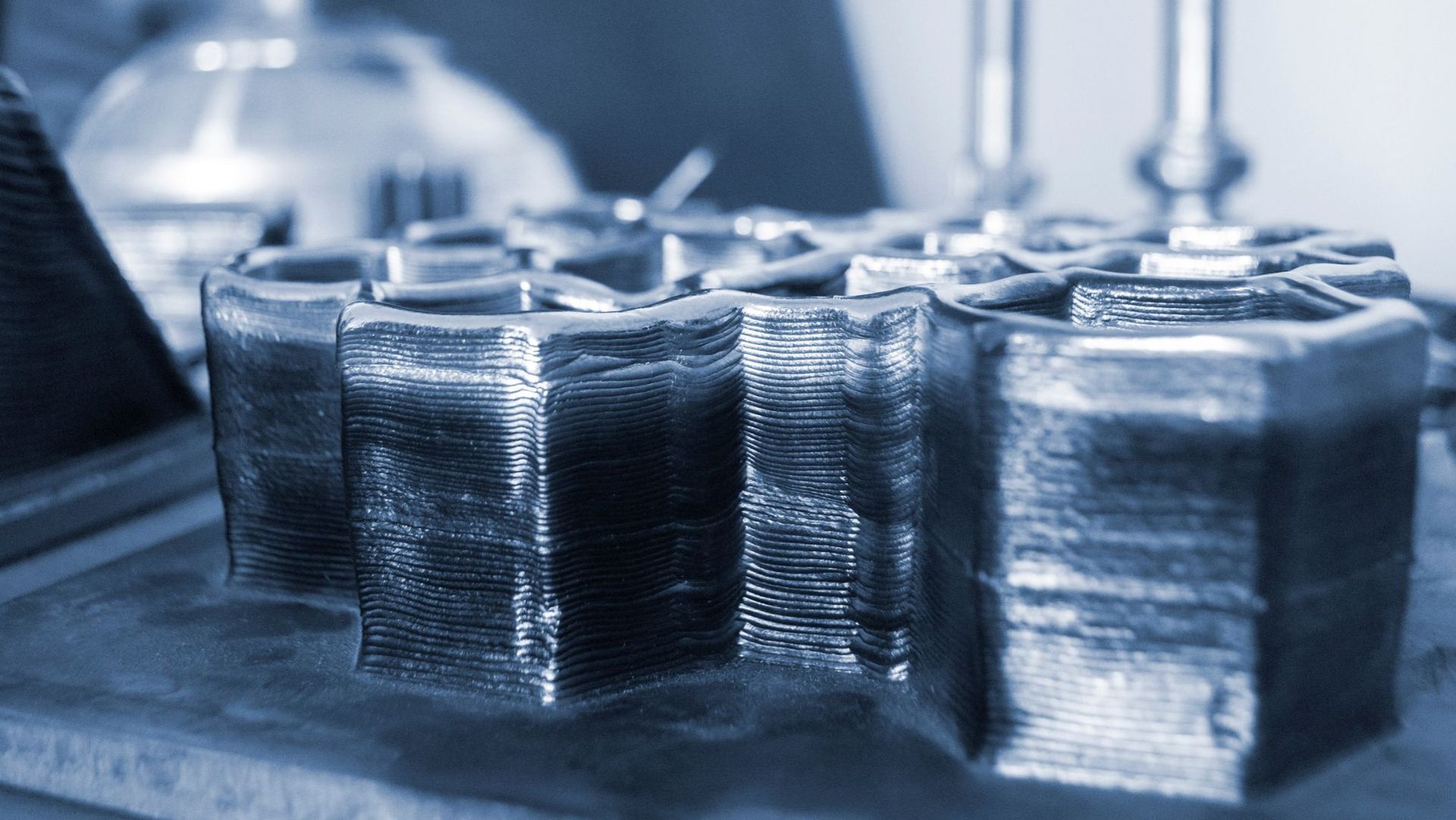
The Shenyang Aircraft Design and Research Institute, the developers of China’s J-35 fighter jet platform, used metal 3D printing to create large primary load-bearing structures for military aircraft applications. Global Times reports the structure is over 16.4 feet (five meters) in length, using segmented printing and fusion techniques.
Shenyang Aircraft Design and Research Institute, a research organization under the Aviation Industry Corporation of China (AVIC), has been working on 3D-printed aircraft components since 2003. The impressively large 3D-printed components are the culmination of decades of research and development of various metal additive manufacturing techniques.
The engineers are no strangers to large 3D-printed components: in 2005, they achieved secondary load-bearing structures; then, in 2012, large primary load-bearing titanium alloy structures, earning additive manufacturing expert Wang Huaming and his team China’s National Technological Invention Award.
Recently, however, the team created a primary load-bearing structure even larger, at over 16.4 feet. The massive component is not printed in one piece, as printing such a large structure faces warping and cracking issues, as stated in Progress and Challenges of Laser Direct Manufacturing of Large Titanium Structural Components, published in the Chinese Journal of Lasers. To avoid these problems, two techniques were employed: Segmented Additive Manufacturing (SAM) and additive fusion joining. It sounds like fancy words to say it was printed separately and welded, and it technically wouldn’t be wrong — but the key distinction is that it is part of the whole workflow; basically, metal 3D printing into the intentionally designed gaps between the components and creating one whole printed piece.
Additive manufacturing eliminates the need for expensive molds and multi-part construction. Titanium alloys are notoriously difficult to machine, cast components are usually weak, and joining parts using bolts and screws is additional labor — metal 3D printing solves all of this by creating a strong printed part in the desired shape in one large piece, minimizing the need for additional fasteners. By eliminating molds, the team can iterate much faster and create more complex structures that would otherwise not be possible with traditional manufacturing techniques.


