AI & ML
From Acceptance and Avoidance to Affective Viscosity: Designing Social Agents Intermediating in Human Relationships
arXiv cs.HC0 views
arXiv:2610.29674v1 Announce Type: cross Abstract: As social agents become embedded in human relationships, they are expected not only to provide smooth assistance but also to handle rejection, discomfort, jealousy, persistence, and other forms of social tension. This paper connects two research directions: acceptance and avoidance in response to an agent's gaze, approach, and contact, and affective viscosity as a model of how negative affect accumulates, persists, is suppressed, and is expressed over time. We argue that avoidance should not be treated merely as a failure of interaction, but as a relational signal that indicates boundaries between humans and agents. Building on this view, affective viscosity provides a design perspective for agents that maintain, suppress, or express negative states depending on social relationships and interaction histories. We discuss several ongoing design cases, including triadic jealousy, discomfort suppression, patience timing, and spatiotemporal stickiness, and consider how these cases lead to broader questions of blame and accountable intervention. Rather than designing agents as simple scapegoats or artificial villains, we ask how agents can intermediate in problematic social situations while making their intervention traceable, limited, contestable, and repairable.
Source:https://arxiv.org/abs/2610.29674PreviousBeyond Small Talk: Modeling Disclosure Trajectories in Human-AI ConversationNextThe Privacy Paradox Is a Misnomer: Data Under Structural Uncertainty
Related posts

Filings: Oracle is selling $10B in common stock and $10B in bonds, as it rushes to get financing for its data center buildout and chip purchases; ORCL falls 5%+ (Kelly Cloonan/Wall Street Journal)
0Techmeme

Sources detail Anthropic's compute deal spree: 3.5GW+ of expected capacity in 2026, diversifying beyond Nvidia's AI chips to Amazon, Google, and AMD, and more (New York Times)
0Techmeme

A profile of OpenAI VP Charles Porch, an ex-Instagram executive who is rehabilitating AI's image across Hollywood and the media, including via celebrity dinners (Charlotte Klein/New York Magazine)
0Techmeme

Putin orders owners of non-state data centers to reserve 10% of capacity for Russia's IT infrastructure after Ukrainian drone attacks on Russian facilities (Reuters)
0Techmeme

Supermarket Freezers Across Europe Hit By Second Suspected Cyberattack
0Slashdot
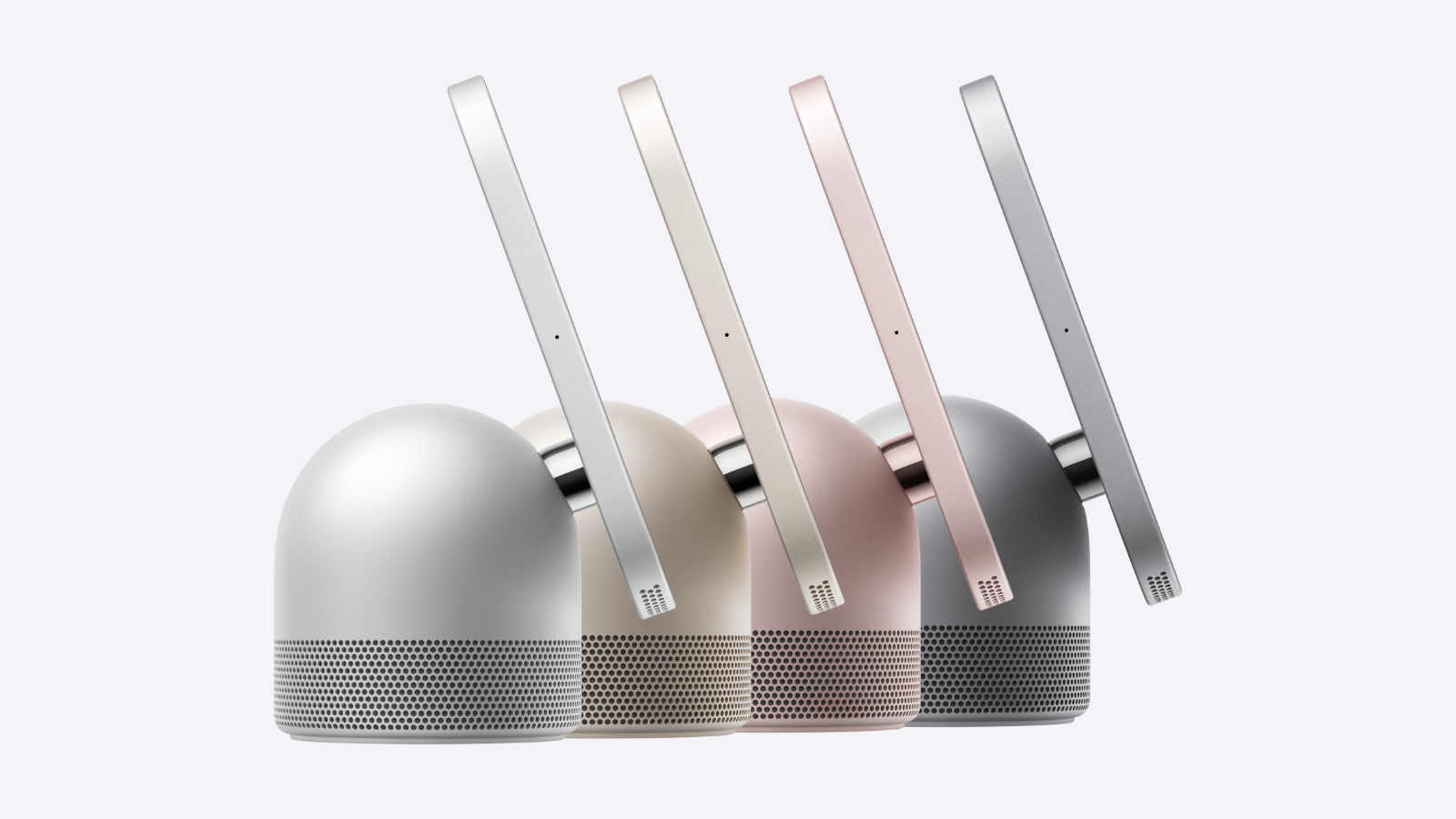
Apple 'HomeView Ultra' With 9-Inch 360º Screen Detailed in New Report
0MacRumors