AI & ML
From Faulty Claims to Incorrect Patches: An Empirical Study of Task-Grounded Reasoning in Coding Agents
arXiv cs.SE0 views
arXiv:2610.32338v1 Announce Type: new Abstract: Large language model (LLM)-based coding agents increasingly resolve real-world software engineering tasks, yet still fail on many of them. Prior trajectory studies characterize these failures through task-agnostic patterns of agent behavior, such as repeated actions. However, an agent may follow a sound workflow yet act on a faulty understanding of the existing code, the task requirements, or a candidate fix. Reasoning models, which power most state-of-the-art coding agents, reveal this understanding in their native chain-of-thought (CoT), whose claims about the task can be checked against the facts. Yet it remains unclear how many such checkable claims the CoT contains, how many are faulty, and whether faulty claims actually cause incorrect patches. We present the first empirical study of such claims, which we term task-grounded reasoning, analyzing 400 trajectories of four open-weight reasoning models on SWE-bench Pro. We extract atomic claims from the CoT with an LLM, assess them against evidence gathered by an LLM agent, and manually trace the defects of incorrect patches back to faulty claims, confirming each link with a claim-corrected replay. Task-grounded reasoning covers only 18.5% of the CoT tokens, yet yields 191 atomic claims per trajectory, at least 9.6% of which are faulty. Faulty claims also occur in 96.7% of the resolved trajectories, so their mere presence is a weak signal of failure. Yet two thirds of the 188 incorrect patches trace back to faulty claims. Correcting such a claim makes the agent fix the linked defect in 89.0% of the cases, and correcting all such claims resolves 11.7% of the failed tasks. Our findings show that the CoT carries task-specific signals for diagnosing and repairing agent failures, but exploiting them requires pinpointing the few faulty claims that actually cause patch defects.
Source:https://arxiv.org/abs/2610.32338PreviousLarge-Scale Study of GitHub Copilot TrajectoriesNextDeepAVR: Deep Analysis via Multi-Agent Collaboration for Automated Vulnerability Repair
Related posts

Show HN: Subvocal – Talk to your computer without making noise
0Hacker News Best
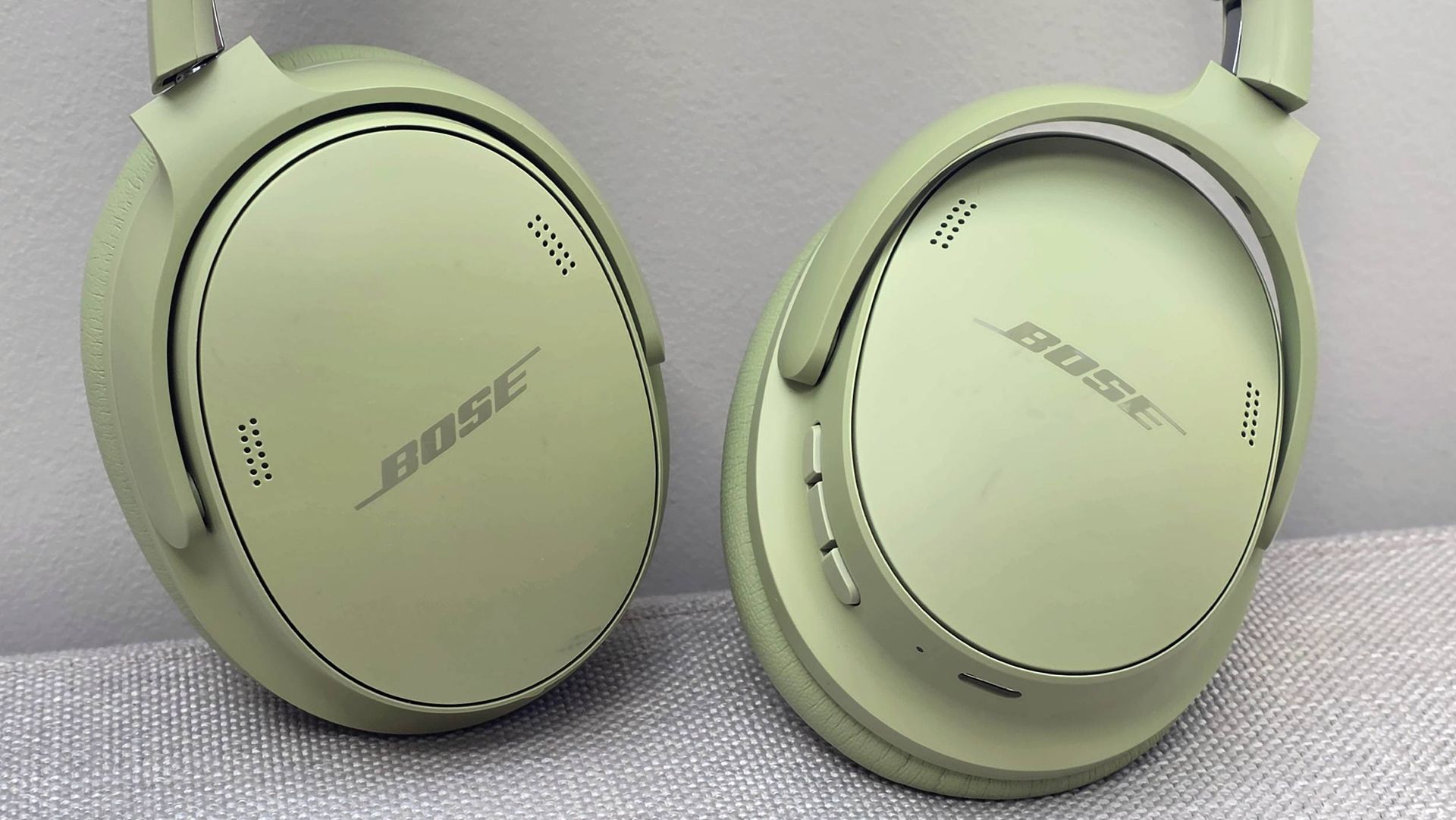
The new and four-star-rated Bose QuietComfort Headphones are already down to a record-low price ahead of Black Friday
0TechRadar

AI may be the future, but customer experience must meet the price-point
0TechRadar

The cassette player renaissance continues with this Bluetooth-toting high-tech Kickstarter model
0TechRadar

FBI confirms it thinks North Korean hackers hit Binance in record cryptocurrency heist
0TechRadar

These 3 hand-cranked radios are affordable and offer extra features
0TechRadar