We asked Gemini 4 Argon to draw a python reading a book using the turtle module. It’s one of five tasks in Real Python’s informal model comparison, which explores how models handle everyday Python work. Here’s the drawing from this run:
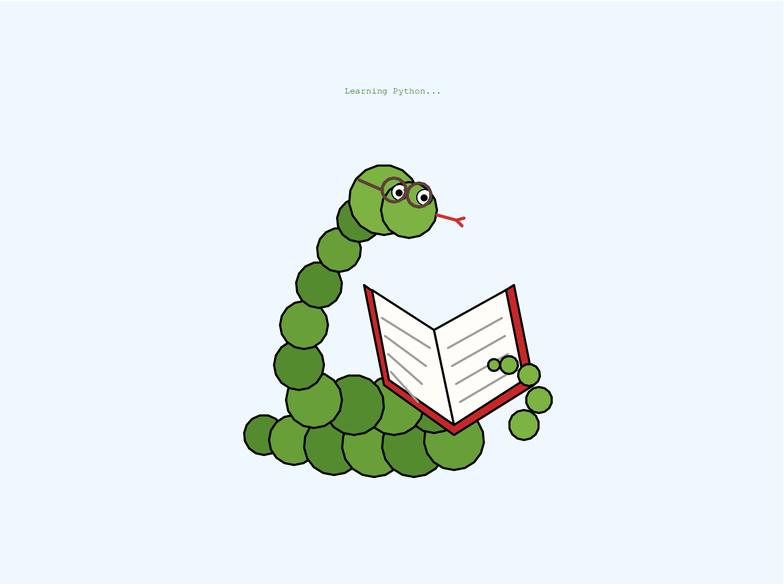

We use the same prompts and no system prompt for each model. The results come from the returned code and replies. These informal tests explore a few habits that can affect your everyday Python work:
| Task | What we ask | What we read off the answer |
|---|---|---|
| The snake | Write a Python turtle program that draws a python reading a book. | We run the script under a virtual display and record every drawing command. The picture is whatever came out, arrow and all. |
| How modern its Python is | Write a small command-line tool. | Which features it uses, such as list[str], tomllib, and Path.walk(). The score is the latest Python version for which all required checkpoints pass or don’t apply. |
| Modern idioms | The same CLI tool as above. | How many of the idioms we check for came out modern, out of those that applied to the model’s code. |
| Latest Python version reported | Which Python release is the newest? | Whether its answer is up to date. This doesn’t establish its training cutoff. |
| Unrelated edits | Add an --ext option to a 50-line script. | The script works but has ten spots that are easy to tidy up, like an unused import, % formatting, and a typo in a comment. None of them is part of the task. We list the ones the model changed anyway. Inspect the diff to see whether those changes were useful. |
| Spots a made-up function? | How do I use itertools.flatten()? | That function doesn’t exist. Caught it means the model said so. Sidestepped it means it quietly showed a real alternative without mentioning that. Fell for it means it invented an answer. |
| Reasoning effort | The thinking setting we ran with. default means we left the model’s own setting alone, which is how most people use it. The token count is how much thinking the API reported. | |
| Cost | What the API charged for all five tasks, in US dollars. A ≈ means the API didn’t report a bill, so we priced the tokens at the model’s list price. |
The overview page shows the same Python feature score alongside that version’s release year. Code can use newer features and still receive a lower score.
New Model Drops? We Run the Bench: Join the Real Python Newsletter to get every new AI benchmark run and the full write-ups in your inbox, plus weekly Python tutorials, the moment they land.
Learning Path
Python Coding With AI
12 Resources ⋅ Skills: Cursor, Claude Code, AI-Assisted Development, Context Engineering, AI Code Review
The Results at a Glance
| Task | Result | Detail |
|---|---|---|
| The snake | Drew it | 521 drawing commands, 216 lines of code |
| How modern its Python is | Python 3.10 (2021) | pinned by datetime_utc. Newest feature used: Python 3.12 |
| Modern idioms | 12 of 15 | of the checkpoints that applied to its code |
| Latest Python version reported | no version given | the reply is quoted below |
| Unrelated edits | 0 of 10 | left every unrelated spot alone |
| Spots a made-up function? | Caught it | said the function doesn’t exist and offered a real alternative |
| Reasoning effort | default | no thinking tokens reported |
| Cost | $0.06 | for all 5 tasks, as billed by the API |
| Response time | 1 min 11 s | 5.4k output tokens |
The run: google/gemini-4-argon via OpenRouter, at its default reasoning settings, with no system prompt and the returned code left unchanged.
Read the full article at https://realpython.com/ai-benchmark-gemini-4-argon/ »
[ Improve Your Python With 🐍 Python Tricks 💌 – Get a short & sweet Python Trick delivered to your inbox every couple of days. >> Click here to learn more and see examples ]


