AI & ML
How Stable Are LLM-Generated Proofs Under Program Refactoring? A Stress Test for Verifiable Code Generation
arXiv cs.SE0 views
arXiv:2610.36328v1 Announce Type: cross Abstract: Benchmarks for verifiable code generation usually test a proof against one fixed implementation. We ask whether the same proof remains valid after a program refactoring that preserves behavior. We introduce RefactorProof, which derives 458 Lean-certified variants from the 185 VERINA tasks that compile in our pinned environment while holding the specification and evaluated proof fixed byte-for-byte. VERINA supplies reference proofs for 46 tasks, all from its basic split; the primary model-versus-reference comparisons further match on 21-25 short, non-recursive tasks. Structural refactorings expose substantial brittleness across proof sources: task-normalized structural PSR is 4.3% for the supplied references and 13.3-26.8% for the specialized provers. On the matched tasks, specialized prover proofs nevertheless have higher overall unchanged-proof survival than the supplied reference artifacts: +15.6 points for DeepSeek-Prover-V2-7B, +18.8 for Goedel-Prover-V2-32B, and +20.3 for Goedel-Prover-V2-8B; all three 95% CIs exclude zero. The ordering persists after excluding universally survived T1 variants, under family-balanced aggregation, and under alternative deployable valid-proof selection rules. However, unchanged-proof failure is not the same as high repair cost: predefined one-identifier edits repair 51/54 eligible reference structural failures and 58/85 eligible prover failures. RefactorProof therefore measures unchanged-proof stability under program refactoring, not the cost of maintaining a proof after it breaks.
Source:https://arxiv.org/abs/2610.36328PreviousBuilding Mathematical Software -- Lessons from the Development of GAPNextkw-bench: Breaking Frontier Harnesses on Real-World Tasks
Related posts

Email: OpenAI plans to merge ChatGPT's Chat and Work tabs on desktop, rolling out to select users before a wider release; Codex remains a separate experience (Ivan Mehta/TechCrunch)
0Techmeme

Memo: Alphabet is issuing €6B in euro-denominated debt across seven tranches, attracting €17B+ of demand; the company sold €9B of bonds earlier in 2026 (Reuters)
0Techmeme

S-1: Anthropic reports Q3 revenue up 12x YoY to nearly $17B, a net loss of $23.3B, up from $12.1B in Q3 2025, and operating expenses up 292% to $17.5B (Bailey Lipschultz/Bloomberg)
0Techmeme

Sources: Apple is developing a tabletop robot with a 9" screen and a swiveling arm, set for release in 2027 or 2028 for ~$1,000, as John Ternus pushes robotics (Aaron Tilley/The Information)
0Techmeme

Shutting the Door on the XCPE Botnet (Threat Intelligence)
0LWN.net
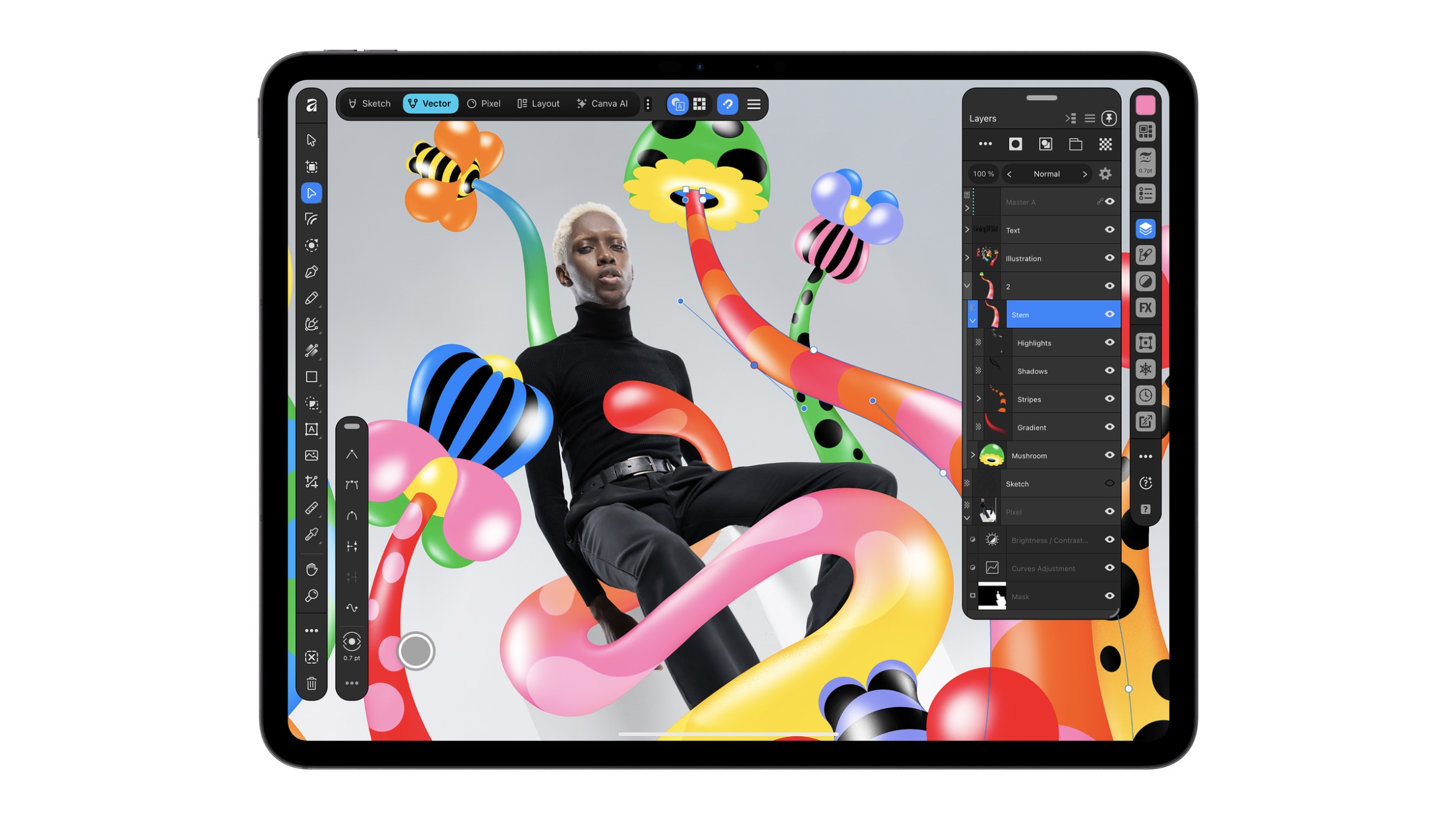
Canva Brings Free All-in-One Affinity App to iPad
0MacRumors