Open Source
huff: A Python package for Market Area Analysis
arXiv cs.SE0 views
arXiv:2602.17640v5 Announce Type: replace-cross Abstract: Market area models, such as the Huff Model and its extensions, are used to estimate regional market shares and customer flows of retail and service locations. In health geography, market area and accessibility models are applied for the analysis of catchment areas and spatial accessibility of healthcare locations. The huff Python package provides a complete workflow for market area and spatial accessibility analysis, including data import, construction of origin-destination interaction matrices, basic model analysis, parameter estimation from empirical data, calculation of distance or travel time matrices, and map visualization. The package is modular and object-oriented. It is intended for researchers in economic geography, regional economics, marketing, geoinformation science, and health geography. The software is openly available via the Python Package Index (PyPI) (https://pypi.org/project/huff/). Its development and version history are managed in a public GitHub Repository (https://github.com/geowieland/huff_official) and archived at Zenodo (https://doi.org/10.5281/zenodo.18639559). A methodological handbook is also available on GitHub Pages (https://geowieland.github.io/huff_official/).
Source:https://arxiv.org/abs/2602.17640PreviousDoc2Spec: Synthesizing Formal Programming Specifications from Natural Language via Grammar InductionNextOOM-RL: Out-of-Money Reinforcement Learning Market-Driven Alignment for LLM-Based Multi-Agent Systems
Related posts

Ask HN: What to do about incorrectly suspended GitHub account, no notice?
0Hacker News Ask
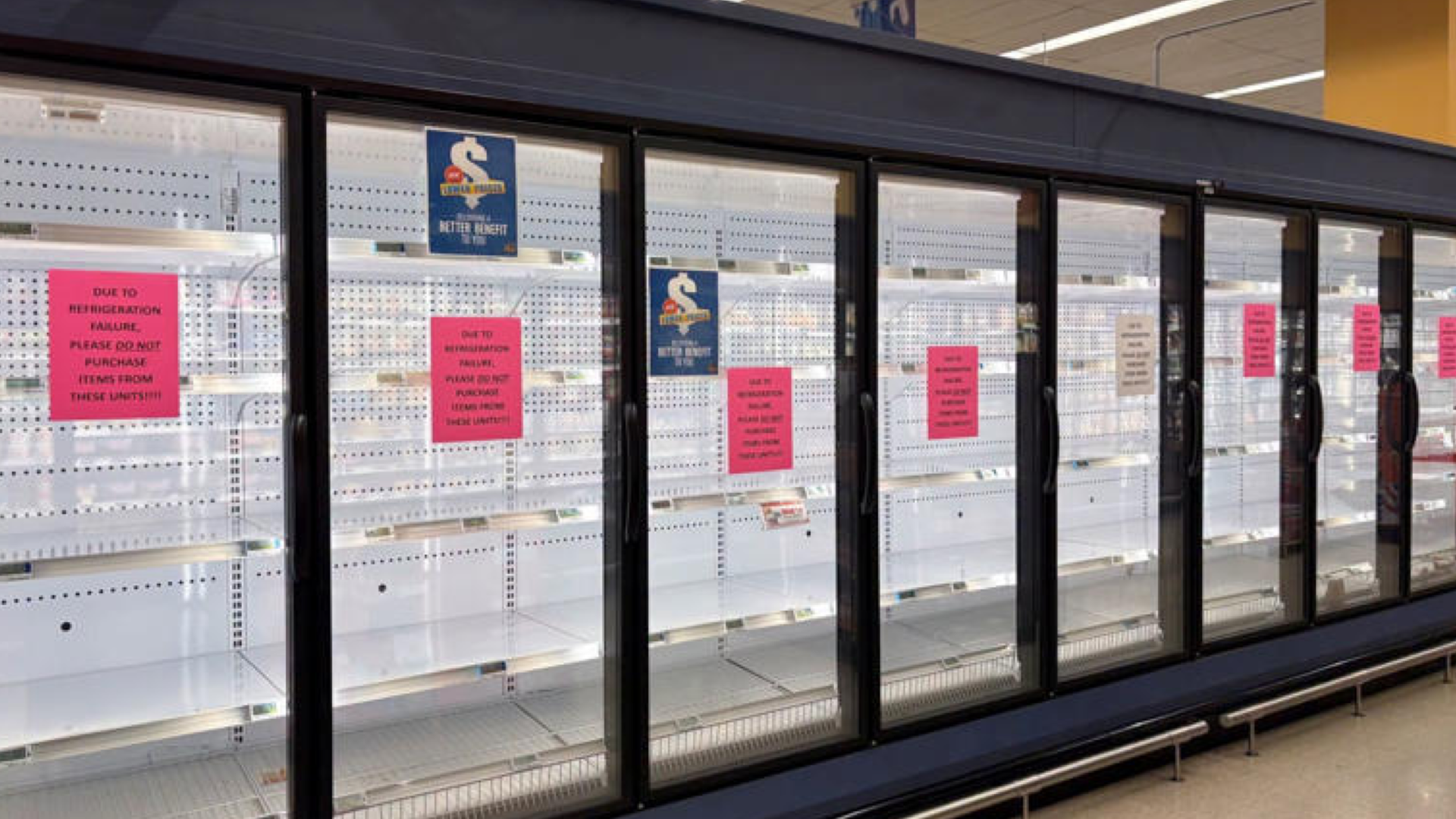
Supermarket freezers across Europe hit by new 'Cold War' cyberattack
0TechRadar

MagSafe Monday: Pelican’s MagSafe Battery Pack is the battery built to go anywhere
09to5Mac

Your Product Is Copyable. Your Distribution Isn't: A 24-Channel Map for Solo Builders
0dev.to

Astra can read and write weights to improve Qwen
0Hacker News

Distillation didn't help our small model until we took the labels away
0dev.to Machine Learning