AI & ML
Interpretable Embeddings of Speech Enhance and Explain Brain Encoding Performance of Audio Models
arXiv cs.SD0 views
arXiv:2507.16080v3 Announce Type: replace-cross Abstract: Speech foundation models (SFMs) are increasingly hailed as powerful computational models of human speech perception. However, since their representations are inherently black-box, it remains unclear what drives their alignment with brain responses. To remedy this, we built linear encoding models from six interpretable feature families: mel-spectrogram, Gabor filter bank features, speech presence, phonetic, syntactic, and semantic features, and contextualized embeddings from three state-of-the-art SFMs (Whisper, HuBERT, WavLM), quantifying electrocorticography (ECoG) response variance shared between feature classes. Variance-partitioning analyses revealed several key insights: First, the SFMs' alignment with the brain can be mostly explained by their ability to learn and encode simple interpretable speech features. Second, SFMs exhibit a systematic trade-off between encoding of brain-relevant low-level and high-level features across layers. Finally, our results show that SFMs learn brain-relevant semantics which cannot be explained by lower-level speech features, with this capacity increasing with model size and context length. Together, our findings suggest a principled approach to build more interpretable, accurate, and efficient encoding models of the brain by augmenting SFM embeddings with interpretable features.
Source:https://arxiv.org/abs/2507.16080PreviousSAGE: Semantic Audio Generative EncoderNextGPU-Accelerated Construction of the Gabriel Graph: Parallelization Strategies and Applications to Large-Margin Classification and Graph-Based Clustering
Related posts

Filings: Oracle is selling $10B in common stock and $10B in bonds, as it rushes to get financing for its data center buildout and chip purchases; ORCL falls 5%+ (Kelly Cloonan/Wall Street Journal)
0Techmeme

Sources detail Anthropic's compute deal spree: 3.5GW+ of expected capacity in 2026, diversifying beyond Nvidia's AI chips to Amazon, Google, and AMD, and more (New York Times)
0Techmeme

A profile of OpenAI VP Charles Porch, an ex-Instagram executive who is rehabilitating AI's image across Hollywood and the media, including via celebrity dinners (Charlotte Klein/New York Magazine)
0Techmeme

Putin orders owners of non-state data centers to reserve 10% of capacity for Russia's IT infrastructure after Ukrainian drone attacks on Russian facilities (Reuters)
0Techmeme

Supermarket Freezers Across Europe Hit By Second Suspected Cyberattack
0Slashdot
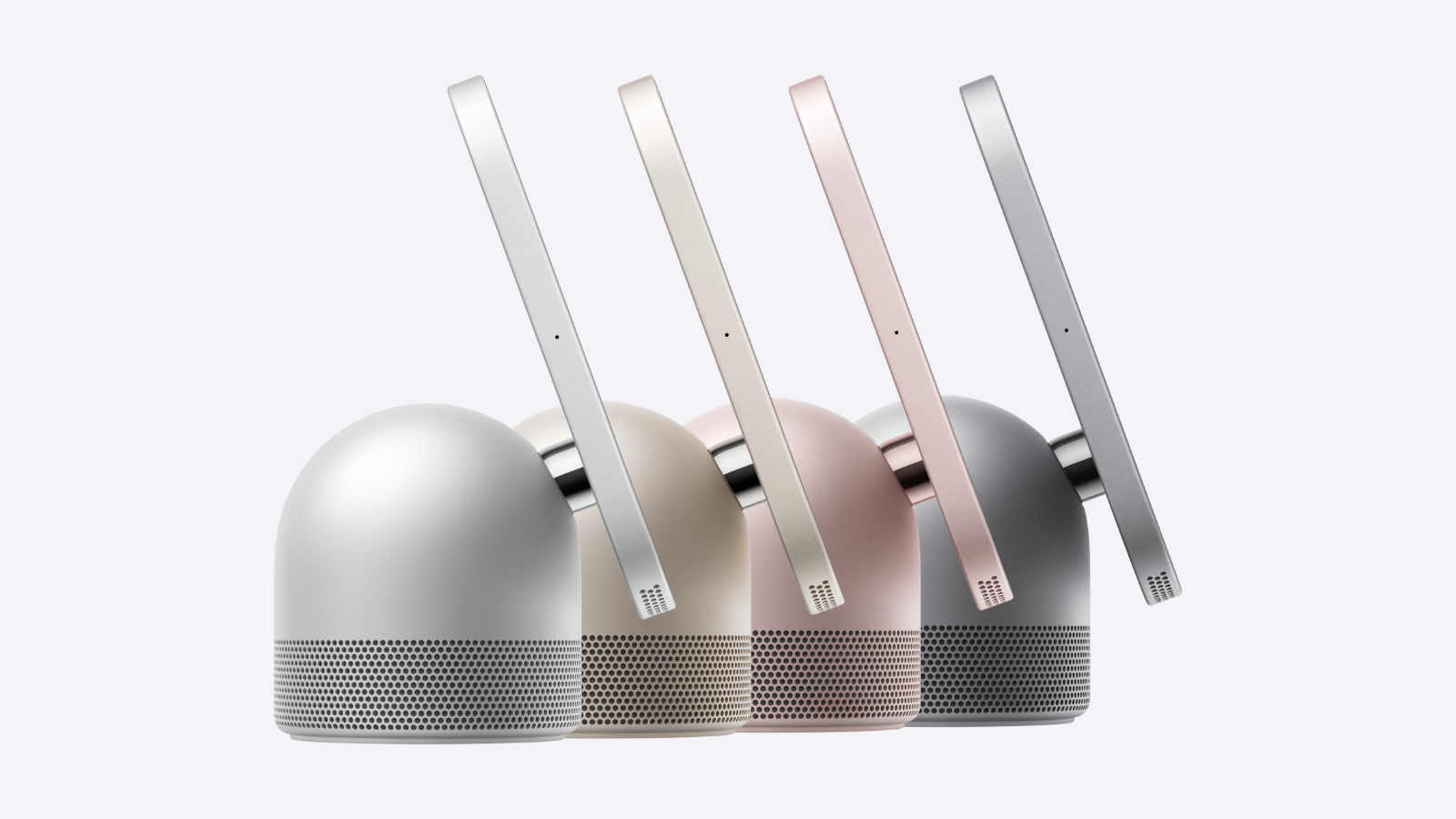
Apple 'HomeView Ultra' With 9-Inch 360º Screen Detailed in New Report
0MacRumors