Backend
MIDA: Multi-Interest Decoding with Adaptive Aggregation for Session-based Recommendation
arXiv cs.IR0 views
arXiv:2610.34192v1 Announce Type: new Abstract: Session-based recommendation (SBR) infers user interest from limited interaction sequences, yet current models show a consistent performance drop when longer histories are available. This degradation is associated with decoder designs that overemphasize recent items while underutilizing distant, yet semantically relevant, interactions, leading to poor modeling of long-range dependencies and multi-interest behaviors. To address this challenge, we introduce MIDA (Multi-Interest Decoding with Adaptive Aggregation for Session-based Recommendation), a lightweight and encoder-agnostic framework that provides a reformulation of the decoding stage. The central design principle is a two-space decoupling: clustering operates on raw item embeddings so that semantic groupings are not distorted by encoder-learned relational biases; encoder outputs are reserved for aggregation, where sequential context remains intact. Concretely, MIDA (i) employs differentiable multi-interest clustering on raw embeddings, preserving semantic structure that encoder representations would otherwise obscure, and (ii) fuses stability and plasticity branches through a gate conditioned on average cluster size, so that the inferred clustering structure directly governs aggregation behavior through a structural coupling across the two stages. Extensive experiments on multiple benchmark datasets demonstrate that MIDA consistently outperforms state-of-the-art methods, with meaningful accuracy improvements while remaining computationally practical.
Source:https://arxiv.org/abs/2610.34192PreviousLoopGR: Parameter-Efficient Scaling for Generative Recommendation via Recurrent DepthNextCross-Lingual Information Retrieval in Tetun for Ad-Hoc Search
Related posts

Node.js SMS Code via API (With Application-Owned Marketplace Templates)
0dev.to

A Redirect Plan for Rebuilding a Criminal Defense Law Firm Site
0dev.to

How an AI agent swarm solved 25 CTF challenges in 24 hours (and what it means for security testing)
0dev.to
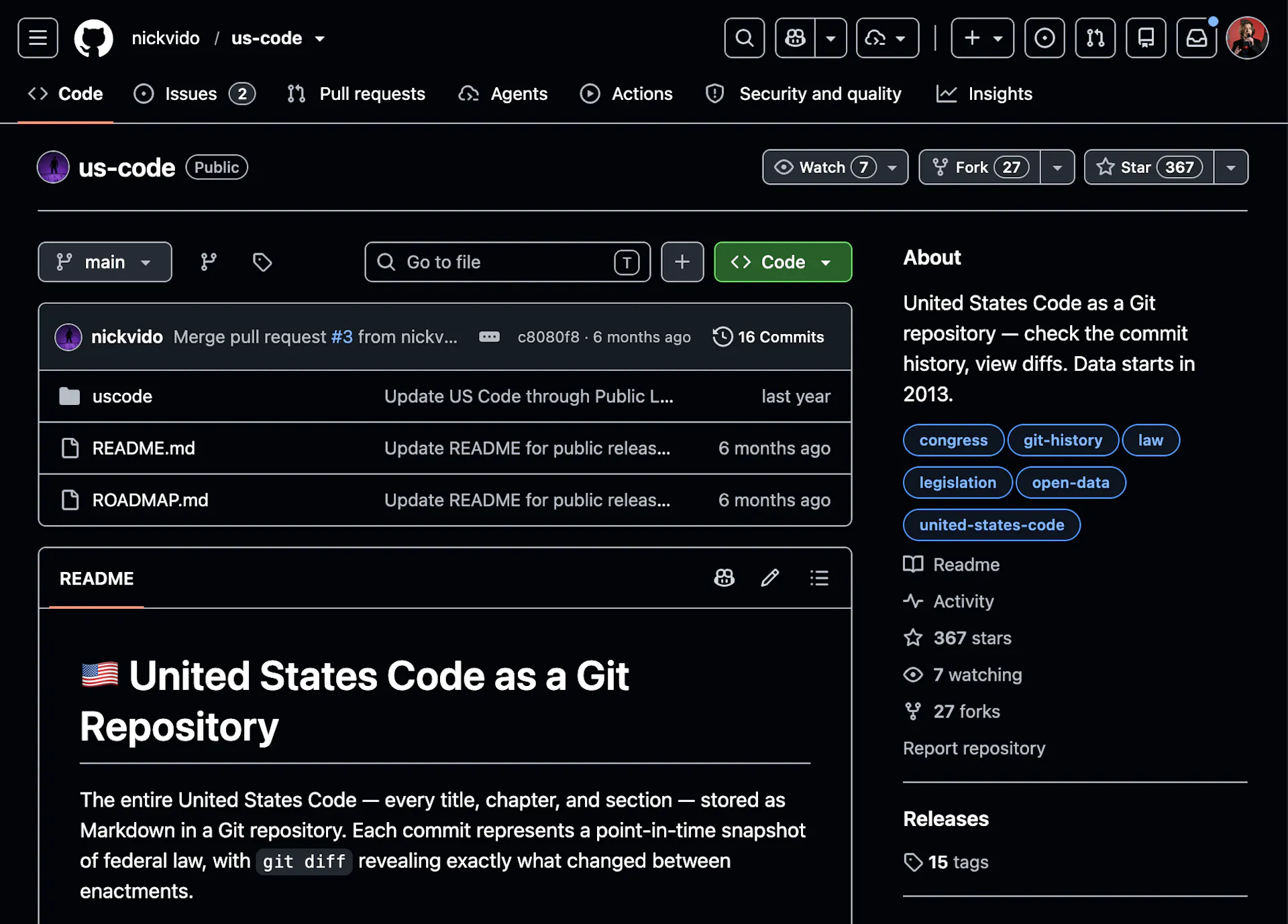
I Put My Country's Entire Legal Code in Git: 300,000+ Documents Since 1810
0HackerNoon

Gemini CLI's mkdir Failed, the Agent Kept Going, and Each move Overwrote the Last File
0dev.to

I built a gesture app for macOS 26. Here's how it works and how launch week went
0dev.to