Backend
MV-IVF: Multi-Vector Retrieval via Multi-Vector Clustering
arXiv cs.IR0 views
arXiv:2611.09040v1 Announce Type: new Abstract: Multi-vector retrieval represents each query and document as a set of embeddings and scores relevance via fine-grained set-to-set interactions such as MaxSim (Chamfer similarity). This expressiveness improves retrieval quality over single-vector representations, but makes search substantially more expensive. Existing systems address this challenge primarily through proxy representations or filter-and-rerank pipelines that reduce candidate generation to single-vector search. We study the complementary direction of building a native IVF-style index directly over multi-vector data. We introduce MV-IVF, an inverted-file index for multi-vector retrieval built on MV-Lloyd, a new Lloyd-style algorithm for clustering point clouds under a Chamfer objective. Our key observation is that once point clouds are assigned to clusters, the center-update step reduces to standard single-vector clustering over the flattened embeddings in each cluster. This enables efficient construction of a hierarchical IVF tree with center point clouds at internal nodes. At query time, MV-IVF performs best-first beam search over the tree to identify promising leaf clusters, then scores the documents in those leaves. We further accelerate search using low-bit quantization, query compression, and cache-efficient batched search. We implement MV-IVF in MVSIC, an optimized C++ library and unified evaluation framework for multi-vector retrieval that includes several major approaches. Across BEIR and LoTTE text retrieval benchmarks, MV-IVF achieves strong latency--recall tradeoffs, the best batched throughput frontiers, and favorable build-time and index-size profiles. At $90\%$ Recall-$10$@$10$, MV-IVF achieves up to $8.03\times$ lower single-query latency and up to $173.5\times$ higher QPS than the baselines, demonstrating that native IVF-style indexing is practical and effective for scalable multi-vector retrieval.
Source:https://arxiv.org/abs/2611.09040PreviousRethinking Latent Reasoning for Generative Recommendation: Beyond Teacher-Generated CoT and Recurrent Hidden-State FeedbackNextPAGSL: Path-Augmenting Graph Structure Learning for explainable scholar recommendation
Related posts
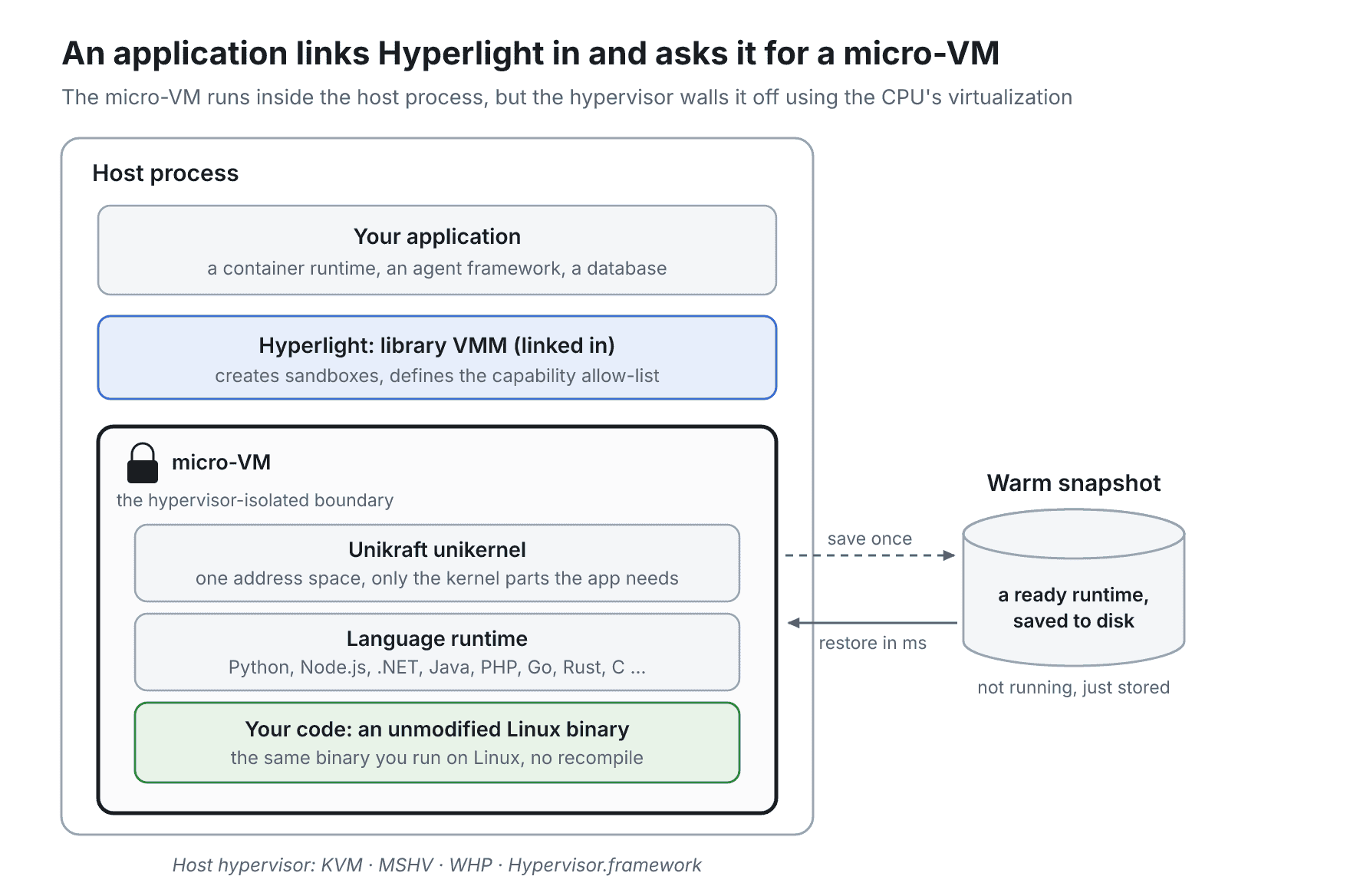
Run Linux applications in hypervisor-isolated micro-VMs with Hyperlight
0CNCF Blog

Phân tích vòng 10 Premier League: Arsenal gia tăng ưu thế điểm số, Bruno Fernandes tỏa sáng trong màn rượt đuổi tỷ số
0dev.to Data

The Quest YouTube Redesign Is a Platform Signal, Not Just a UX Story
0dev.to Design

Should background workers ship with the web app or deploy separately? Let's argue about it
0dev.to Discuss

Building TaskFamily: Designing the After-School Handoff as a System — What Worked, What Broke
0dev.to Discuss

I built a startup directory ranked by verified traffic. Almost nobody connects their analytics.
0dev.to Discuss