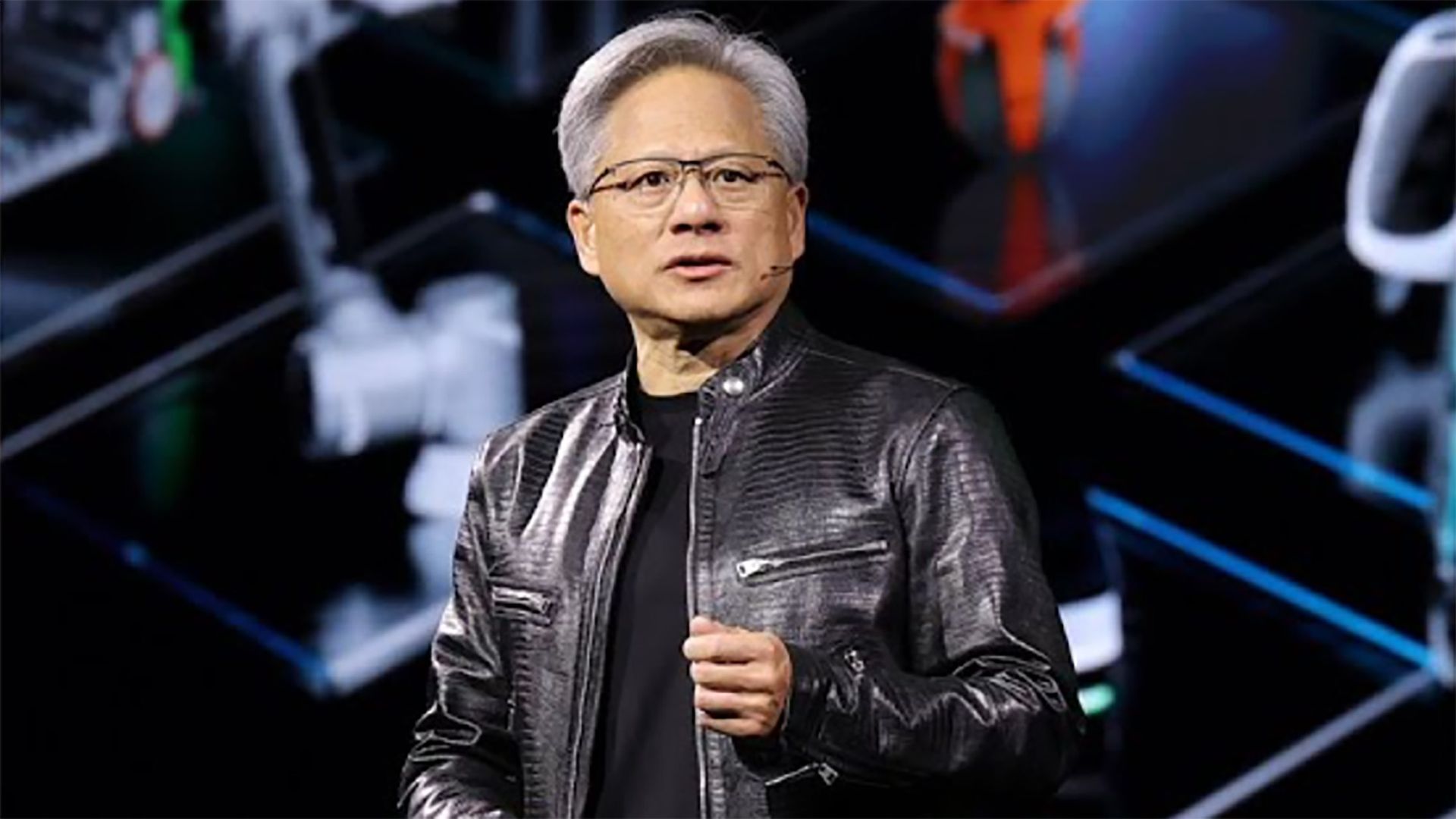
Without a doubt, Nvidia's dominance in the AI hardware market stems not only from the capabilities of its AI accelerators and its vast software ecosystem, but also from its aggressive procurement strategy that effectively denies its rivals access to sufficient production capacity at TSMC and other contractors. The result of his deals is that supply and capacity commitments rose by almost a quarter of a trillion dollars in a single quarter, primarily due to memory procurement, according to SemiAnalysis. However, even Nvidia's former chief executive Jensen Huang had apparently begun to question the sustainability of this strategy before his departure, based on reports from The Wall Street Journal and SemiAnalysis.
Over the past several years, Nvidia has not only captured the vast majority of the AI accelerator market, but has also secured a substantial proportion of the world's production capacity for advanced logic, high-bandwidth memory (HBM), and various other components required to build AI accelerators and systems, which has limited the ability of its competitors to ramp up shipments of their processors. To support the deals, Jensen Huang personally negotiated agreements with major suppliers in Taiwan and South Korea.
The massive scale of Nvidia's procurement commitments also enabled the company to secure more favorable quotes than its rivals. SemiAnalysis estimates that SK hynix could charge Nvidia between $3.00 and $3.30 per gigabit of HBM4 memory in 2027, whereas other first-tier customers, such as AMD, Amazon, Broadcom, and Google, would pay between $3.70 and $4.10 per gigabit. The analysts believe that as part of an informal arrangement between the two companies, Nvidia gives SK Group preferential access to its AI GPUs.
While Nvidia's ability to secure vast production capacities has been instrumental in its success, such commitments also carry considerable risks. At a meeting with senior executives in August, Huang reportedly expressed concerns about the massive volumes of wafers and memory that Nvidia had committed to purchase as major cloud service providers sought to reduce their reliance on the company's hardware in favor of alternative AI accelerator platforms, according to The Wall Street Journal.
In a bid to diversify its customer base and create additional demand for its products, Nvidia offered financial guarantees to emerging cloud service providers and data center developers that otherwise could not afford to procure its hardware at scale. As of the end of its fiscal second quarter, Nvidia had $530 billion in gross off-balance-sheet guarantees, up from $184 billion a quarter earlier, as well as $99 billion worth of equity investments, according to SemiAnalysis. As half a trillion dollars seems gargantuan, here is a breakdown based on a filing with the Securities and Exchange Commission:
- $366 billion in future commitments (of which $279 billion was supply and capacity commitments, mainly for memory and manufacturing);
- $56 billion in additional commitments (including $36 billion in AI cloud agreements/take-or-pay arrangements and $20 billion in data-center leases expected to be reassigned);
- $108.5 billion in maximum gross exposure under guarantees (of which $105 billion was a lease/credit-support guarantee related to SB Energy’s PORTS Technology Campus in Ohio for an OpenAI affiliate, plus $3.5 billion for other AI-cloud partner land/power/shell guarantees).
The scale of such commitments raised concerns even within Nvidia. Then-CFO Colette Kress questioned the criteria used to select recipients of financial support and the potential returns on such arrangements. She also reportedly reduced Nvidia's initial financial commitment to OpenAI's massive data center project in Ohio by half before the two companies signed an agreement on August 17. The facility is expected to house some $300 billion worth of Nvidia processors.
Massive outcome?
At some point, Huang himself began to question the merits of Nvidia's aggressive financing strategy in the event of his departure, essentially calling the current interim CEO, Colette Kress, a mere 'reporting CFO' rather than an executive capable of making strategic decisions. He also expressed concerns about massive wafer and memory procurement commitments as major cloud service providers sought to reduce their reliance on Nvidia’s GPUs.
Despite questionable commitments, without Huang and his personal relationships with executives at major semiconductor companies, Nvidia may find it harder to secure preferential treatment from its suppliers. SemiAnalysis believes that customers other than Nvidia could account for over 70% of TSMC production capacity in 2028. While this could enable Nvidia’s competitors to significantly increase shipments of their AI processors, it could also affect the willingness of Taiwanese and South Korean suppliers to invest aggressively in additional production capacity without the kind of assurances that Huang used to provide.