
Following the public disclosure of PHP2Shell (CVE-2026-109618 and CVE-2026-109619), Imperva Threat Research observed a sharp increase in scanning and exploitation attempts across protected environments. What had been a small number of unsuccessful probes before disclosure quickly grew into widespread automated activity targeting sites across industries and regions.
Before public disclosure, Imperva participated in the coordinated disclosure process with Wiz, OpenAI, and Calif. The researchers shared confidential vulnerability details, enabling us to assess existing protections, develop dedicated detection and mitigation rules, and prepare diagnostic testing against proof-of-concept exploits.
Our involvement began with a confidential briefing from Wiz on October 12. We deployed dedicated monitoring rules that same day and refined them as our analysis progressed. When PHP announced the lifting of the embargo on October 21 at 13:38 UTC, Imperva immediately enabled the full set of PHP2Shell protection rules. Existing protections had already covered the early probing attempts.
Below, we trace the disclosure and attack timeline, then examine the scale, targeting, and client behavior observed during the first 24 hours of activity.
The First 24 Hours in Numbers
During the first 24 hours of observed activity, Imperva recorded:
- 482,342 requests
- 122,311 attack sessions
- 21,998 targeted sites
- 103 targeted countries
The activity was broad but relatively shallow: each attack session contained approximately 3.9 requests, and targeted sites received an average of nearly 22 requests during the observation period. This pattern is consistent with opportunistic spray-and-pray scanning, in which attackers probe many sites for potentially vulnerable deployments.
These figures describe observed traffic and targeting. They do not represent confirmed successful exploitation or compromised sites.
How the Activity Developed
The aggregate figures show the scale of targeting, while the hourly distribution shows how quickly activity intensified. The chart below traces observed request volumes alongside key disclosure and patch-release milestones.
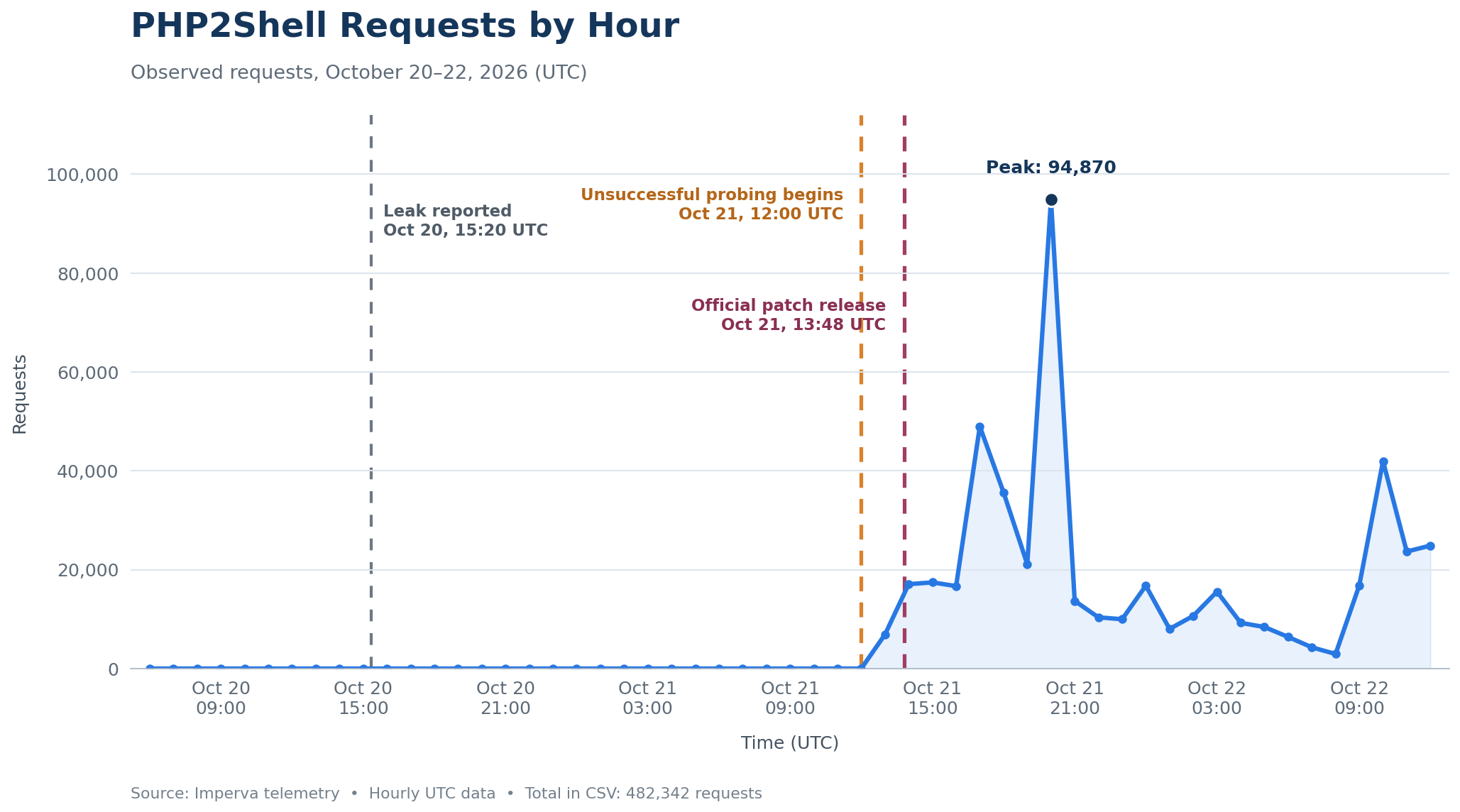
Figure 1: PHP2Shell-associated requests by hour, with disclosure and patch-release milestones. All times are UTC.
Following the initial increase, request volume rose sharply and reached a pronounced peak before declining. Activity continued after the peak, with several smaller spikes during the remaining observation period.
This pattern is consistent with an initial burst of automated scanning and exploitation attempts followed by continued activity at lower volumes. The timing alone does not establish what triggered each spike or whether the requests came from the same tools or actors.
Targeting Concentrated in the United States
Sites in the United States accounted for 64.5% of targeted sites, making it the clear center of the observed activity. Indonesia was the second-most targeted country, followed by Australia, Germany, and the Brazil.
Despite this concentration, associated activity reached sites across 103 countries within 24 hours. The geographic distribution shows how quickly scanning and exploitation attempts spread beyond a single region once vulnerability details became public.
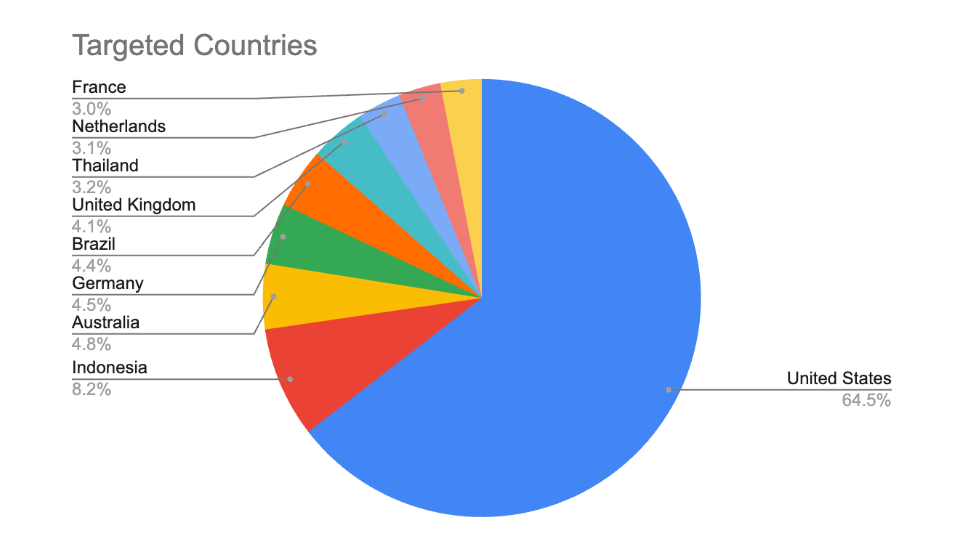
These percentages reflect the distribution of targeted sites within Imperva’s observations. They do not, by themselves, establish a deliberate attacker preference for particular countries.
Education and Financial Services Lead Industry Targeting
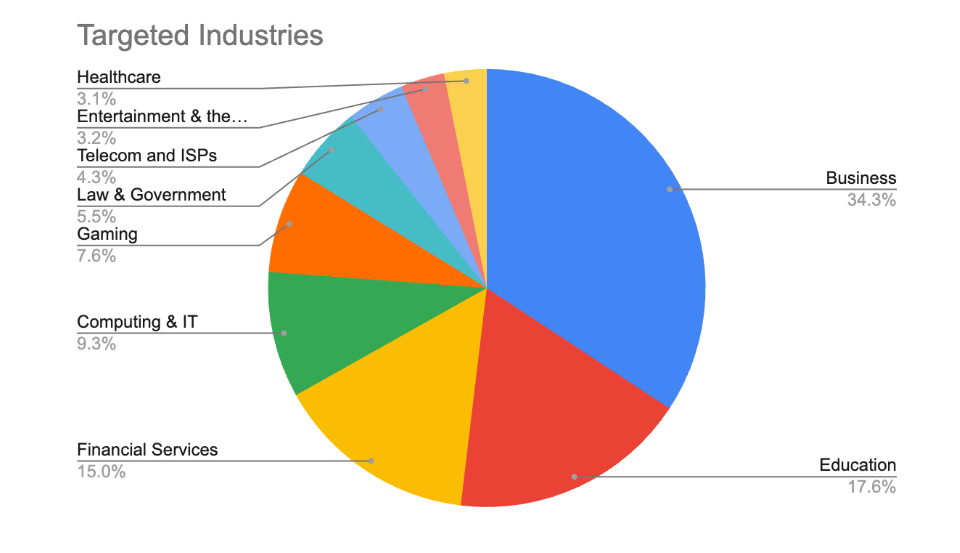
The activity reached organizations across a wide range of industries. Business accounted for the largest share of targeted sites at 34.3%, followed by Education and Financial Services.
The distribution shows that targeting was not limited to sectors traditionally associated with high-value financial or government data. Instead, activity extended across industries likely to operate large or publicly accessible PHP environments.
Automation Drives Early Activity
The clients associated with the traffic further support an assessment of heavily automated activity. Almost half of the observed activity came from clients classified as browser impersonators, which present themselves as legitimate browsers. Most of the remaining activity was split between known bots and clients using the Go HTTP library.
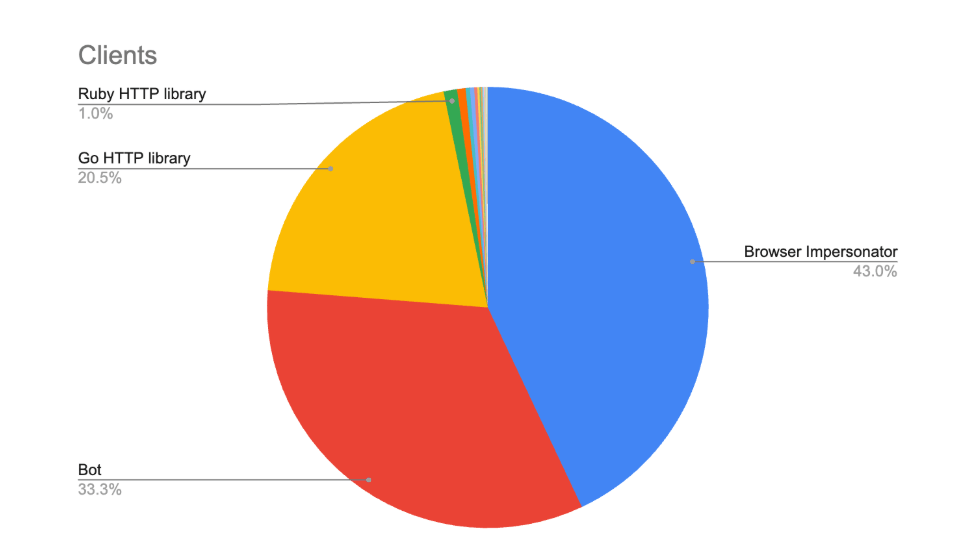
The prominence of browser impersonation suggests that many of the tools generating this traffic were designed to blend into normal web activity. At the same time, the substantial use of Go-based clients is consistent with purpose-built, high-speed tooling used to scan large numbers of targets.
Imperva Customers Remain Protected
As detailed in our initial analysis, Imperva Cloud WAF customers are protected against PHP2Shell out of the box. Elastic WAF customers receive protection following the applicable software update. WAF Gateway customers receive protection following the applicable software and ADC security-content updates.
Existing protections covered the early unsuccessful probing attempts. Imperva also developed and refined dedicated PHP2Shell rules before public disclosure, enabling the full set immediately after the embargo was lifted.
Organizations should apply the relevant PHP security updates to remediate affected deployments. WAF protections provide a compensating control while that remediation takes place.
Imperva Threat Research continues to monitor PHP2Shell activity and refine protections as scanning tools, exploitation techniques, and attacker behavior evolve. These findings capture the first 24 hours of observed activity; the volume and distribution may change as further activity emerges.
The post PHP2Shell: Early Attack Activity Through Imperva’s Lens appeared first on Blog.




