AI & ML
Proof-of-Continuity: A Temporal Model for Authority Propagation in Distributed Systems and AI Agents
arXiv cs.DC0 views
arXiv:2607.08906v2 Announce Type: replace-cross Abstract: Proof-of-Possession authorization models derive authority from the possession of artifacts such as tokens, credentials, or capabilities. This paper argues that possession is insufficient for discrete execution chains, whether they span multiple services or occur as separated steps within the same machine, because it does not guarantee preservation of the causal relationship between the origin of a request and the authority exercised at later steps. We introduce Proof-of-Continuity, a minimal authority-propagation discipline for the Provenance Identity Continuity (PIC) model, in which each execution step must be causally linked to the previous step and may only propagate a non-expansive subset of the authority received from the origin. It introduces Proof of Relationship, a single-hop causal primitive whose transitive composition is Proof-of-Continuity; these complement Proof-of-Possession rather than replace it. Under this model, the confused deputy condition cannot be satisfied as valid model behavior: any privilege exercised at a later step must already be present in the origin authority context. This is directly relevant to distributed systems and AI agents, where executors invoke tools and downstream services while holding multiple authority sources, so that the same authority/causality mismatch recurs across service boundaries. Under Proof-of-Continuity these sources may be carried together but are never merged into a combined authority, since each step is authorized only against the authority context of the lineage that caused it. This paper concerns authorization propagation rather than authentication: identity and authentication mechanisms such as OIDC, verifiable credentials, wallets, and workload identity remain complementary mechanisms for establishing the origin, while Proof-of-Continuity addresses how authority propagates after that origin exists.
Source:https://arxiv.org/abs/2607.08906PreviousS4oP: Operator-level Pruning of Structured State Space Models for Resource-Constrained DevicesNextCapacity Confounds and Coverage Guarantees in Adaptive Sub-model Federated Learning
Related posts

Apple 'HomeView Ultra' With 9-Inch 360º Screen Detailed in New Report
0MacRumors

Apple Isn't Done With 2026: Here's What's Still Coming
0MacRumors
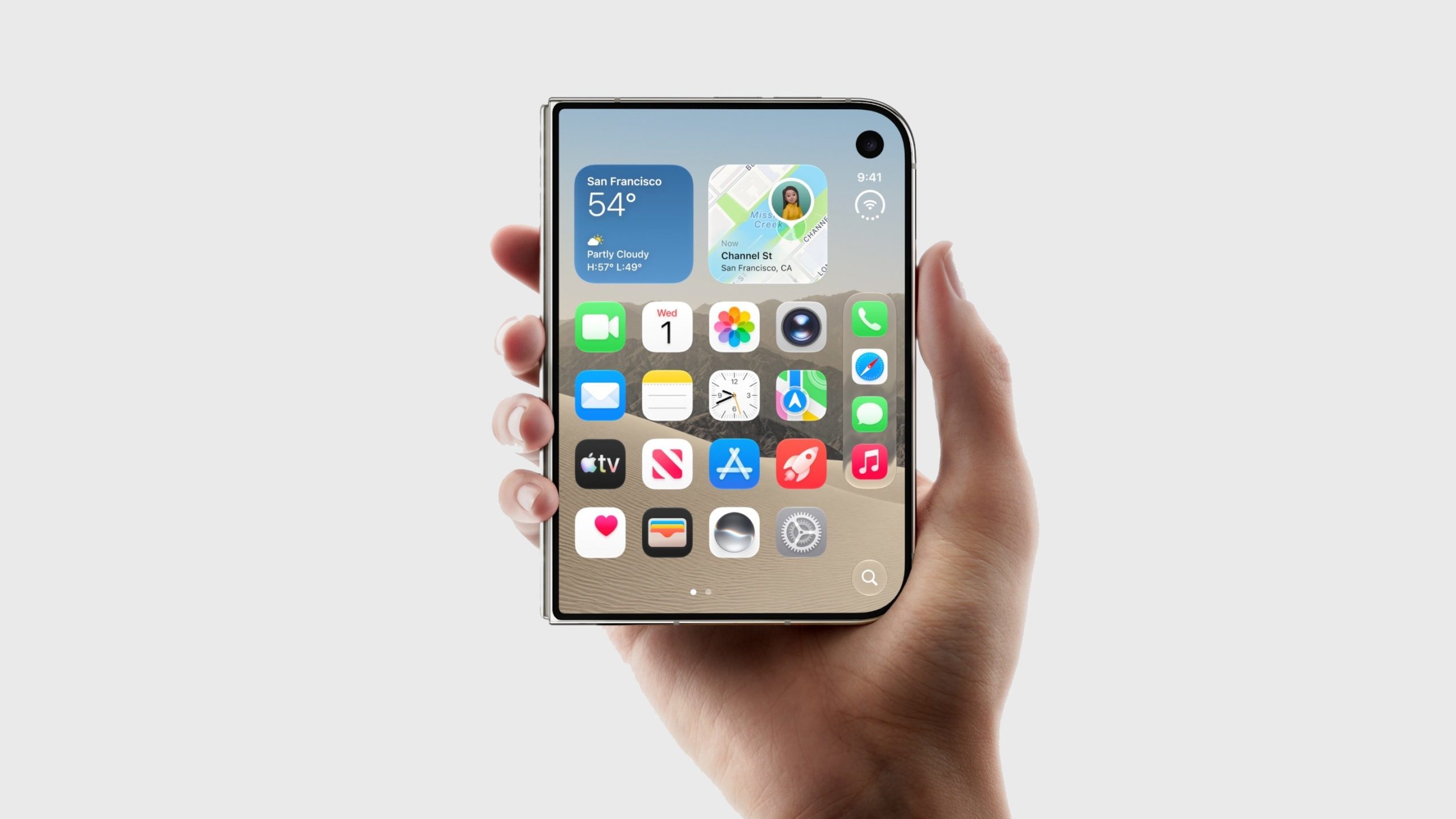
Mark Gurman: Apple Initially Aimed to Release iPhone Duo in November
0MacRumors
iOS 27.2.1 Coming Soon, iOS 27.3 Beta Likely Available Tomorrow
0MacRumors

Grokipedia offers lessons in how AI can help Wikipedia
0Hacker News New

Are Prediction Markets Missing the Voters Who Could Decide the 2026 Midterms?
0Hacker News New