
- Nvidia's RTX 5080 Super was rumored for January 2027, but fresh gossip suggests it's delayed
- Meanwhile, a new report on GPU prices observes a hefty price jump month-on-month
- Even lower-end GPUs are getting more costly at a faster pace, and the high-end is a nightmare — with no RTX 5080 Super riding to the rescue, it seems
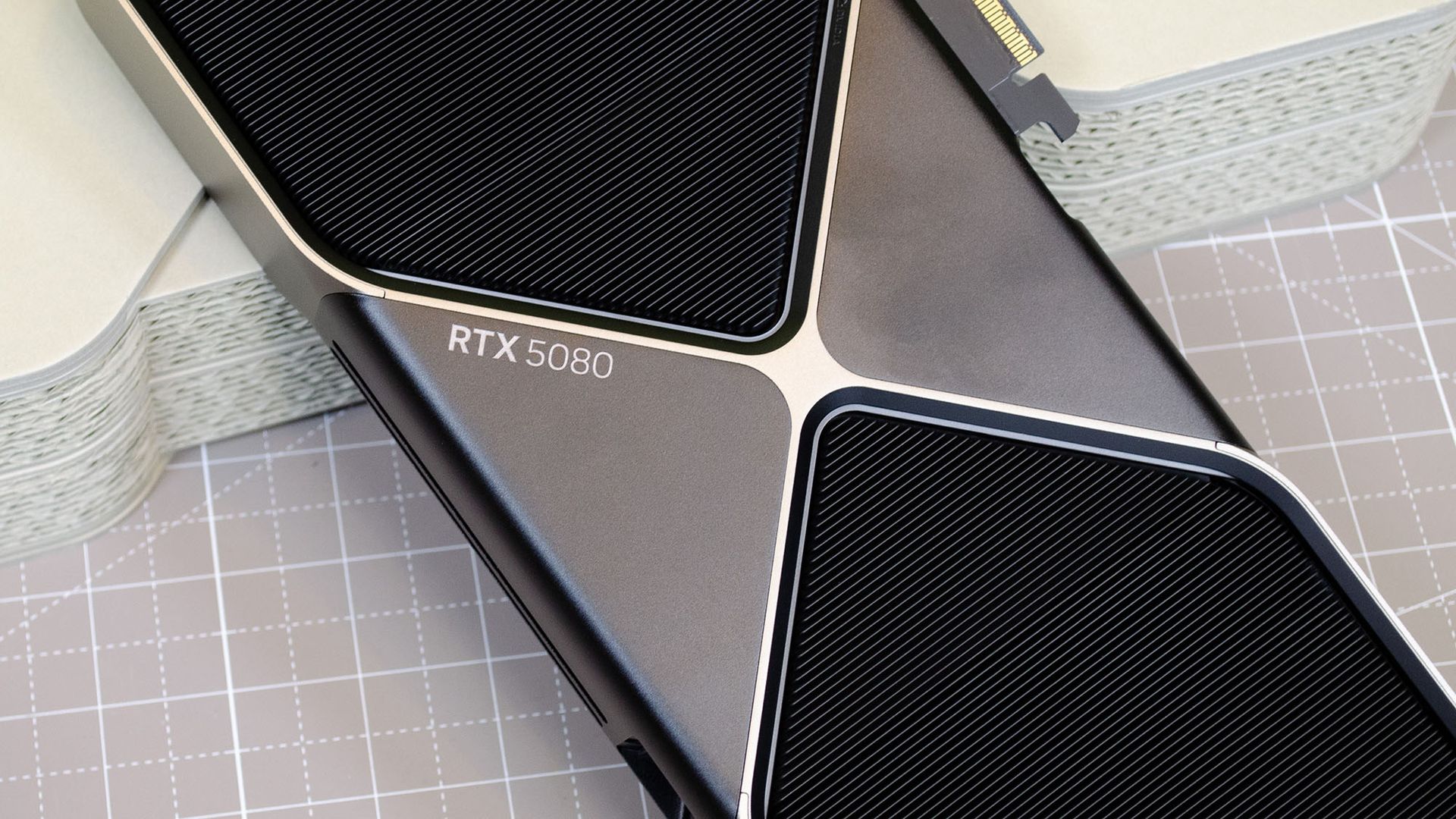
Nvidia's RTX 5080 Super has been strongly rumored of late, but there's now been a cloud of doubt cast over this potential addition to the Blackwell range — just as we've got more evidence of how dire the situation with GPU price hikes has recently become.
VideoCardz spotted the latest from the rumor mill on the RTX 5080 Super, a graphics card that supposedly packs 24GB of video RAM, with Taiwanese tech site Benchlife reporting that Nvidia has delayed the GPU (assuming it's a real product in the first place, of course).
We were told via other rumor peddlers that the 24GB spin on the RTX 5080 is theoretically planned for a January 2027 launch, but Benchlife asserts that the release date "remains unclear" and that Nvidia's board manufacturing partners have yet to receive any design details for the new model.
Given that, according to Benchlife, the "probability is extremely high" that the RTX 5080 Super won't debut in January, considering that board makers were expecting to receive the mentioned design info back in October.
This pushes the rumored GPU back at least a month, very probably more, and the idea of that is hardly surprising given the ongoing RAM crisis, which has been getting worse as 2026 rolls on.
That affects video RAM, and it's the main driver of price spikes with graphics cards, which are starting to get out of hand, as evidenced by TechSpot's latest monthly report highlighting the current cost of GPUs across various regions.
What TechSpot's monitoring data for October 2026 shows is that, as we already knew, high-end pricing has gone even further off the rails. The RTX 5080 is up 39% in the US and 40% in Germany month-on-month, for example, which is ludicrous, frankly — in the US it's now 120% over the MSRP at $2,200. The UK has seen an 8% hike over the past month, with this GPU now 40% over its MSRP in the country. Globally, it's 77% over Nvidia's recommended price on average.
The RTX 5090 is even sillier, as we've seen for some time now, and stands at $9,400 in the US in October, some 370% over the already very expensive MSRP. If you can find the Blackwell flagship at all, that is.
What's really worrying is that TechSpot's data shows lower-tier GPUs are now seeing some major price bumps. Want a humble RTX 5050 in the US? It's gone up 35% over the past month (an increase of over $100), so you'll now pay 68% over the MSRP.
The RTX 5060 is creeping up in price in some European countries, too — it's up 7% in the UK and 13% in Germany. The RTX 5060 Ti 8GB has gone up more, with this GPU getting hiked by 10% in the UK, so it's now £440 compared to £350 back at the start of 2026. The 5060 Ti 8GB went up 6% in the US, too, so it's now 40% over the MSRP in total.
There are hikes across the board for Nvidia, and AMD's Radeon GPUs are getting more expensive at an even faster rate currently. Again, lower-end graphics cards are suffering, such as RX 9060 XT models being up 10% on average month-on-month. The RX 9070 XT is also up 10% in the US since last month, and the increase in Canada has been a sickening 30% — in just one month.
Analysis: a deteriorating situation for GPUs
What does all this tell us? That spiralling graphics card prices are very real, with some huge ongoing hikes for higher-end models — but this isn't just a top-end GPU problem any longer. The real concern is that lower-tier boards are also seeing more price inflation, and I don't think this is a problem that's going away.
Indeed, based on the weighty amount of chatter about the memory crisis continuing to get worse in this final quarter of 2026 and into next year, there's every reason to believe that GPU prices could keep going up. That's why I've been advising PC owners thinking of a GPU upgrade to treat Black Friday as a prime (pun not intended) opportunity to get in and buy a graphics card before any more hikes.
With the RTX 5090 reportedly effectively discontinued — something Nvidia strenuously denies, but the stock situation speaks for itself in countries like the US — and the RTX 5080 pricing itself well out of the range of the vast majority of consumers, those who were anticipating the RTX 5080 Super to ride to the rescue have suffered a fresh blow here, too.
I never thought that was a realistic proposition anyway, mind, but still, it's clear enough that the GPU market is in trouble, and Nvidia seemingly doesn't have any answers in the short term for the upper echelons of its Blackwell range. As noted, though, the real worry is that there's more pain coming to the more affordable end of the graphics card spectrum, where mainstream buyers make their purchases.


