AI & ML
SSA-3DGS: Unsupervised Removal of Screen-Space Artifacts for 3D Gaussian Splatting
arXiv cs.GR0 views
arXiv:2607.05598v3 Announce Type: replace Abstract: Novel View Synthesis (NVS) methods, such as 3D Gaussian Splatting (3DGS), rely on the assumption of clean, multi-view consistent, posed input images. Real-world captures can violate this assumption due to \textbf{screen-space artifacts}---static occlusions fixed to the 2D image plane rather than to the 3D world. Common examples include physical sensor defects, environmental obstructions (such as rain or mud on the lens enclosure), capture obstructions (such as a thumb over the camera sensor or a dashboard visible in dashcam footage), and digital overlays (such as watermarks or UI elements). When present, they are erroneously baked into the 3D geometry as ``floaters'' or near-camera artifacts, degrading the quality of novel-view rendering. In this work, we propose \textit{SSA-3DGS}, an unsupervised framework that jointly optimizes a 3D scene and a learnable 2D overlay to recover a clean 3D scene and the corrupting artifacts. By exploiting geometric consensus across views, our method effectively disentangles static artifacts from the 3D scene geometry without supervision or manual input. Across diverse synthetic corruptions and a self-captured real-world dataset, SSA-3DGS improves reconstruction fidelity by up to ${\sim}8$~dB PSNR over 3DGS trained on the same corrupted inputs, while faithfully preserving the corrupting artifact.
Source:https://arxiv.org/abs/2607.05598PreviousPractical High-Fidelity Novel-View Synthesis of Mounted LepidopteraNextLearning Generalizable Hand-Object Tracking from Synthetic Demonstrations
Related posts

I lied to ChatGPT and Gemini and pretended to be an expert
0TechRadar
The overlooked technology that could determine the ROI of enterprise AI
0TechRadar
Microsoft is giving agents their own Cloud PC capabilities to help you with crucial tasks
0TechRadar
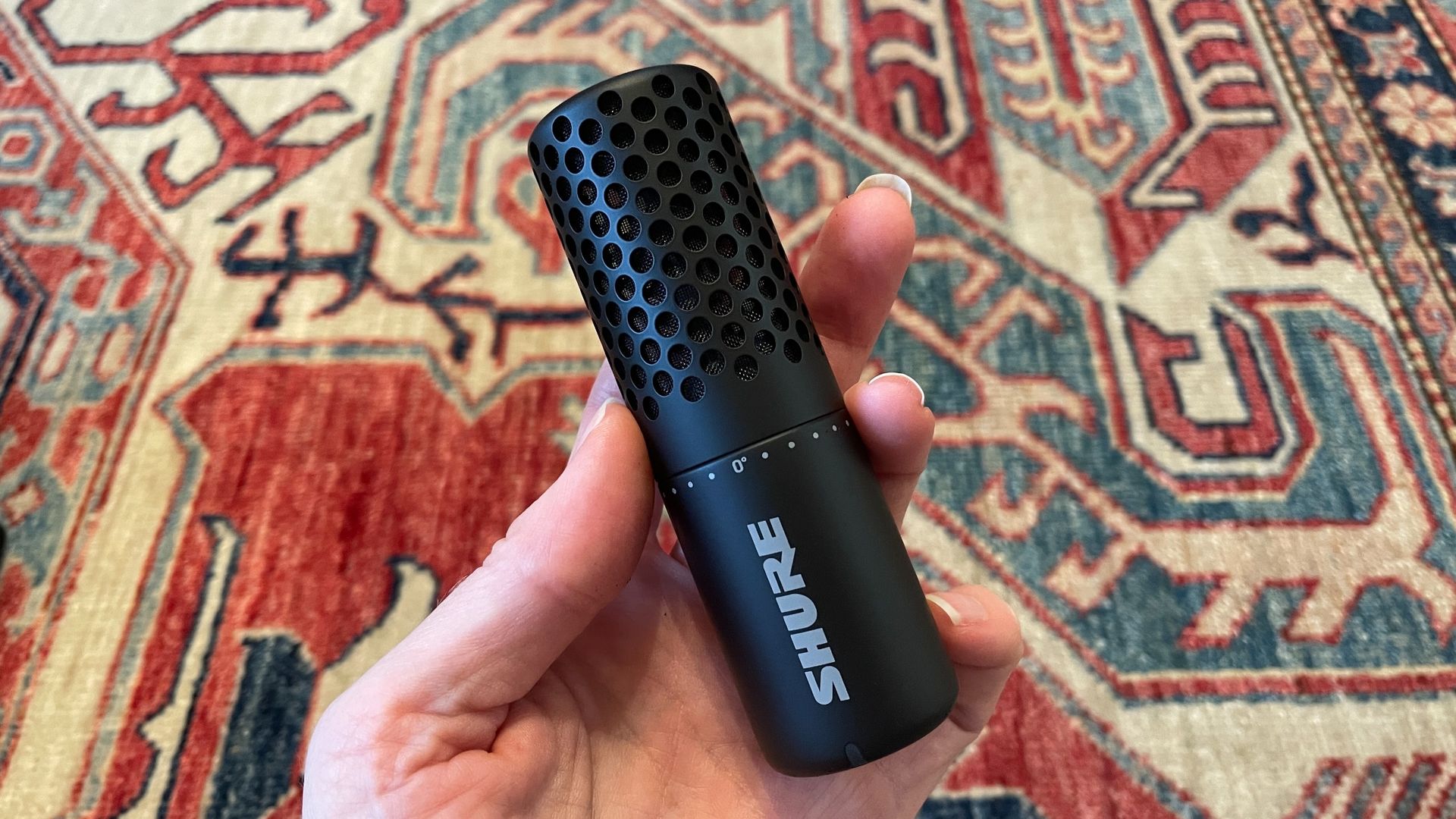
The Shure MV360 is an affordable mic for spatial audio capture
0TechRadar

Chief AI Officers are now a common sight in businesses — but new study finds they often don't really have any power
0TechRadar
Nvidia board faction angling for Jensen Huang return as CEO, report claims
0Tom's Hardware