AI & ML
TAC2: Timestamped Audio Captioning as composable functions
arXiv cs.SD0 views
arXiv:2610.36568v1 Announce Type: new Abstract: Real-world audio applications require precise, queryable representations grounded in physical time. Yet modern Large Audio-Language Models (LALMs) increasingly favor conversational generation, producing free-form descriptions that conflate acoustic perception with higher-level reasoning and lack precise temporal grounding. We introduce TAC2, a foundation model that casts timestamped audio captioning as composable functions to construct granular, speaker-attributed acoustic timelines directly from in-the-wild audio. To avoid prohibitively expensive manual annotation, we programmatically fuse complementary predictions from specialized weak teachers through time-registered IoU matching. We model the resulting multi-granularity schema of timestamped events, speaker turns, and fine-grained speech attributes using an Instruction-Input-Output (IIO) completion format, in which each task is a function of the audio, an instruction, and an optional input. A single call decodes the full description autonomously, while composing calls lets earlier outputs or external priors, such as a reference transcript, condition later ones. We further extend TAC2 with expressive speech attributes to obtain TAC2-S, using parameter-efficient specialists to elicit latent paralinguistic capabilities from the pre-trained backbone and distill them into a unified model. We validate the resulting representation in two complementary settings. Paired with frozen text-only LLMs, it yields strong spoken audio understanding across diverse reasoning backends, demonstrating the utility of decoupling fine-grained acoustic perception from downstream reasoning. Used as paired supervision for text-to-audio generation, it supports semantically and temporally grounded reconstruction, together with explicit zero-shot control over event timing, speaker attributes, and word-level emphasis.
Source:https://arxiv.org/abs/2610.36568PreviousConformalMOS: Uncertainty-Aware MOS Prediction with Conformal Intervals and Ordinal ModelingNextAudioRSI: Recursively Self-Improving Audio Reasoners
Related posts

Email: OpenAI plans to merge ChatGPT's Chat and Work tabs on desktop, rolling out to select users before a wider release; Codex remains a separate experience (Ivan Mehta/TechCrunch)
0Techmeme

Memo: Alphabet is issuing €6B in euro-denominated debt across seven tranches, attracting €17B+ of demand; the company sold €9B of bonds earlier in 2026 (Reuters)
0Techmeme

S-1: Anthropic reports Q3 revenue up 12x YoY to nearly $17B, a net loss of $23.3B, up from $12.1B in Q3 2025, and operating expenses up 292% to $17.5B (Bailey Lipschultz/Bloomberg)
0Techmeme

Sources: Apple is developing a tabletop robot with a 9" screen and a swiveling arm, set for release in 2027 or 2028 for ~$1,000, as John Ternus pushes robotics (Aaron Tilley/The Information)
0Techmeme

Shutting the Door on the XCPE Botnet (Threat Intelligence)
0LWN.net
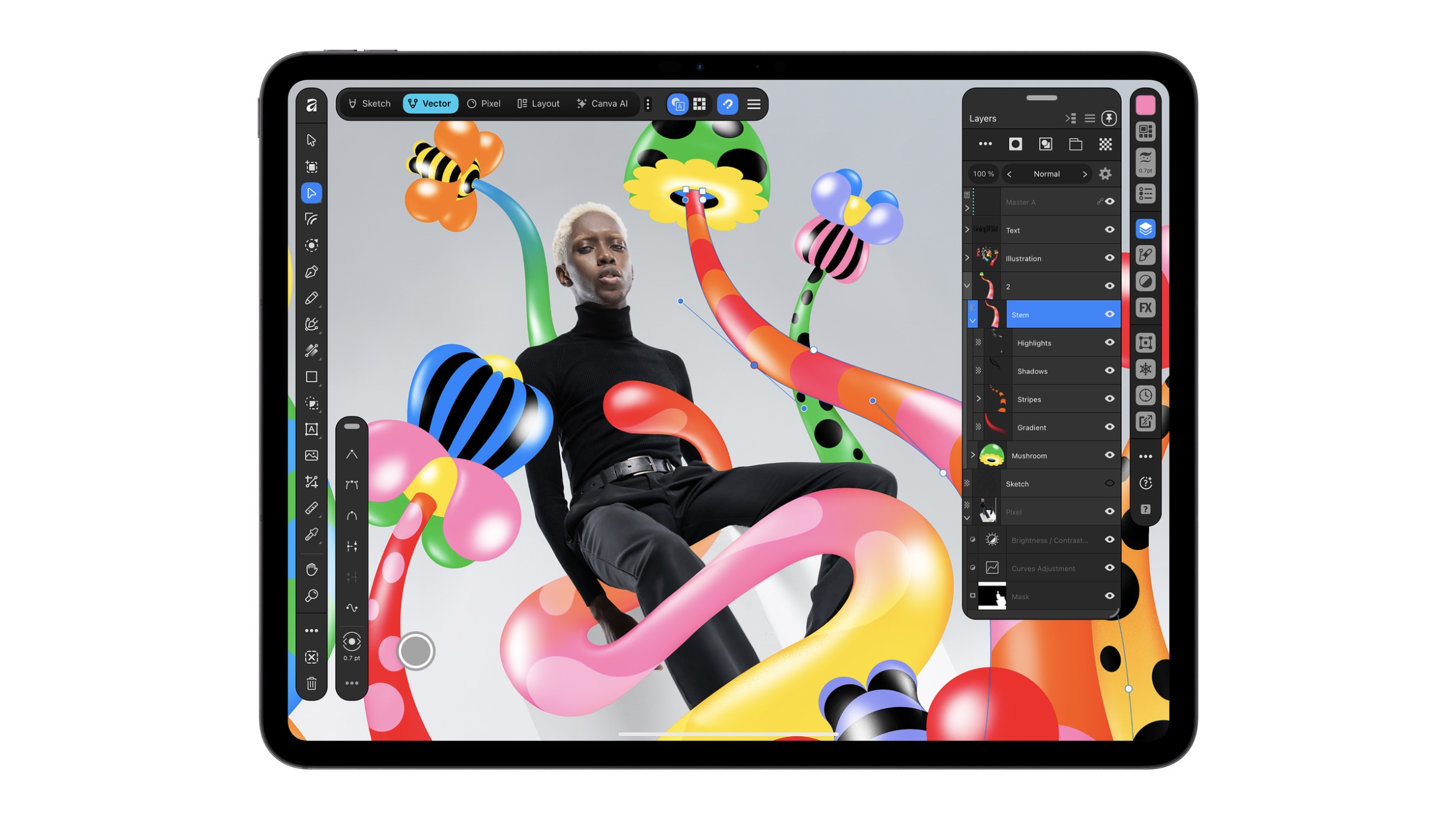
Canva Brings Free All-in-One Affinity App to iPad
0MacRumors