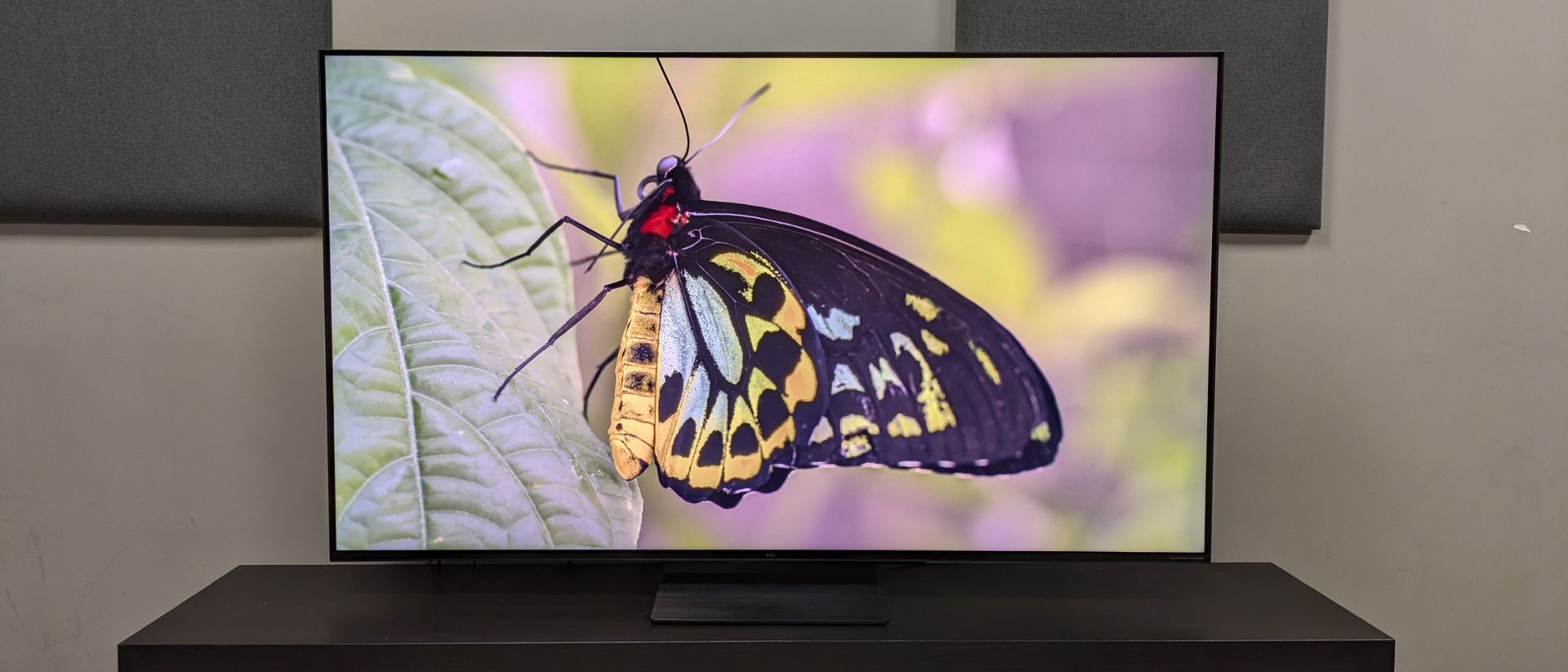
TCL C7L review: Two minute review
The C7L serves as the mid-range model in TCL’s 2026 SQD (Super Quantum Dot) mini-LED lineup. In terms of value, this is one of the best TVs you can get, delivering great performance and features for the price. While it does have its shortcomings, its bang-for-your-buck proposition is unmatched.
It delivers excellent picture quality, with vivid, bright colours that really pop, smooth motion for movies and sports, impressive contrast and backlight control, and even offers deep black tones that can on occasion rival some of the C7L’s best OLED TV rivals. Viewing angles are its main weakness, with some obvious blooming when viewed off-center, and it can overexert its brightness, but overall the C7L’s picture is great for the price.
Built-in sound quality is a mixed bag. While the C7L has surprisingly good width, along with some nice detail, clear speech and good front-end power, it really is lacking in the bass department, and at higher volumes the sound can become a tad harsh. While the C7L’s speakers are fine for casual viewing, fans of movies, and shows with a more cinematic feel, will want to invest in one of the best soundbars.
The C7L can easily compete with the best gaming TVs, and offers a lot for gamers on a tighter budget. Its full suite of features — 4K 144Hz, FreeSync Premium Pro, ALLM and Dolby Vision gaming — low 9.8ms input lag time and great picture quality make it a fantastic-value gaming TV.
Price is where the C7L excels. The 55-inch model I tested launched for £1,099 in June 2026, and since then I’ve seen it drop to £849 in places — and these prices will continue to drop. This makes it cheaper than rival OLEDs, such as the LG B6 and Samsung S85H, and RGB TVs such as the Hisense UR8. In terms of value for money, there aren’t many better TVs available.
TCL C7L review: Price & release date
- Release date: June 2026
- 55-inch: £1,099
- 65-inch: £1,299
- 75-inch: £1,699
- 85-inch: £2,199
- 98-inch: £2,999
The TCL C7L is the brand’s mid-range SQD (Super Quantum Dot) mini-LED for 2026, sitting below the TCL C8L and flagship TCL X11L. It also sits below TCL’s RGB lineup, which comprises the TCL RM7L and flagship RM8L. The 55-inch model I tested launched in June 2026, and was priced at £1,099 at launch.
Since its release, prices have dropped across the board, with the 55-inch model dropping as low as £849, making it cheaper than most RGB TVs and pretty much every 2026 OLED, with its nearest rivals being the LG B6 and Samsung S85H (both of which are priced at £1,199 for the 55-inch model at the time of writing).
TCL C7L review: Specs
Screen type: | SQD mini-LED |
Refresh rate: | 144Hz (up to 288Hz) |
HDR support: | Dolby Vision, HDR10+, HDR10, HLG |
Audio support: | Dolby Atmos, DTS: Virtual X |
Smart TV: | Google TV |
HDMI: | 4 (2 x HDMI 2.1) |
TCL C7L review: Benchmark results
Brightness measurements
Taken using a colorimeter and test pattern generator. Click the test name for measurements and select the chosen test from the dropdown menu.
| Product | HDR Filmmaker Mode (10% window) (nits) | HDR Filmmaker Mode (Fullscreen) (nits) |
|---|---|---|
| TCL C7L | 2083 | 692 |
| LG B6 | 835 | 150 |
| Samsung QN80H | 1149 | 603 |

TCL C7L review: Features
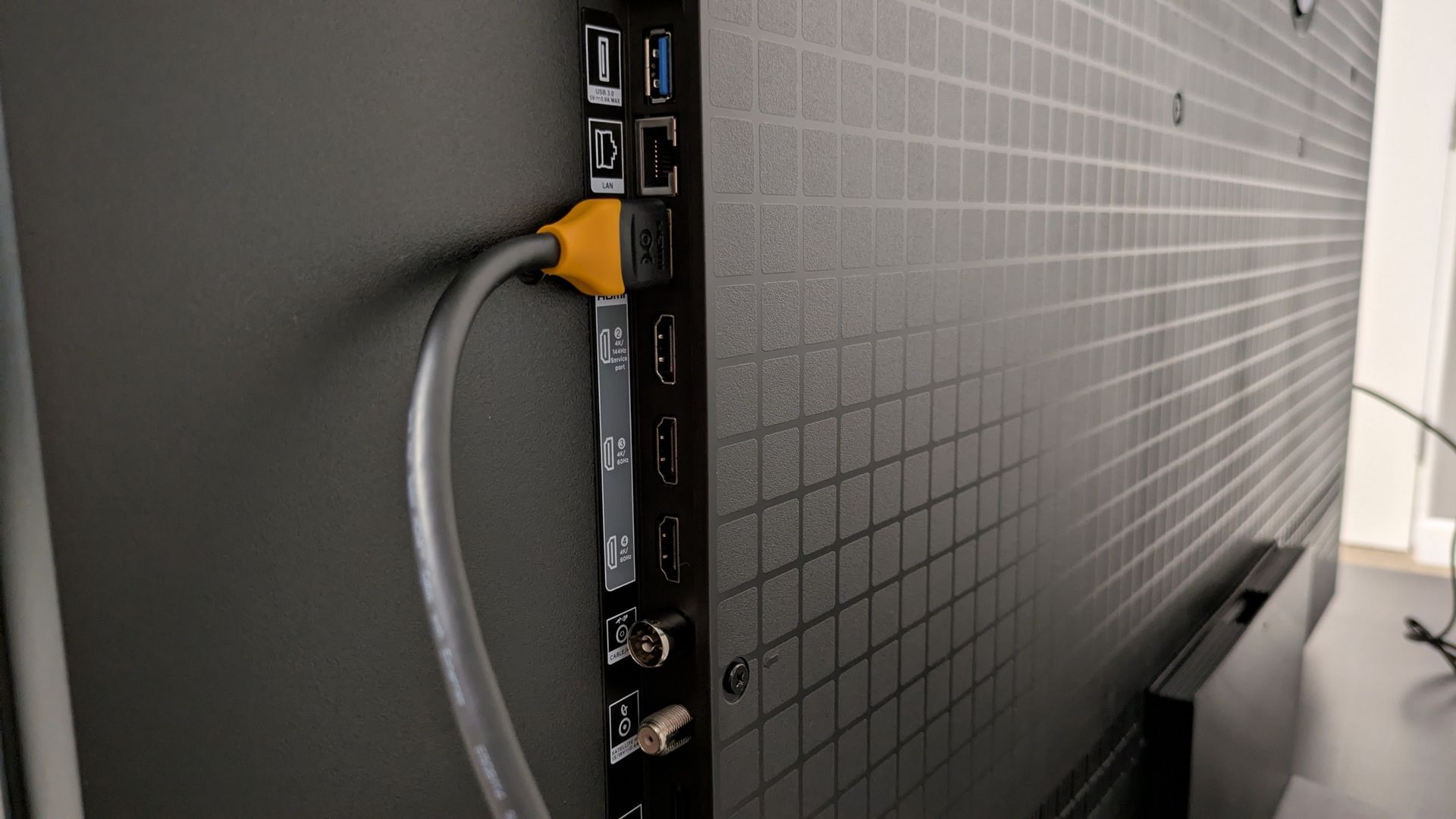
- SQD mini-LED panel
- Dolby Vision and HDR10+ support
- Four HDMI 2.1 ports
The TCL C7L has TCL’s SQD mini-LED panel, which the brand claims provides better backlight accuracy thanks to more precise dimming, as well as better colour volume. This panel has been adopted from the flagship X11L, the first SQD mini-LED, which also launched in 2026.
It uses TCL’s TSR AiPQ processor, which comes with AI features designed to improve picture, sound and gaming performance. Unlike TVs from major rivals such as LG, Samsung and Sony, the C7L supports all HDR flavours, including both Dolby Vision and HDR10+.
The C7L also has an anti-glare screen for reduced mirror-like reflections, taking a cue from Samsung’s own Glare Free screen, which Samsung first introduced on its flagship S95D OLED in 2024, before bringing it to more TVs in its mini-LED and OLED range in 2025.
It’s also well equipped for gaming, supporting 4K 144Hz, FreeSync Premium Pro, ALLM and Dolby Vision gaming, along with an option for 288Hz with a compatible connected source (PC). The C7L is, however, limited to two HDMI 2.1 ports rated for gaming.
Audio is provided by Bang & Olufsen, with a 60W speaker system that supports both Dolby Atmos and DTS: Virtual X. A number of AI sound features are available, as well as a BeoSound menu where you can customise your sound profile manually.
The C7L uses Google TV as its smart TV interface, which offers all the major streaming apps like Netflix, Prime Video and Disney Plus, alongside BBC iPlayer, ITVX, Channel 4 and Channel 5.
- Features score: 4.5 / 5
TCL C7L review: Picture quality
- Bold colours
- Great contrast
- Blooming from off-centre viewing
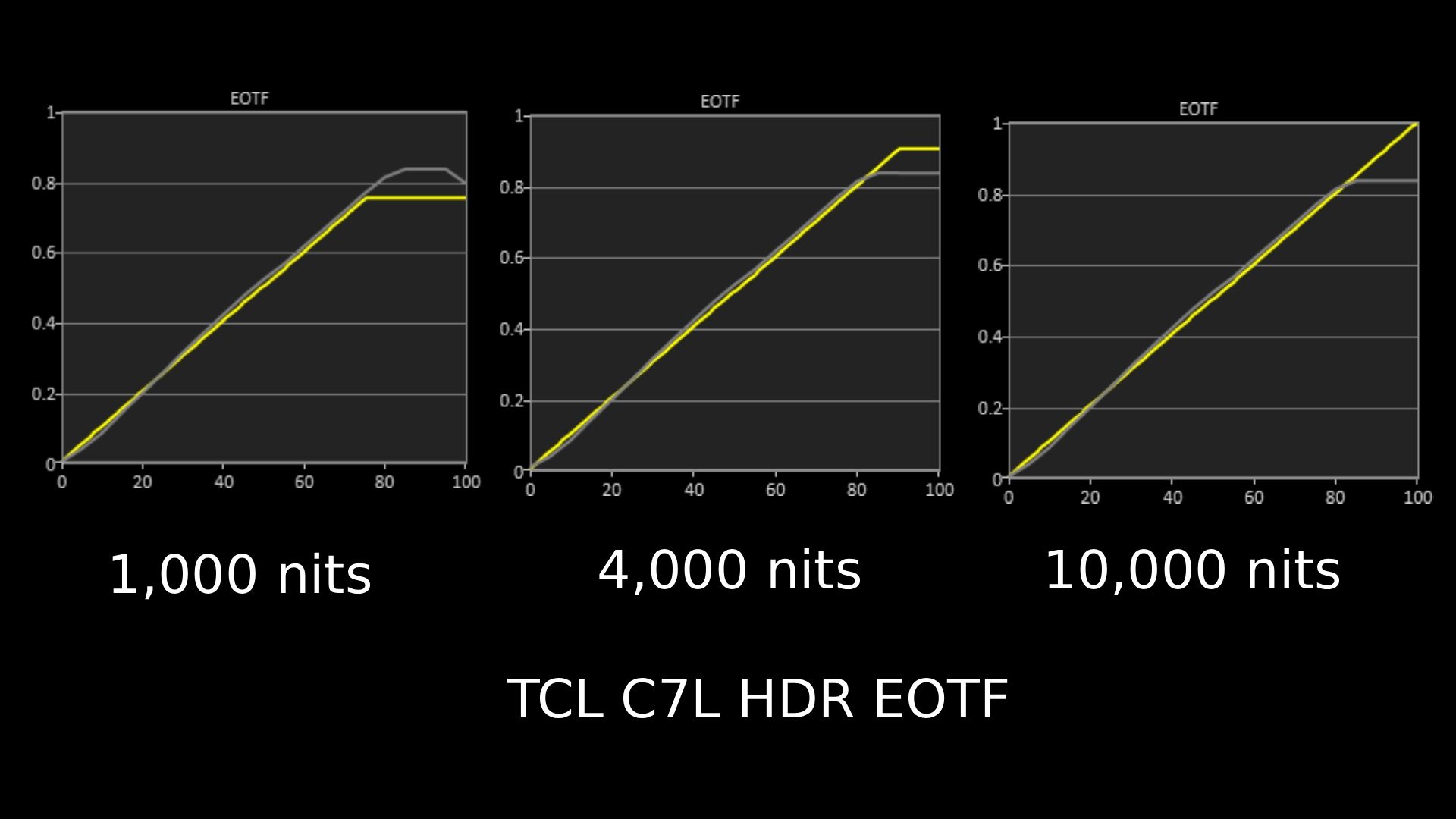
The C7L produces excellent brightness for a mid-range, affordable mini-LED. It measured 2,083 nits peak HDR brightness (with Boost off, on a 10% window) in Filmmaker Mode, which easily beats LG’s mid-range OLED C6 (which hit 1,427 nits in my most recent tests), and even bests some RGB TVs like the Bravia 7 II (1,595 nits) and the flagship Samsung R95H (1,545 nits). With the C7L’s Boost mode activated, its brightness did hit 3,514 nits peak HDR in Movie mode, but it only affected 10% window measurements.
It also delivers very good fullscreen brightness, hitting 692 and 699 nits fullscreen HDR brightness in Filmmaker and Standard mode. While other mini-LEDs have scored higher, this is much higher than any OLED. I did find when watching in a bright room that there were some mirror-like reflections with darker scenes, but the C7L did a great job of mitigating reflections in bright scenes and sports content.
The C7L does a good job of upscaling textures in SDR/HD content, and, while they don’t get to 4K levels of sharpness, textures do look cleaner. I saw this when watching sports on Prime Video, which was in HD.
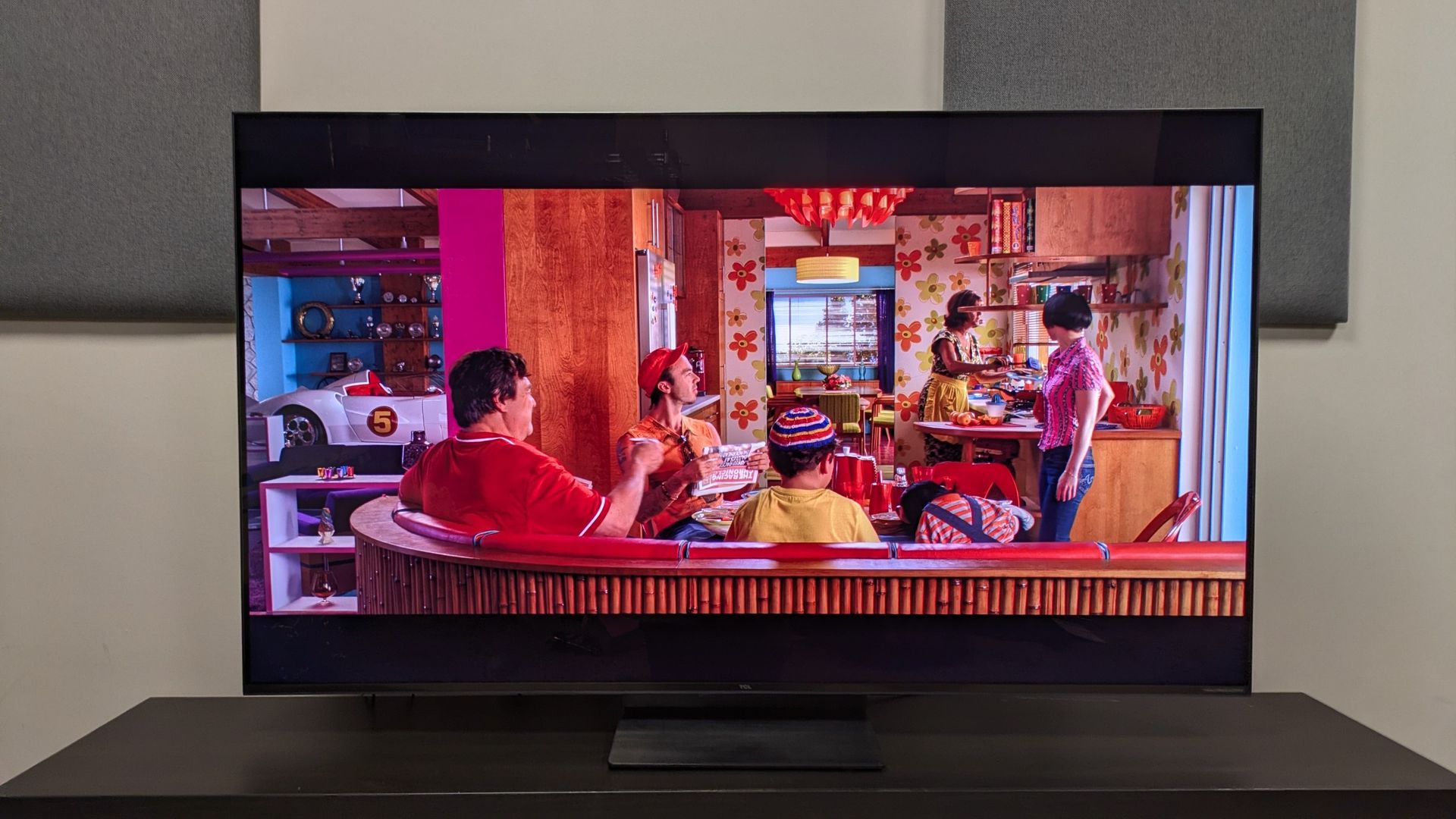
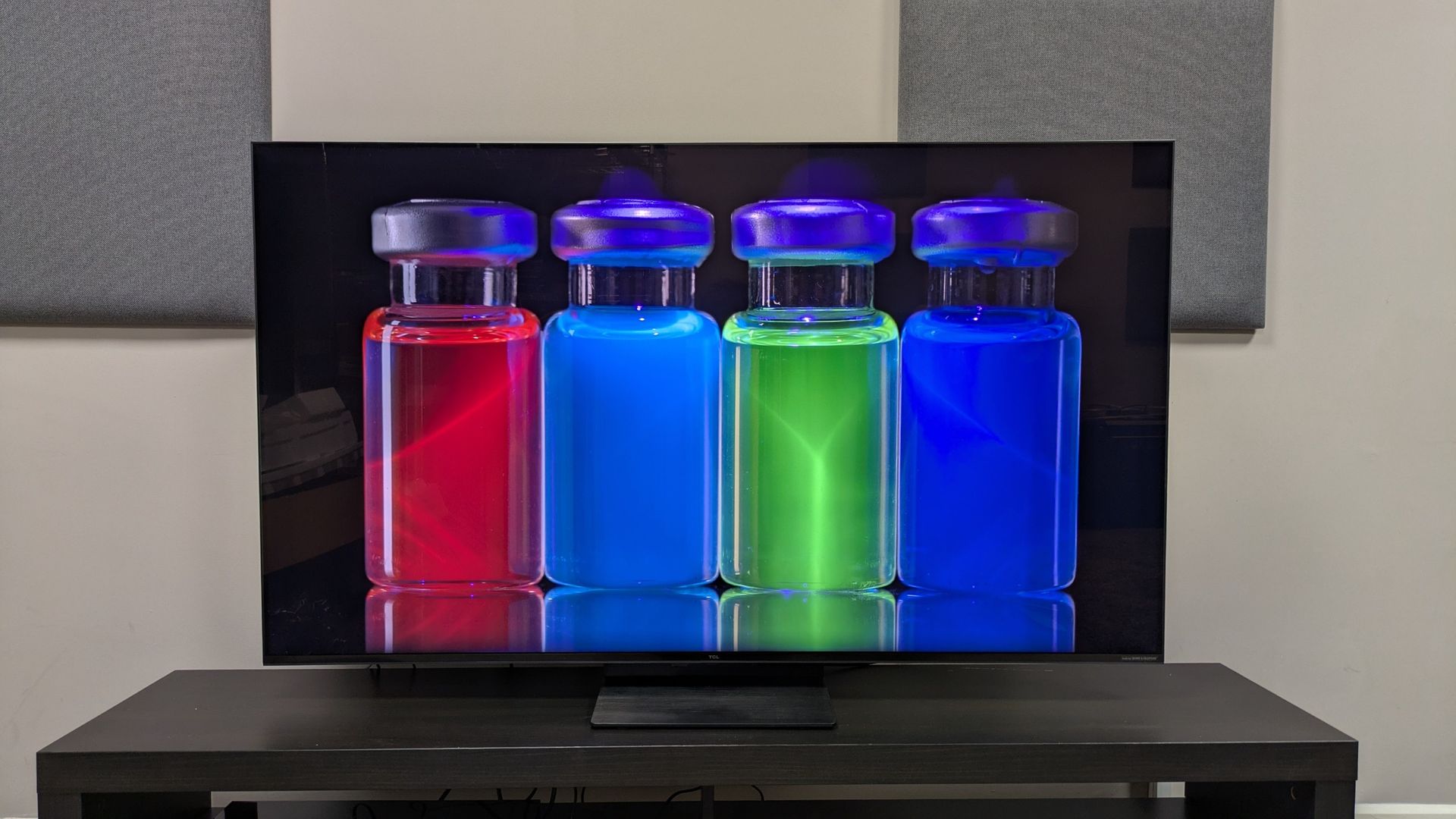
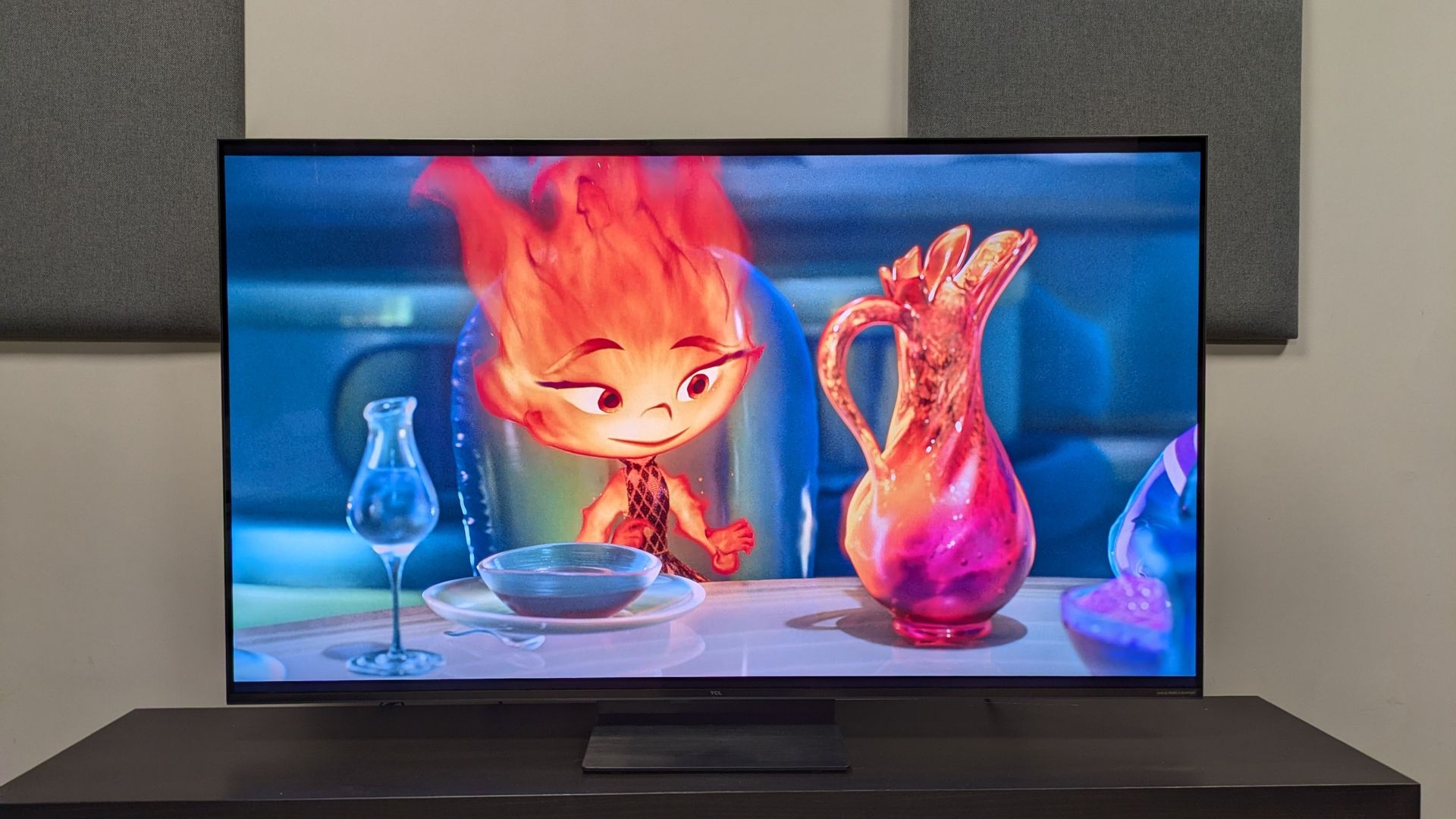
Switching to reference 4K scenes, the C7L demonstrated bold, vibrant colours. This made movies like The Super Mario Galaxy Movie really pop on screen, shown by the rich hue of the Lumas whenever they were on screen. In Speed Racer, the C7L renders the candy-coloured aesthetic of the Racer house and the character’s outfits well, and it did a great job with Elemental on Disney Plus, especially during the scene where Ember makes a vase, making the oranges, purples and pinks of the vase dazzle on screen.
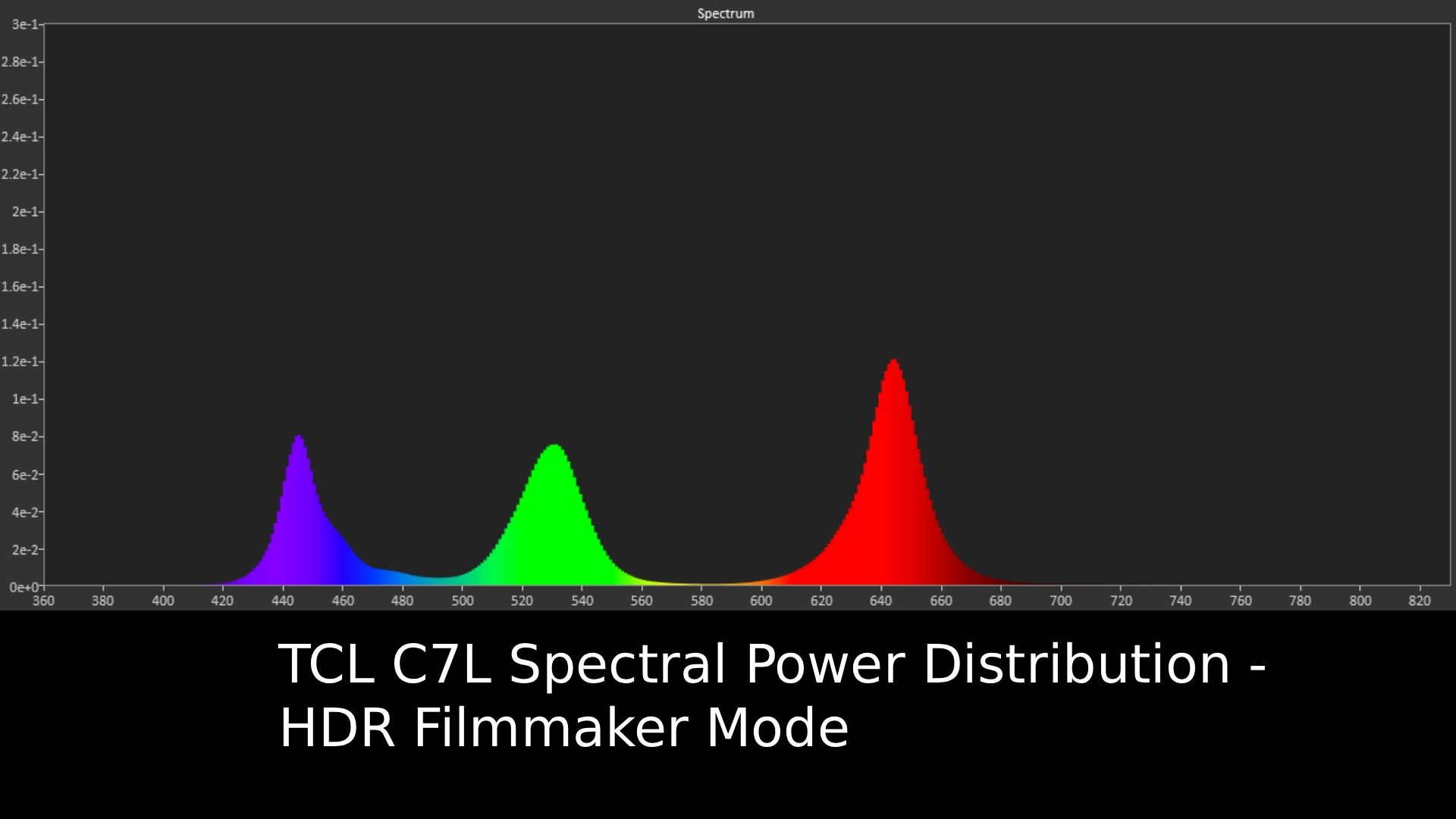
Measuring the C7L’s HDR colour gamut, it hit 97.3% of the UHDA-P3 colour space (which is used for mastering 4K Blu-ray and digital cinema releases). That’s a good result, but most impressive was its BT.2020 result, which hit 90.1%, which is one of the highest scores I’ve seen.
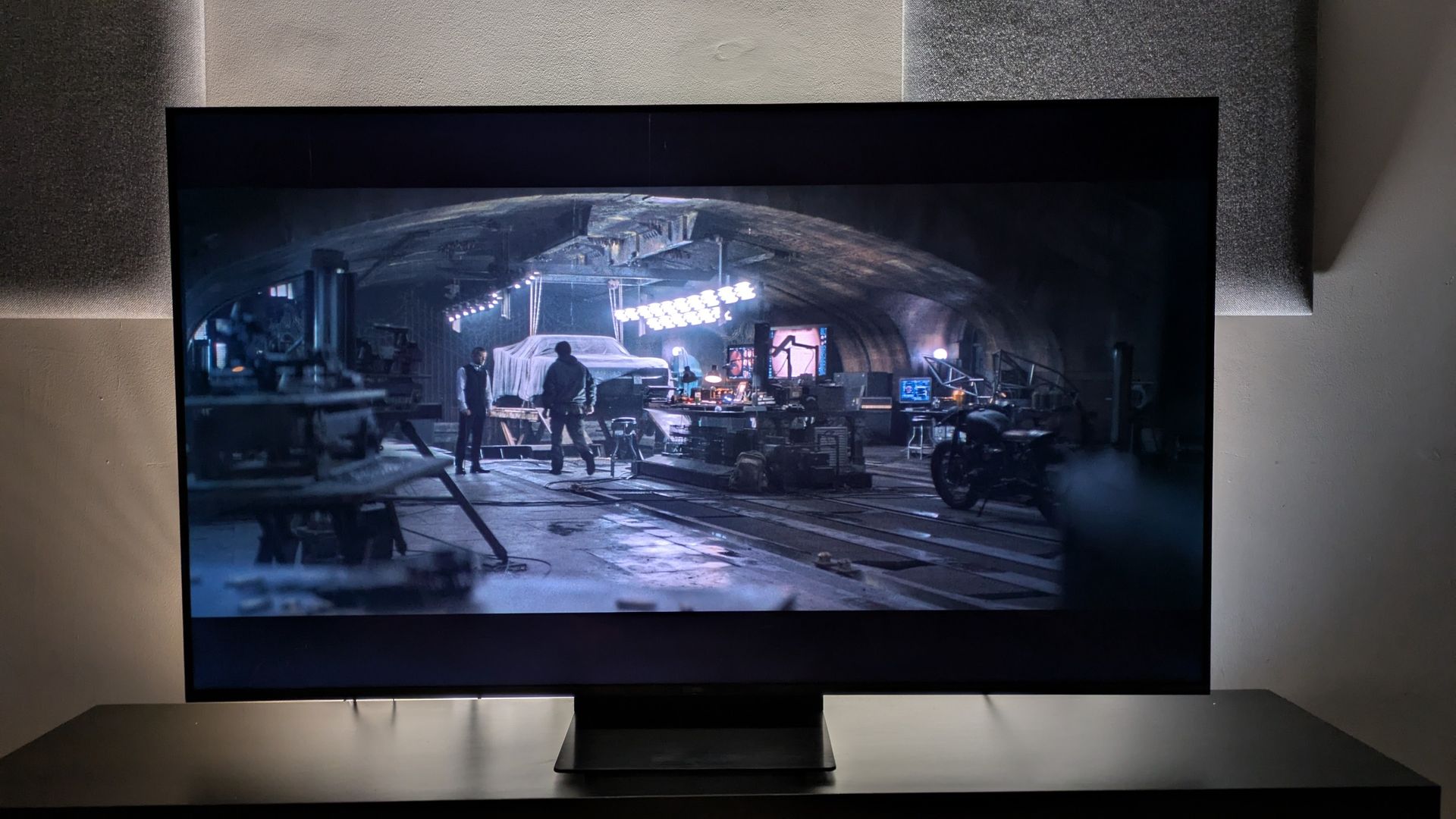
Switching to darker and high-contrast scenes, the C7L demonstrates strong contrast with a good balance between light and dark tones. This is shown in the scene in The Batman in which Bruce works in the Batcave, with the contrast between the bright monitors and the dark surroundings handled well. While the contrast didn’t quite match up to that of the LG B6E OLED when I compared the two, it was good for a backlit TV.
Space scenes in Project Hail Mary looked similarly impressive, with rich and inky blacks. The C7L also showed good backlight control, with only minor blooming occurring in the stars against the black backdrop of space when viewed head-on. Off-center viewing, however, revealed more backlight blooming, which is a common occurrence with backlit TVs. Picture quality did fade with some brighter scenes as well when viewed off-center, though not to the extent I’ve seen with past mini-LED TVs.
Finally, the C7L demonstrated very good mo...


