Backend
Transfer Learning of Multiobjective Indirect Low-Thrust Trajectories Using Diffusion Models and Markov Chain Monte Carlo
arXiv cs.SY0 views
arXiv:2605.09125v2 Announce Type: replace Abstract: Preliminary low-thrust spacecraft mission design is a global search problem characterized by a complex solution landscape, multiple objectives, and numerous local minima. During this phase, mission parameters are often not yet fully defined, requiring new solutions to be generated at a high cadence across varying parameter values. When combined with the indirect approach to optimal control, diffusion models can accelerate this search by learning distributions that represent high-quality initial costates. However, generating training data remains expensive, and opportunities exist to better exploit past data. We propose a transfer-learning framework that combines homotopy in a mission parameter with Markov chain Monte Carlo (MCMC) to generate training data more efficiently. The approach reformulates a multiobjective optimization problem as sampling from an unnormalized target distribution in costate space. We compare three MCMC algorithms on a planar multi-revolution transfer in the circular restricted three-body problem, with homotopy in the system mass parameter. The results show that gradient-based MCMC variants achieve the best trade-off between sample quality and computational cost. For the test transfer, the proposed framework generates 40 % more feasible solutions and achieves a higher-quality Pareto front than a state-of-the-art indirect approach based on adjoint control transformations and gradient-based optimization. Finally, the MCMC-generated samples are used to fine-tune a diffusion model conditioned on the mass parameter, enabling it to learn a global representation of the underlying solution distribution and efficiently generate new solutions. These findings establish the transfer-learning framework as a practical method for efficiently solving indirect trajectory optimization problems with varying parameters.
Source:https://arxiv.org/abs/2605.09125PreviousTowards Ultra-Reliable 6G in-X Subnetworks: Dynamic Link Adaptation by Deep Reinforcement LearningNextKoopman operator theory: fundamentals, control, and applications
Related posts
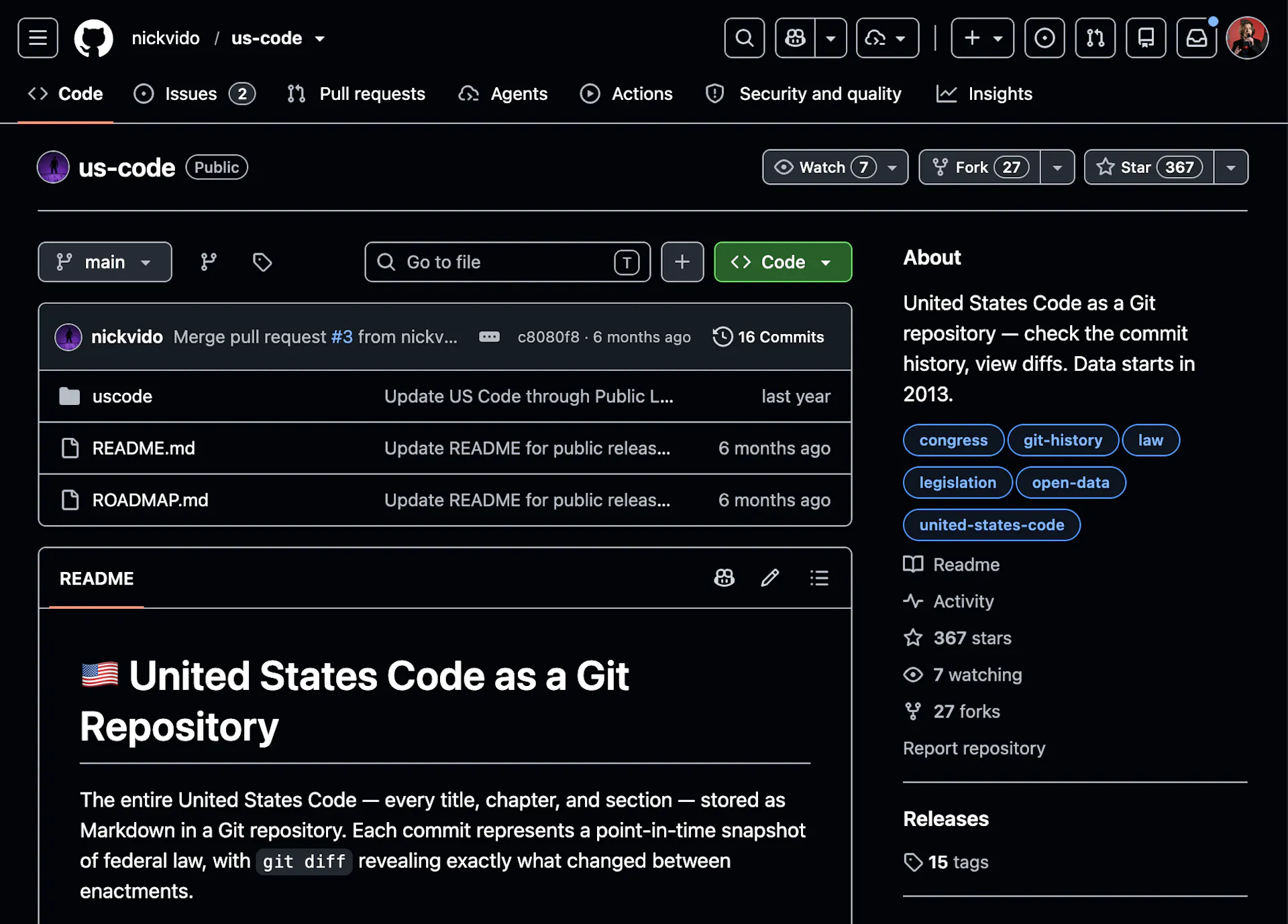
I Put My Country's Entire Legal Code in Git: 300,000+ Documents Since 1810
0HackerNoon

Gemini CLI's mkdir Failed, the Agent Kept Going, and Each move Overwrote the Last File
0dev.to

I built a gesture app for macOS 26. Here's how it works and how launch week went
0dev.to

When Scripting Saves the Day... After Almost Deleting System32🥲
0dev.to

Goldman Sachs restricts Claude Code and GitHub Copilot to engineers
0dev.to

Convert PNG to JPEG or WebP in the Browser: What Happens to Transparency
0dev.to