AI & ML
Implicit DeepReach Without Implicit Differentiation
arXiv cs.SY0 views
arXiv:2611.13291v1 Announce Type: new Abstract: We consider the problem of approximating backward reachable and reach-avoid tubes for high-dimensional nonlinear systems whose Hamiltonians require numerical optimization over constrained controls and disturbances. Existing neural Hamilton-Jacobi (HJ) reachability methods alleviate the dimensionality bottleneck of grid-based solvers, but evaluating Hamiltonians without closed-form expressions introduces an additional computational challenge. We show that, under suitable assumptions, the gradients required for value-function training can be computed without differentiating through the inner optimization problem. Specifically, we establish an envelope-type gradient identity for the saddle point Hamiltonian, under which the optimal control and disturbance enter backpropagation as constants without gradient tracking. This enables end-to-end neural HJ reachability with numerically evaluated Hamiltonians while avoiding both solver unrolling and implicit differentiation. We demonstrate the accuracy and computational efficiency of the proposed approach on nonlinear reachability and reach-avoid problems of different scales.
Source:https://arxiv.org/abs/2611.13291PreviousPulsatile Endocrine Regulation with a Releasable Hormone Pool: Impulsive Feedback ModelNextModal-Augmented Chebyshev Physics-Informed Kolmogorov-Arnold Networks for Power Systems
Related posts

HPE7-A11 Exam: A Design-Artifact Guide to Campus Access Architecture
0dev.to

Railway's Breach Cost $740,000 in Fraudulent AI Charges — and Up to 100,000 Workspaces May Have Leaked Secrets
0dev.to

Nod Reports 98% Agent Task Completion and 93.2% Long-Term Memory Recall in Tests
0dev.to

How to get business location data for a whole US state in bulk
0dev.to

OpenAI Cost Tracking Middleware: Build a Logging Wrapper That Shows Every Call's Price
0dev.to
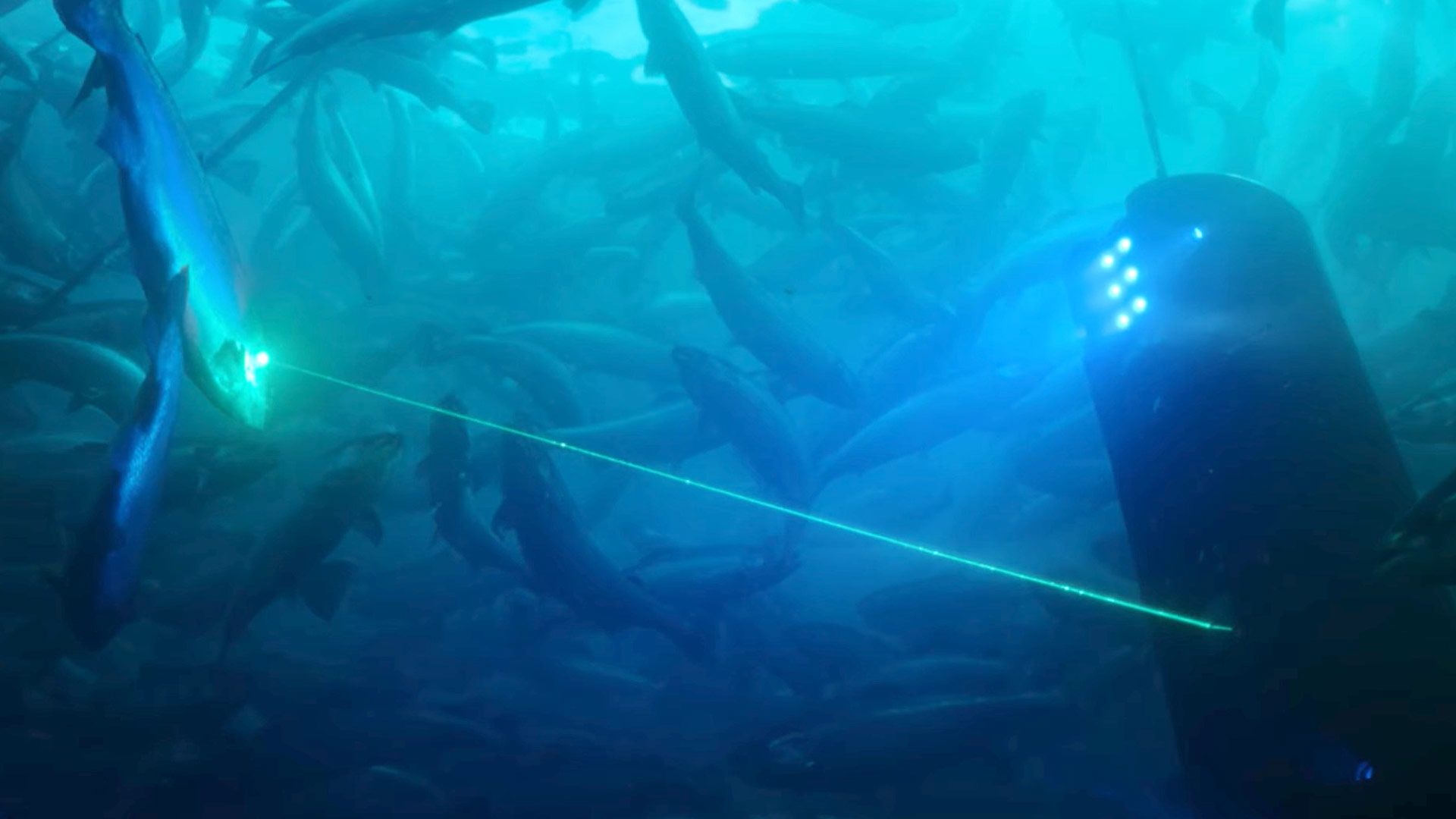
3,500 laser-armed AI submarine drones patrol Norwegian salmon farms, killing sea lice and protecting 112 million fish
0Tom's Hardware