AI & ML
Mesh-Free Weak-Form Regression for Learning Interaction Kernels from Particle Trajectories
arXiv stat.ML0 views
arXiv:2611.18455v1 Announce Type: new Abstract: We propose mesh-free weak-form regression for learning interaction kernels from noisy particle trajectories. Our method uses smooth test functions to avoid differentiating noisy data and empirical particle averages to avoid density reconstruction and spatial grids. We then fit sparse combinations of candidate functions, evaluating interaction terms on sampled particle pairs to avoid all-pair quadratic cost. By transferring identifiability from the mean-field limit, we prove high-probability coefficient error bounds that separate finite-particle, time-discretization, observation-noise, and pair-sampling errors, without grid-resolution or density-estimation terms. We evaluate one-dimensional (1D) Newtonian-repulsion, 2D predator-prey, and 10D distance-localized experiments. The numerical results show trends consistent with the theoretical coefficient-error bounds. Comparisons of weak and forward-difference formulations with LASSO, Ridge, and OLS show that weak LASSO gives the smallest coefficient and drift errors in the three nominal experiments.
Source:https://arxiv.org/abs/2611.18455PreviousLipschitz-Constrained Discriminators in Generative Modeling: Asymptotic Behavior and Support MismatchNextNode Localization by Multidimensional Scaling with Iterative Majorization
Related posts

Replacing workers with AI could prove incredibly costly if the technology doesn't work out
0TechRadar
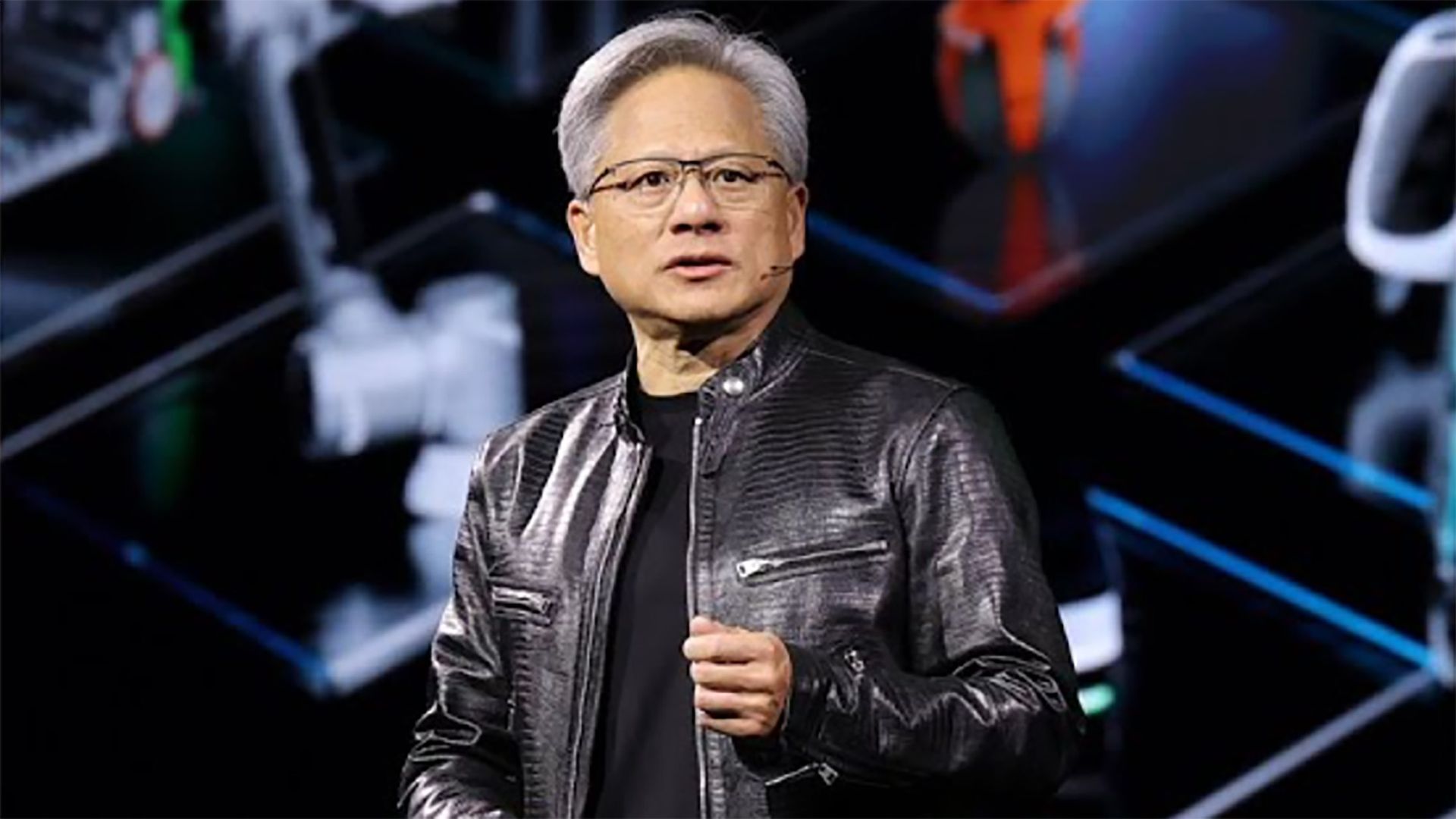
Campaign to reinstate Huang as Nvidia CEO now has 175,000 signatures
0TechRadar

Apple provides a safe way to ask an AI questions about your health
09to5Mac

The King’s Trust and OpenAI launch £1m partnership
0OpenAI Blog

AI Skills and the Gender Gap: Who Gets Ahead in the Changing Job Market?
0HackerNoon

AI in Leadership: Managing People, Not Just Work
0HackerNoon