AI & ML
SkinMind: Equipping Agentic RAG with Human-Inspired Graph Probing for Reliable Dermatology AI
arXiv cs.IR0 views
arXiv:2611.08935v1 Announce Type: new Abstract: Reliable dermatology AI requires access to verifiable evidence distributed across heterogeneous textual and visual sources. However, conventional retrieval-augmented generation (RAG) typically relies on one-shot retrieval from flat corpora, limiting its ability to adapt retrieval granularity, explore multi-hop relations, and integrate multimodal clinical evidence. We introduce SkinMind, a multimodal agentic RAG framework that equips policy models with human-inspired graph probing for autonomous evidence seeking. SkinMind organizes retrieval as an iterative interaction between an orchestrator and a graph environment. Through eight hierarchical graph-probing tools, the orchestrator progressively identifies relevant entities, inspects node-level information, traverses relations and paths, and retrieves source-text and visual evidence. This progressive-disclosure design allows the model to adaptively determine the retrieval modality, exploration direction, and evidence granularity while constructing a query-specific evidence subgraph. To support autonomous graph probing, we construct SkinMind-KG from a 62M-token corpus of dermatology guidelines and textbooks and 423K images, guided by a dermatologist-informed schema and a conflict-resolution mechanism. The resulting graph contains over 1.0M nodes and 2.0M edges, unifying textual, relational, and visual evidence for retrieval. Across six dermatology VQA benchmarks and two policy-model settings, SkinMind improves the average score over direct answering by 8.70 and 8.89 points with GPT-5.4-mini and Gemini-2.5-Flash, respectively, while consistently outperforming competing RAG methods. Together, SkinMind and SkinMind-KG provide an effective foundation for evidence-grounded multimodal reasoning in dermatology.
Source:https://arxiv.org/abs/2611.08935PreviousGenerative Search and Recommendation at ShopifyNextRethinking Latent Reasoning for Generative Recommendation: Beyond Teacher-Generated CoT and Recurrent Hidden-State Feedback
Related posts
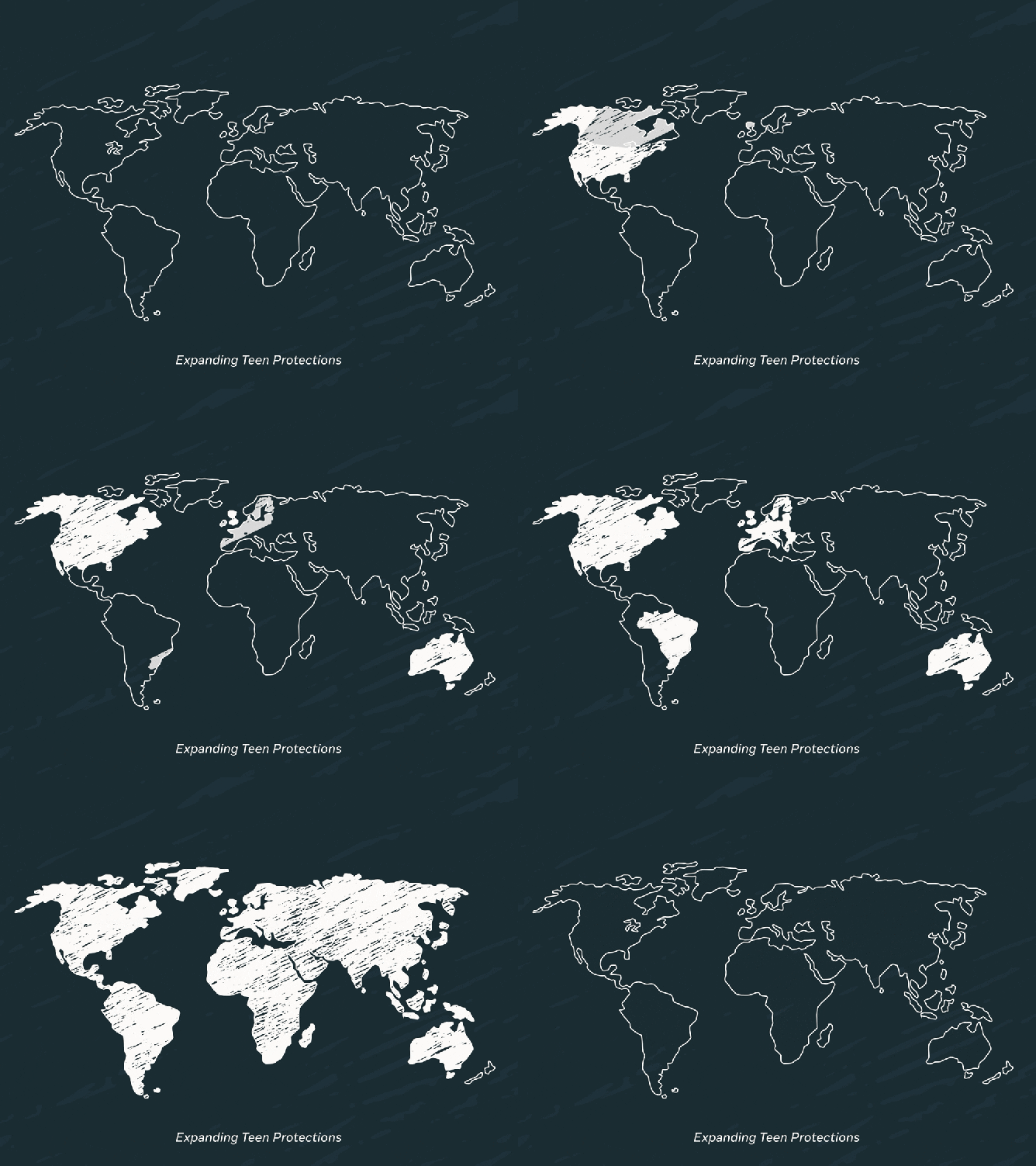
Expanding Teen Account Protections to Teens Around the World
0Meta Newsroom

Tối ưu hóa hiệu suất đầu ra: Tiền vệ Njie vực dậy hàng công Fiorentina với 5 lần in dấu giày
0dev.to Data

Hiệu suất săn bàn ấn tượng của Gouiri thúc đẩy chuỗi toàn thắng của Marseille
0dev.to Data

Hiệu suất săn bàn vượt trội của Kylian Mbappé trong màu áo Real Madrid
0dev.to Data

Hiệu suất toàn diện đưa Harry Kane vượt mặt Kylian Mbappe và Lamine Yamal trên bình diện thế giới
0dev.to Data

How Many .com Names Appear and Disappear Each Day?
0dev.to Data