AI & ML
Beyond Attack-Based Accuracy: Rethinking Adversarial Robustness Evaluation Through Structural Gradient Alignment
arXiv cs.CR0 views
arXiv:2611.17377v1 Announce Type: new Abstract: Visual adversarial robustness remains a fundamental security property as vision systems evolve from conventional classifiers to vision-language models (VLMs) and large vision-language models (LVLMs), with visual inputs remaining an attack surface across generations. Yet existing evaluation methods often depend on prescribed attacks, in-distribution data, extensive probing, or classifier-specific formulations, limiting external auditing of diverse models. We introduce Structural Gradient Alignment (SGA), a complementary robustness metric measuring the structural alignment between input content and objective-conditioned local model sensitivity. SGA uses a few randomly sampled, unlabeled public probes that need not follow the downstream task distribution and only one input-gradient computation per model--probe pair. Across 38 distinct DNNs, VLMs, and LVLMs, SGA produces rankings consistent with attack-based references. Without robustness references, uncalibrated SGA achieves $83.72\%$ average pairwise agreement across eight public-probe conditions, outperforming the strongest overall baseline in all eight by $9.38$ percentage points on average. With known robustness orders of anchor models, calibrated SGA increases agreement to $85.36\%$. These results demonstrate an attack-agnostic, computationally efficient robustness signal across conventional DNNs, VLMs, and autoregressive LVLMs, downstream tasks, threat norms, probe distributions, and evaluator-knowledge settings. Our implementation is available at https://github.com/azrealwang/SGA.
Source:https://arxiv.org/abs/2611.17377PreviousThe State Is Not the Bottleneck: A Paged-State Gated-DeltaNet Tile on a Tri-Mode Multicast Mesh, Bit-Exact from RTL to SiliconNextEvolutionary-based Transfer Learning for Physical Attack on End-to-End Autoencoder Communications
Related posts

An LLM confidence score isn’t correctness: the certainty trap
0dev.to

What a host-side layer for LLM agents is, in plain words (and what it is not)
0dev.to

OpenAI's Agents API Lets Any App Rent Codex, Here's How It Works
0dev.to
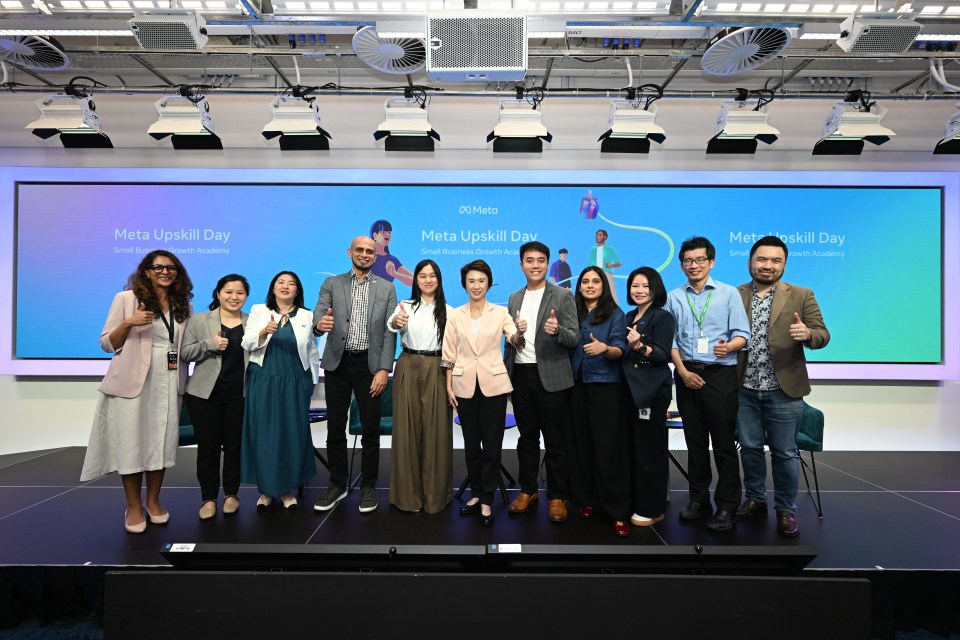
94% of Singapore Small Business Owners Surveyed Say More AI Guidance Is Needed
0Meta Newsroom

Nashville, Tennessee Real Estate Dataset: 7,436 Listings, Excel File (Nov 10, 2026)
0dev.to Data

A Hundred and Eighty Six Thousand Pounds of Stock Had Left One Branch and Never Arrived at Another
0dev.to Data