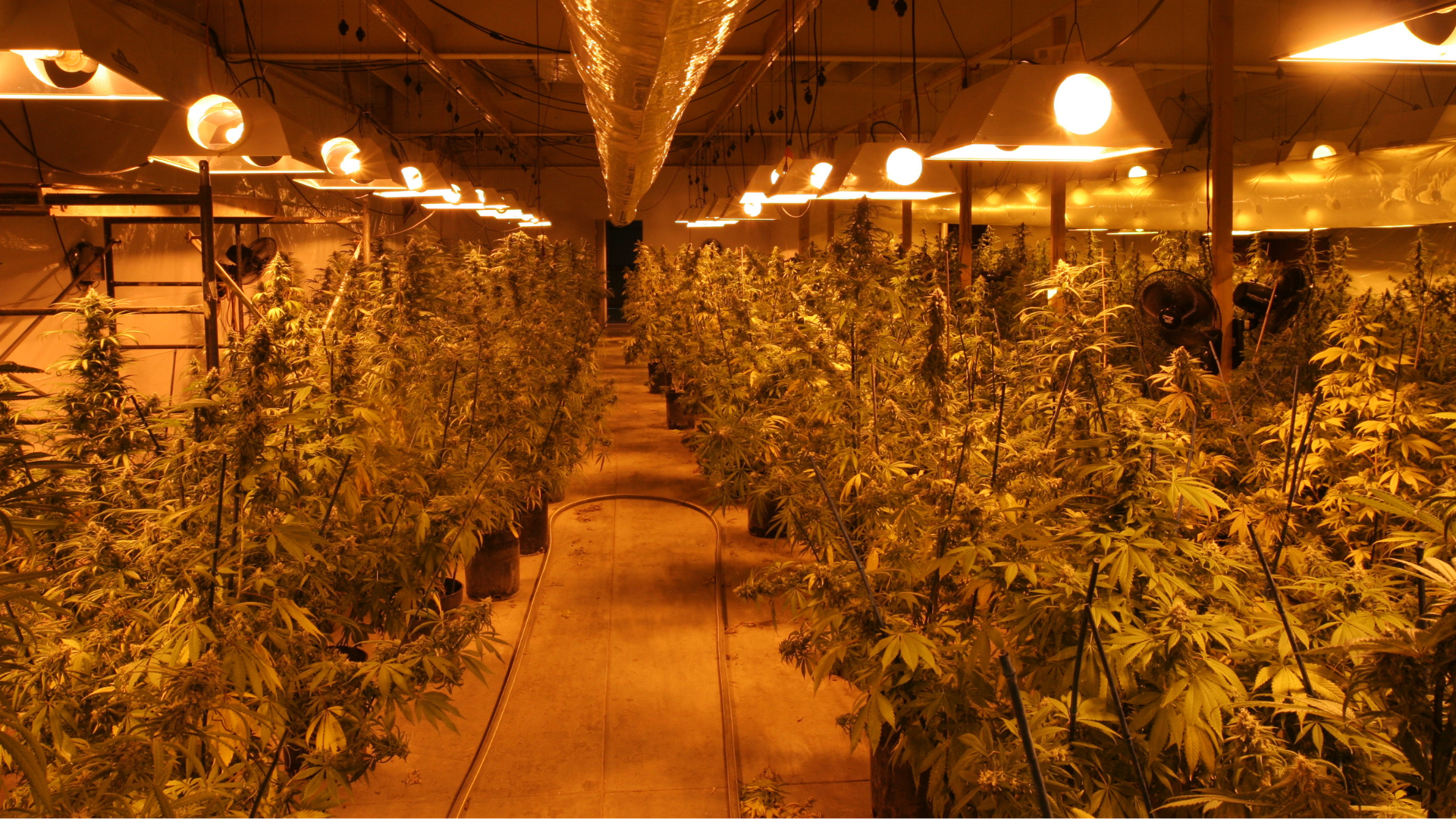
The AI data center boom is bringing hope to struggling cannabis farmers as they face increased competition, costs, and taxes amid reduced demand for marijuana. According to Arizona Public Media, the cannabis industry is in decline, with sales peaking in 2024 and oversupply driving prices down. And now, several growers are considering selling their cultivation facilities or converting them into “mini data center nodes.” These facilities already have many of the ingredients needed for AI data centers, such as the increasingly hard-to-get supply of electricity and water infrastructure.
"For some reason, there's a lot more cannabis grown in Arizona than Arizonans use. And so, a lot of folks are getting out of that business, like myself, at least on the cultivation side. But these facilities can potentially be repurposed to be mini data center nodes," Moe Asnani, the former owner of two Tucson D2 Dispensaries, told the public broadcaster. He also added, "The whole idea is if you create these smaller nodes where people control their own data, where they're not at the mercy of other people's updates and things like that — that's kind of where the idea came in, because I believe in decentralization."
Cannabis farming is both power- and water-intensive. Forbes looked at a 32,850-square-foot cannabis facility in Kalamazoo, Michigan, which is currently wired for 1.5 megawatts, which can be expanded to 2.5 megawatts in under a year and 15 megawatts in the long term. It's also provisioned for fiber internet and equipped with a state-of-the-art HVAC system for climate control, which should make it a tempting property for anyone wanting to put up a small data center — something that even OpenAI and Anthropic are interested in as massive hyperscale sites face opposition from the community.
This concept is dubbed "adaptive reuse," with Tucson City Council member Paul Cunningham saying that it’s a more palatable alternative to massive, purpose-built sites sitting on the outskirts of town. "Data centers are dirty words, and everybody knows that. And no one wants to build a brand-new data center anywhere," the politician said. "But if we have buildings that were using that amount of water and that amount of energy already in their previous function and [it] can be done without being invasive, I'm OK with exploring that option."
There is massive demand for data centers, but it’s not a guaranteed payoff for struggling cash-strapped growers looking to unload their unprofitable properties. Niki Krear, vice president of acquisitions of real estate investment trust New Lake Capital Partners, said that there’s a sweet spot between connectivity, costs, and regulation that data center operators look for in a site.
"It’s a combination of finding affordable power, dense fiber networks, and favorable tax policies," Krear told MJBizDaily. Even though many cultivation facilities already boast higher-than-average power capacity for lighting and climate control, data centers often demand twice to thrice more, with upgrades possibly taking up to five years.
Data center operators looking for smaller sites may also have to contend with NIMBY — not in my backyard — fights from neighbors. Additionally, there may be zoning restrictions, moratoriums, and regulatory hurdles, and the lack of economies of scale could end up costing operators more.
This is particularly important as AI chips are expected to increase in power and efficiency in the next five years. As these new AI GPUs become available, data centers will need to sell their existing equipment and buy new hardware to remain competitive. Because suppliers usually offer favorable pricing for larger orders, upgrading these smaller sites will likely end up being more expensive on a per-unit basis. That said, growing opposition toward large new projects could make these former cannabis farms suitable alternatives for operators desperate to get more compute online quickly, provided they check all (or most of) the boxes they need.


