AI & ML
Superfluid: Local AI Server for Distributed LLM Inference
arXiv cs.DC0 views
arXiv:2611.17753v1 Announce Type: new Abstract: Running large language models (LLMs) on local devices keeps data private, removes per-token cost, cuts network latency, and keeps working without a connection. Two shifts now strain how such models are served. On one device, several agents share a locally served model with an interactive user. Across devices, a developer or small team often owns several capable machines from different vendors, which sit idle most of the day because every local server serves one runtime on one machine. We present Superfluid, an open-source LLM server built for local inference at both scales. On one device, Superfluid drives llama.cpp, MLX, or BaseRT in isolated worker processes through one scheduler that moves interactive requests ahead of agent work, computes a prompt shared by many requests once, and writes every token to a durable log before it reaches the client. Across devices, one Superfluid server turns a fleet of machines into a single API endpoint. Machines with different hardware serve copies of the same model, receive work according to their measured speed, and can join or fail under load without losing a request. For Qwen3.8-27B on an Apple M5 Pro, a chat sent while eight agents are working receives its first token in 1.5 s, against 291-612 s on llama-server, Ollama, and mlx_lm.server. On six machines from three chip vendors serving 64 simulated users for one hour, Superfluid answers all 5,041 requests while machines join one at a time and one is killed and rejoins; throughput grows from 112 to 534 tok/s and the median first-token time falls from 99 to 12 s. On twelve Mac Studio M3 Ultras it sustains 10,656 tok/s across 38,563 requests from 384 agents without a failure. Superfluid is available under the Apache-2.0 licence at https://github.com/basecompute/superfluid.
Source:https://arxiv.org/abs/2611.17753PreviousPerformance-Portable Exact Gaussian Process Regression in Python via SYCL and oneMathNextTailGuard-GDS: Tail-Safe Control of GPU Storage Data Movement
Related posts

An LLM confidence score isn’t correctness: the certainty trap
0dev.to

What a host-side layer for LLM agents is, in plain words (and what it is not)
0dev.to

OpenAI's Agents API Lets Any App Rent Codex, Here's How It Works
0dev.to
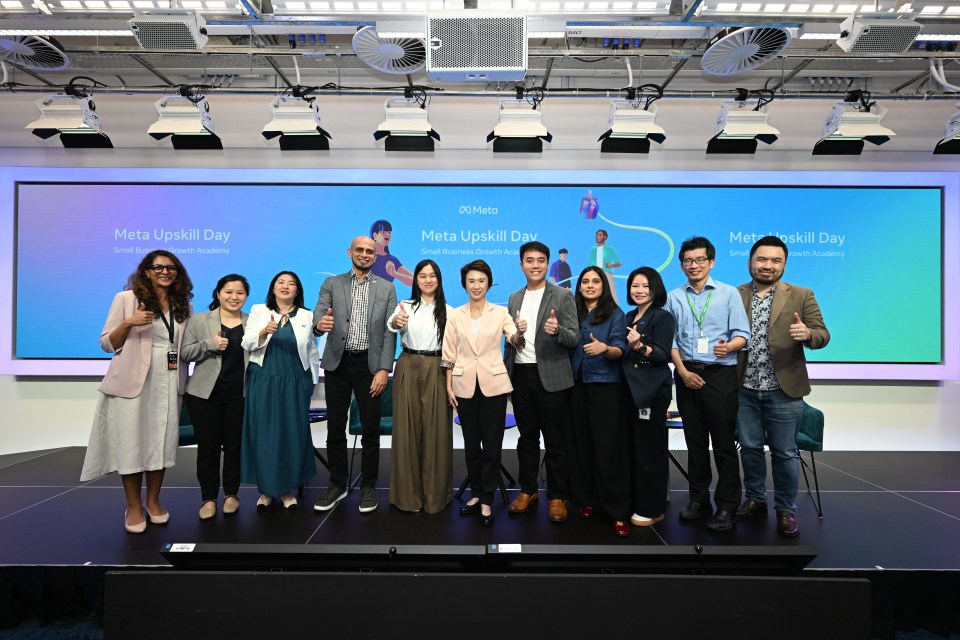
94% of Singapore Small Business Owners Surveyed Say More AI Guidance Is Needed
0Meta Newsroom

Nashville, Tennessee Real Estate Dataset: 7,436 Listings, Excel File (Nov 10, 2026)
0dev.to Data

A Hundred and Eighty Six Thousand Pounds of Stock Had Left One Branch and Never Arrived at Another
0dev.to Data