AI & ML
LLMs are Vulnerable to Malicious Requests with Indistinguishable Intent
arXiv cs.CR0 views
arXiv:2611.17818v1 Announce Type: new Abstract: Jailbreak attacks can circumvent the safety mechanisms of Large Language Models (LLMs) and lead to the generation of harmful or policy-violating content. We first examine eight jailbreak methods against an LLM-based filter and observe that requests resembling normal user queries tend to have higher filter pass rates than those containing obvious anomalous patterns. This observation motivates the hypothesis that resemblance to normal requests may contribute to jailbreak success. We introduce \textbf{Detail Guidance Attack (DGA)}, a framework that uses an auxiliary LLM to construct detailed requests and interacts with the victim model in a single turn. Across 11 victim models and three datasets, the complete DGA pipeline achieves high attack success rates under our automated judging criterion, including rates above 95\% in several evaluated settings. We also evaluate a DGA-aware filter and conduct a user study on everyday requests with ambiguous or dual-use intent. The survey documents differing expectations about whether models should respond; the usability costs of the filter remain to be measured.
Source:https://arxiv.org/abs/2611.17818PreviousInferring Sensitive Events in Multi-Mode Cyber-Physical Systems via Scheduling Side ChannelsNextSecuring Multi-Agent Systems by Design
Related posts

An LLM confidence score isn’t correctness: the certainty trap
0dev.to

What a host-side layer for LLM agents is, in plain words (and what it is not)
0dev.to

OpenAI's Agents API Lets Any App Rent Codex, Here's How It Works
0dev.to
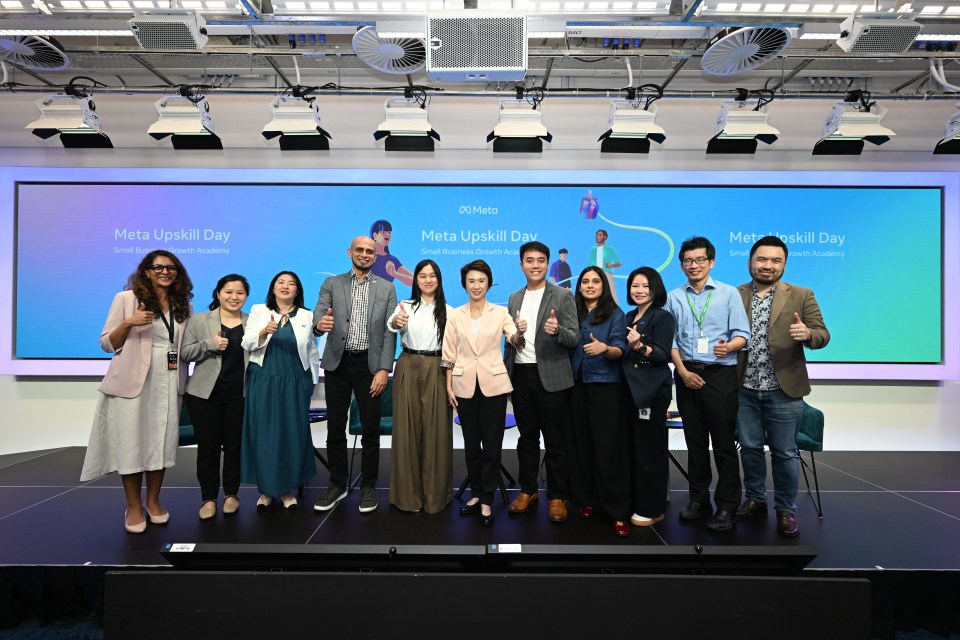
94% of Singapore Small Business Owners Surveyed Say More AI Guidance Is Needed
0Meta Newsroom

Nashville, Tennessee Real Estate Dataset: 7,436 Listings, Excel File (Nov 10, 2026)
0dev.to Data

A Hundred and Eighty Six Thousand Pounds of Stock Had Left One Branch and Never Arrived at Another
0dev.to Data